
TL;DR
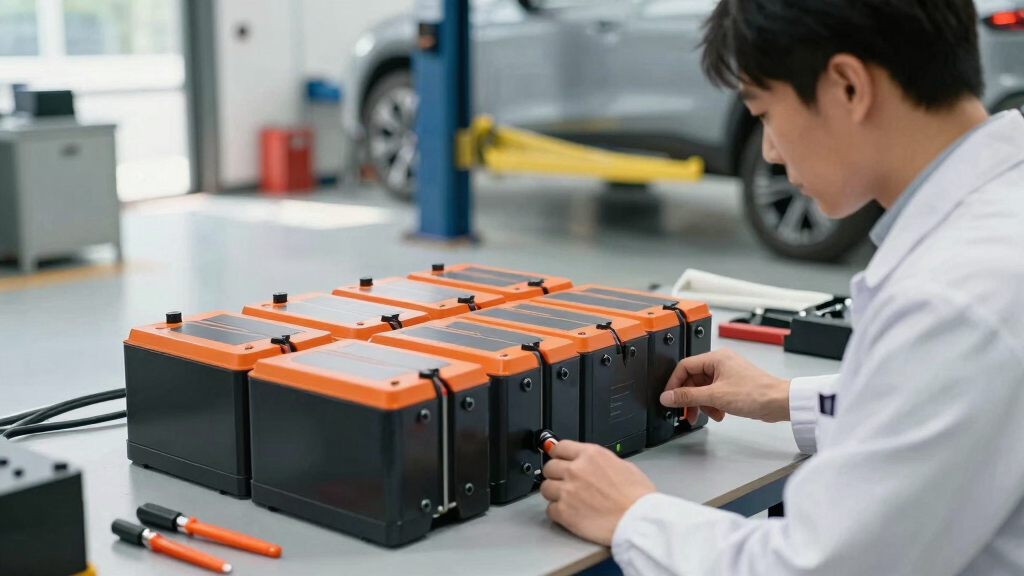
A new battery technology has been announced that could challenge solid-state batteries and reshape the EV market. The development is confirmed but details about commercial readiness remain unclear. This could impact vehicle performance, supply chains, and industry competition.
A new battery technology has been announced that could challenge the dominance of solid-state batteries in the electric vehicle market. The development promises faster charging times, improved safety, and potentially lower costs, making it a significant industry milestone. The announcement has generated widespread interest among automakers and suppliers, as it could accelerate EV adoption and disrupt existing supply chains.
The breakthrough involves a novel electrode material that reportedly offers higher energy density and faster charge-discharge cycles than current lithium-ion and solid-state batteries. The technology was unveiled by a startup, VoltInnovate, which claims to have demonstrated a prototype capable of charging fully in under 10 minutes with enhanced safety features. Industry experts, including Dr. Lisa Chen of the Battery Research Institute, have confirmed the core innovation and its potential benefits. However, it remains unconfirmed whether this technology can be scaled for mass production or meet automotive safety standards in the near term. The company states that commercial prototypes are in development, with pilot testing expected within the next 12 months.
Potential Industry Shake-Up from New Battery Tech
This new battery breakthrough could dramatically alter the EV landscape by enabling faster charging, reducing costs, and improving safety. If scalable, it may diminish the current emphasis on solid-state batteries, which are still in development phases. Automakers and suppliers could face shifts in sourcing and manufacturing priorities, while consumers may benefit from more affordable, longer-range EVs. The development could also intensify competition among battery manufacturers, prompting further innovation and investment in alternative technologies.

ChargePoint HomeFlex Level 2 EV Charger J1772 – Fast Smart Battery Power Charging at Home for Electric Automobile Vehicles
Charge With Confidence: ChargePoint builds reliable, flexible EV charging stations for home, business, and fleets. Get 24/7 support…
As an affiliate, we earn on qualifying purchases.
As an affiliate, we earn on qualifying purchases.
Recent Trends and Challenges in EV Battery Development
Solid-state batteries have been viewed as the next big step in EV technology, promising higher energy density and safety. However, their commercial deployment has faced hurdles such as high production costs, scalability issues, and limited supply chain readiness. Meanwhile, traditional lithium-ion batteries continue to improve incrementally. The recent announcement from VoltInnovate introduces an alternative approach that could bypass some limitations of solid-state technology, which has yet to reach mass-market viability. Industry analysts note that several startups and established companies are racing to develop next-generation batteries, but few have announced breakthroughs with immediate commercial potential.
“This new electrode material could represent a significant leap forward if it proves scalable and reliable in real-world conditions.”
— Dr. Lisa Chen, Battery Research Institute

2 Pack 24V 5Ah Lithium Battery with 29.4V 1A Charger, 24 Volt Rechargeable Battery for DIY Projects
Complete Ready-to-Use Package: Experience instant power with our 24V 5Ah lithium battery, which comes with a 29.4V 1A…
As an affiliate, we earn on qualifying purchases.
As an affiliate, we earn on qualifying purchases.
Uncertainties Surrounding Commercial Deployment
It is not yet confirmed whether the technology can be scaled for mass production or meet all automotive safety and durability standards. Details about cost, longevity, and real-world performance are still emerging, and regulatory approval processes remain to be navigated.
ChargePoint HomeFlex Level 2 EV Charger J1772 – Fast Smart Battery Power Charging at Home for Electric Automobile Vehicles
Charge With Confidence: ChargePoint builds reliable, flexible EV charging stations for home, business, and fleets. Get 24/7 support…
As an affiliate, we earn on qualifying purchases.
As an affiliate, we earn on qualifying purchases.
Next Steps for Validation and Industry Adoption
VoltInnovate plans to begin pilot testing of commercial prototypes within 12 months. Industry stakeholders will closely monitor performance data and scalability efforts. Automakers and suppliers may initiate partnerships or investments if the technology demonstrates viability, potentially leading to pilot integrations in upcoming EV models.
Hybrid Electric Vehicle Design and Control: Intelligent Omnidirectional Hybrids
As an affiliate, we earn on qualifying purchases.
As an affiliate, we earn on qualifying purchases.
Key Questions
How does this new battery technology compare to solid-state batteries?
The new technology claims to offer faster charging times, higher safety, and comparable or higher energy density than current solid-state batteries, with the potential for easier scalability.
Is this technology ready for mass production?
No, it remains in prototype and pilot testing phases. Scalability and regulatory approval are still being developed.
What impact could this have on EV prices and range?
If successfully commercialized, it could reduce costs and improve range and charging convenience, benefiting consumers.
When might we see vehicles using this technology?
Commercial prototypes are expected within the next year, with potential market entry in 2-3 years if testing is successful.
Could this technology replace solid-state batteries entirely?
It is too early to say. While promising, it will depend on scalability, cost, and regulatory approval before it can replace existing technologies.
Source: rss