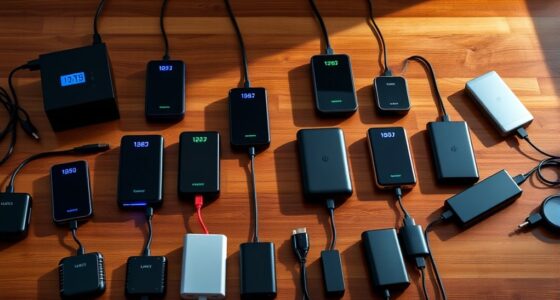

This checklist is for home mechanics building or refreshing a practical set of tools for routine automotive work. It can help you think through what you need before adding equipment to your garage, whether you are starting with hand tools or filling gaps in an existing setup.

Get business pricing on garage and car supplies
- Business-only prices and quantity discounts
- Tax-exempt purchasing
- Multiple users, one account, clear invoices
The sections are organized by tool category: a mechanic’s tool set, a floor jack, jack stands, a torque wrench, an OBD2 scanner, and a magnetic parts tray. Some sections include a named pick; others offer selection advice without naming a product.
Use each section to compare the recommendation or guidance with your vehicle and workspace. Check the tool’s specifications, your vehicle’s service information, and the work area before buying or using equipment, especially for tools involved in lifting or tightening parts.
Mechanic’s Tool Set
A mechanic’s tool set is a useful starting point for common repair tasks and routine maintenance. The named pick is the GEARWRENCH 89-Piece 120XP Mechanics Tool Set in Foam Tray, GWMS120CBMT. Before choosing any set, consider the fasteners and jobs you actually encounter: a large assortment is less useful if it lacks the sizes or drive types your work requires. Check the included pieces against your vehicle’s service information and the tools you already own.
A frequent buying mistake is treating the piece count as a measure of coverage. Counts do not tell you whether the set has the specific sockets, extensions, or other pieces needed for a particular task. Review the complete contents list, note any gaps, and confirm the drive sizes match your planned accessories. Also consider where the set will live and whether its storage format suits your toolbox or workbench. The product name specifies a foam tray; check its dimensions and layout against your available storage before purchasing.
For a good fit, make a short list of upcoming jobs and compare their tool requirements with the set’s stated contents. Confirm socket and wrench measurements in the units used by your vehicle’s fasteners, and keep a note of pieces you may need separately. Choose around actual tasks, not an impressive-sounding count.
What to look for:
- Compare the full contents list with your vehicle’s service information.
- Confirm included socket sizes and drive sizes suit planned work.
- Check whether needed extensions or accessories are included.
- Measure the foam tray against your storage space.
- List tools you already own to avoid unnecessary overlap.
GEARWRENCH 89-Piece 120XP Mechanics Tool Set in Foam Tray, GWMS120CBMTS

The GEARWRENCH 89-piece mechanics tool set includes 120XP flex-head ratchets, low-profile sockets, bits, and a bit-holding screwdriver in a foam storage tray. Its compact 3-degree swing arc and shallow socket design improve access to fasteners in tight spaces.
Pros:
- 120-position flex-head ratchets allow a 3-degree swing arc for tight spaces
- Low-profile sockets and compact head improve access to hard-to-reach fasteners
- Off-corner loading helps reduce fastener rounding
- Foam tray keeps tools organized for efficient workflow
Cons:
- Foam tray may require dedicated drawer space
- Flex-head ratchets may feel less rigid than fixed ratchets under heavy torque
Best for: Home mechanics comparing a named 89-piece set with their planned tasks
Not ideal for: Shoppers who need a specific socket or accessory without confirming it is included
Bottom line: Compare the GEARWRENCH set’s contents and tray dimensions with your work and storage needs before choosing it.
Low-Profile Floor Jack
A floor jack is one part of a vehicle-lifting setup, so selection starts with the vehicle’s requirements and the surfaces where you plan to work. The named pick is the Electric Floor Jack 3 Ton Low Profile Heavy Duty Steel Car Jack. Its name identifies it as electric, low profile, and 3 ton; verify the manufacturer’s specifications and instructions to understand its actual operating limits and requirements for your situation.
A common mistake is assuming that a jack’s capacity or low-profile description alone establishes compatibility. Check the vehicle’s weight information, approved lifting points, and the jack’s specified capacity and minimum and maximum height. Confirm that the jack can reach the intended lifting point and raise it enough for the planned task. Also check whether the jack’s footprint and approach clearance work in your garage. Follow the jack and vehicle instructions, and use properly rated jack stands to support a vehicle before working underneath it; a jack is for lifting, not a substitute for stands.
Before buying, review how the electric jack is powered and operated, along with any stated setup, maintenance, or storage requirements. For a low-clearance vehicle, compare the published minimum height with the measured clearance at the approved lifting point. Make the choice based on documented fit and safe support requirements, not the product name alone.
What to look for:
- Check the jack’s stated capacity against vehicle information.
- Compare minimum and maximum height with the approved lift point and task.
- Measure clearance at the intended approach and lifting point.
- Review power, operation, and maintenance instructions.
- Plan for properly rated jack stands and follow vehicle lifting guidance.
Electric Floor Jack 3 Ton Low Profile Heavy Duty Steel Car Jack

This 3-ton electric floor jack features one-touch lifting with a high-capacity lithium battery, making vehicle maintenance effortless. Its low-profile design and heavy-duty steel construction allow for safe lifting of low-profile vehicles, SUVs, and trucks, with smooth descent and durable build quality.
Pros:
- One-touch electric lifting for ease of use
- Heavy-duty steel construction with high durability
- Suitable for low-profile vehicles, SUVs, and trucks
- Fast recharging in 2 hours
Cons:
- Limited to 15-30 lifts per charge depending on vehicle type
- Requires power source for operation
- Heavy weight may be difficult to move manually
Best for: Shoppers whose vehicle and workspace match the jack’s documented specifications
Not ideal for: Anyone who has not confirmed lifting points, clearance, and support equipment
Bottom line: Confirm capacity, height range, clearance, and operating requirements before relying on this electric low-profile jack.
Jack Stands
Jack stands provide support after lifting a vehicle, making them a separate and essential part of an under-vehicle work plan. This checklist has no named product for this slot, so compare stand specifications with your vehicle and the way you intend to lift it. Follow the vehicle’s service information for approved support points and the stand manufacturer’s instructions for placement and use.
A common mistake is buying stands based only on appearance or assuming a pair’s stated capacity can be interpreted without reading its labeling. Check the rated capacity and how the manufacturer describes it, along with the stand’s height range and the support saddle shape. Confirm that the stands can reach the vehicle’s approved support points while keeping the vehicle stable on the work surface. Do not work beneath a vehicle supported only by a floor jack. Use stands on an appropriate, firm, level surface and make sure each one is correctly positioned and engaged as directed.
Fit depends on both the vehicle and the job: a stand that reaches one support point may not suit another, and required working clearance can vary. Check the vehicle’s approved support locations, compare them with the stand design, and confirm the height range leaves usable access without compromising placement. Inspect stands before use and follow their instructions every time.
What to look for:
- Read the stand’s capacity labeling and manufacturer guidance.
- Compare height range with approved vehicle support points.
- Check saddle shape and placement compatibility for the vehicle.
- Use stands on a firm, level surface as instructed.
- Inspect each stand and confirm correct positioning before working underneath.
Torque Wrench
A torque wrench helps you tighten specified fasteners to the torque values in service information. The named pick is the Tekton 1/4, 3/8, 1/2 Inch Drive Micrometer Torque Wrench Set. Its name identifies three drive sizes and a micrometer style, but you should confirm the actual ranges, units, and instructions for each wrench before choosing it for particular work.
A common mistake is assuming that a set covers every torque value or that drive size alone determines suitability. Look up the specified torque for the fasteners you plan to service, then compare those values with each wrench’s published range and unit scale. Confirm that the value falls within the manufacturer’s stated operating range and that the drive size works with the socket or accessory needed. Avoid using a torque wrench as a general breaker bar, and follow the maker’s directions for setting, use, storage, and any calibration guidance.
For fit, check whether the scale is readable in the units used by your service information and whether the wrench can be operated in the available space. Consider how the three sizes divide the tasks you expect to do; do not infer overlapping ranges from the product name. Keep task-specific records of torque specifications and verify the instructions for each tool before tightening.
What to look for:
- Compare published torque ranges with your vehicle’s service specifications.
- Confirm the wrench scale uses units you can read and apply correctly.
- Match each drive size to the sockets and access needed for planned tasks.
- Review setting, use, storage, and calibration instructions.
- Check clearance and handle access at the fasteners you expect to service.
Tekton 1/4, 3/8, 1/2 Inch Drive Micrometer Torque Wrench Set

This set includes three calibrated micrometer torque wrenches with 1/4, 3/8, and 1/2 inch drives, each with a certified accuracy within ±3%. Designed for precision and control, the wrenches feature easy-to-read scales, secure locking collars, and durable cases for safe transport.
Pros:
- Calibrated to ISO standards with certified accuracy within ±3%
- Includes multiple drive sizes for versatile use
- Durable cases for safe transport and storage
- Easy-to-read laser-marked scales
Cons:
- No thumb knob for locking adjustment
- Requires careful handling to maintain calibration
- Limited to specific torque ranges
Best for: Mechanics whose required torque values fit the set’s documented ranges
Not ideal for: Anyone who has not checked torque specifications and tool ranges
Bottom line: Verify each wrench’s range, units, and instructions against the fasteners you plan to service.
OBD2 Scanner
An OBD2 scanner can help you retrieve vehicle diagnostic information, but the right choice depends on your vehicle and needs. No product is specified for this section. Before shopping, identify the vehicle’s year, make, model, and the information you want to access. Then compare those details with the scanner maker’s compatibility information and feature descriptions rather than assuming every scanner provides the same functions.
A frequent buying mistake is treating code retrieval as a complete diagnosis. A code can point toward a system or condition to investigate; it does not, by itself, prove which part has failed. Check what data and functions the scanner actually supports, whether it works with your vehicle, and whether its instructions explain how to interpret results. If you need functions beyond reading and clearing codes, verify that capability explicitly. Also consider screen readability, controls, and how the scanner connects, using the product documentation to confirm the details.
For a practical fit, write down the jobs you expect the scanner to support, such as checking a warning light or viewing a particular kind of data, and compare them with stated features. Confirm compatibility for the specific vehicle, including any limitations listed by the manufacturer. Keep diagnostic context in mind: use service information and appropriate testing to investigate results, rather than replacing parts based on a code alone.
What to look for:
- Confirm compatibility with the vehicle’s year, make, and model.
- Check that supported functions match the diagnostic tasks you expect.
- Verify whether the scanner supports the data or systems you need.
- Review connection, controls, display, and operating instructions.
- Use codes as diagnostic information alongside service guidance and testing.
Magnetic Parts Tray
A magnetic parts tray gives small metal pieces a dedicated holding place during a job, which can make it easier to keep track of fasteners as you remove them. The named pick is the Titan 21262 Magnetic Parts Tray (10.5 x 11.5 inches). Its stated dimensions offer a starting point for judging the footprint, but check the product details and your workspace to decide whether that size suits your tasks.
A common mistake is choosing a tray without considering where it will sit or what it needs to hold. Measure the available bench or vehicle-side space, and think about whether the tray’s footprint fits without obstructing tools or access. Confirm the product’s construction and magnetic details from its listing, and consider the kinds of parts you handle. A magnetic tray is for compatible items; it does not replace labeling, sorting, or careful handling of nonmagnetic pieces. Keep components organized by location or step so they can be returned correctly.
For a good fit, compare the 10.5 x 11.5 inch dimensions with the working area and the quantity of small parts from a typical task. Consider whether you need one tray or separate containers for different jobs, and make a plan for identifying parts during disassembly. Use clear organization to avoid mixing fasteners, and keep the tray stable and within reach while you work.
What to look for:
- Compare the 10.5 x 11.5 inch footprint with available workspace.
- Check product details for the magnetic features and construction.
- Consider the size and quantity of parts from your typical tasks.
- Plan separate organization for nonmagnetic or easily mixed pieces.
- Position the tray where it stays accessible without blocking work.
Titan 21262 Magnetic Parts Tray (10.5 x 11.5 inches)

The Titan 21262 magnetic parts tray measures 10.5 by 11.5 inches with a 1-inch depth, constructed from durable stainless steel. It securely holds hardware, fasteners, and small parts, sticking to ferrous metal surfaces with a non-marring rubber-covered magnetic base.
Pros:
- Large size provides ample space for parts
- Strong magnetic base ensures secure attachment
- Stainless steel construction offers durability
- Non-marring rubber coating prevents surface damage
Cons:
- Magnetic base may not stick to non-ferrous surfaces
- Limited to ferrous metal surfaces only
Best for: Home mechanics with workspace for the stated tray dimensions
Not ideal for: Anyone whose work area cannot accommodate its footprint
Bottom line: Check the Titan tray’s dimensions and product details against your workspace and parts-organizing habits.
Build in a task-first order: start with the hand tools needed for work you already plan to do, then choose lifting equipment only after confirming vehicle fit and safe support requirements. Add a torque wrench when your service tasks call for specified tightening values, and choose a scanner after identifying the diagnostic functions and vehicle coverage you need. A parts tray can support organization as your work expands.
You do not need to assemble everything at once. Use your vehicle’s service information to guide each choice, check product specifications carefully, and add tools as real jobs require them. A considered checklist can help you build a garage setup that fits your work and gives you a clear next step.
Columbus Day / Indigenous Peoples' Day Picks
long weekend sales
As an affiliate, we earn on qualifying purchases.