
To understand your pay stub and deductions, start by checking your gross pay, which shows your total earnings before any deductions. Then, review each line item, including taxes, benefits, and other withholdings like Social Security and Medicare. Make sure they match your current elections and rates. Look for updates or errors, especially if your personal situation has changed. Keep exploring the details, and you’ll gain clearer insight into your pay and deductions.
Key Takeaways
- Review your pay stub to identify gross pay, taxes, and benefit deductions for a clear financial overview.
- Understand the difference between gross pay (total earnings) and net pay (take-home amount).
- Check tax codes and withholding allowances to ensure correct federal, state, and local tax deductions.
- Verify benefit deductions like health insurance or retirement contributions match your enrollments and recent changes.
- Regularly examine your pay stub for accuracy, including rates for Social Security, Medicare, and any variable components.
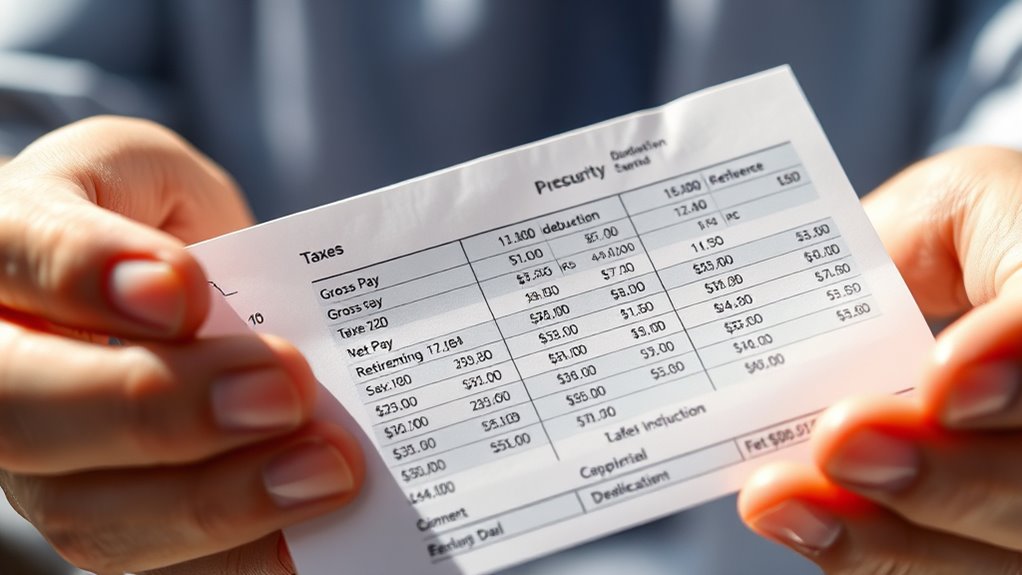
Understanding how to read a pay stub is essential for managing your finances and ensuring you’re paid correctly. When you look at your pay stub, one of the first things to understand is the way taxes are deducted. Your employer uses tax codes to determine how much federal, state, and local taxes to withhold from your paycheck. These tax codes are based on your filing status, allowances, and any additional withholding instructions you’ve provided. If your tax codes aren’t accurate, you might find yourself owing money at tax time or giving the government more than necessary throughout the year. It’s important to review your pay stub regularly to confirm the correct tax codes are applied, especially if you’ve experienced a change in your personal circumstances, like getting married or having a child.
Next, take a look at your benefit options. Many employers offer benefits like health insurance, retirement plans, or flexible spending accounts, and these are often deducted directly from your paycheck. The pay stub will itemize these deductions, showing how much is taken out for each benefit. Understanding these deductions helps you see what you’re actually paying for and how it impacts your net pay. If you’ve recently changed your benefits or enrolled in new options, double-check that your pay stub reflects these changes correctly. Sometimes, errors happen, and catching them early can save you money and hassle later.
Review your pay stub for benefit deductions to ensure accuracy and reflect recent changes.
Your pay stub will also break down your gross pay, which is your total earnings before any deductions, and your net pay, which is what you actually receive after taxes and benefits are deducted. Knowing the difference helps you budget better and understand your income. Deductions like Social Security, Medicare, and unemployment insurance are usually fixed percentages, but the actual dollar amounts can vary depending on your gross pay. It’s worth reviewing these figures to ensure they align with current rates and to verify that no unauthorized deductions have been made. Additionally, being aware of how specialized candies or treats are prepared and their unique ingredients can sometimes influence health benefits or dietary considerations, which may be reflected in your benefits choices.
Finally, understanding your pay stub means paying attention to any additional items listed, such as overtime, bonuses, or reimbursements. These are part of your gross pay but could also be taxed differently or subjected to specific benefit options. By becoming familiar with how each component works, you gain better control over your financial health. Taking the time to understand your pay stub empowers you to identify errors, optimize your benefits, and plan your finances with confidence.
Frequently Asked Questions
How Are Taxes Calculated on My Paycheck?
You pay taxes on your paycheck based on tax brackets, which determine your income tax rate. Your employer calculates payroll taxes like Social Security and Medicare, which are a percentage of your earnings. These taxes are deducted automatically, and your overall tax rate depends on your income level and filing status. To understand your specific deductions, review your pay stub and see how the tax brackets and payroll taxes are applied to your earnings.
What Are Common Hidden Deductions on a Pay Stub?
Hidden deductions on your pay stub can sneak in like a wolf in sheep’s clothing. Common examples include insurance premiums, retirement contributions, or union dues. Sometimes payroll errors cause discrepancies, so review your deductions closely. These hidden costs can quietly chip away at your paycheck, so stay vigilant and ask questions if something doesn’t add up. Knowing deduction examples helps you spot when payroll errors might be affecting your earnings.
Can I Change My Tax Withholding Amount?
Yes, you can change your tax withholding amount. You just need to submit a new W-4 form to your employer for a tax adjustment or withholding change. This allows you to adjust how much federal income tax is taken out of your paycheck. Keep in mind that making a withholding change can impact your year-end tax return, so review your financial situation and consult a tax professional if needed.
Why Did My Net Pay Decrease This Period?
Your net pay decreased this period because of pay stub errors or deduction myths that led to higher withholdings. Check your pay stub carefully for any unexpected deductions or errors that could impact your net pay. Sometimes, incorrect tax withholding or benefit deductions cause reductions. Review your deductions, and if something seems off, consult your HR or payroll department to clarify or correct any pay stub errors.
How Do Benefits Like Health Insurance Affect Deductions?
Benefits like health insurance and voluntary benefits directly impact your deductions, lowering your net pay. When you choose health insurance, a portion of your paycheck goes toward premiums, supporting employee wellness. Voluntary benefits, such as dental or vision coverage, also reduce your take-home pay. These deductions promote your overall well-being, but it’s important to review your pay stub to understand how each benefit affects your net income.
Conclusion
Now that you know how to read your pay stub, you’re better equipped to understand where your money’s going. Think of it as a map guiding you through your earnings and deductions—each line revealing a story about your finances. Remember, your pay stub isn’t just a piece of paper; it’s a snapshot of your hard work and a tool to help you plan your financial future. Use it wisely, and watch your confidence grow!