Understanding flooring options like hardwood, laminate, vinyl, and tile helps you choose the best fit for your space. Hardwood offers timeless elegance but needs careful installation and maintenance. Laminate provides a budget-friendly, durable alternative with easy DIY installation. Vinyl is moisture-resistant and great for kitchens or bathrooms, while tile adds a classic, versatile look ideal for high-traffic areas. With the right knowledge, you can select, install, and care for your flooring confidently—learn more to make informed decisions.

Get business pricing on garage and car supplies
- Business-only prices and quantity discounts
- Tax-exempt purchasing
- Multiple users, one account, clear invoices
Key Takeaways
- Hardwood offers natural beauty and durability but requires proper acclimation, installation, and regular maintenance to prevent damage.
- Laminate flooring is easy to install with a click-lock system, resistant to scratches, and ideal for DIY projects.
- Vinyl flooring is moisture-resistant, suitable for kitchens and bathrooms, and easy to clean with gentle mops and sweeping.
- Tile flooring provides a durable, water-resistant surface, requiring precise installation, grout sealing, and periodic maintenance.
- Proper installation, routine cleaning, and protective measures extend the lifespan and preserve the appearance of all flooring types.
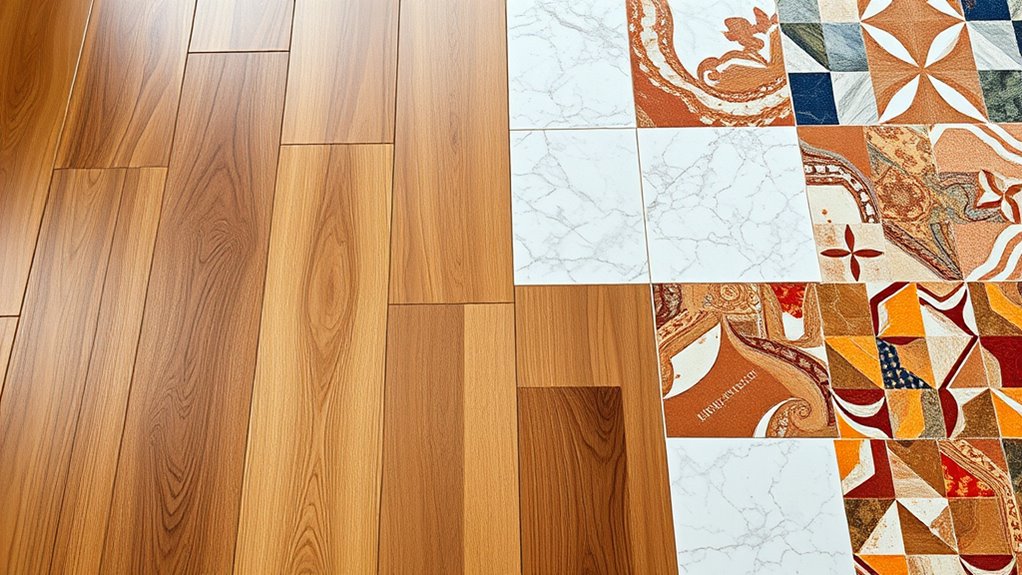
Are you considering new flooring but feeling overwhelmed by your options? It’s normal to feel a bit lost with so many choices like hardwood, laminate, vinyl, and tile. Each has its own look, durability, and installation requirements. To help you make the right decision, it’s important to understand not just the aesthetic appeal but also how to install and maintain your chosen flooring. Proper installation tips can ensure your floor looks great and lasts for years, while good maintenance routines keep it in top shape.
Choosing the right flooring involves understanding installation and maintenance for lasting beauty and durability.
When it comes to hardwood flooring, proper installation tips involve preparing a clean, level subfloor and leaving enough room for expansion. Hardwood needs to acclimate to your home’s humidity for at least 48 hours before installation. Use the right nails or adhesives suited for your specific type—whether solid or engineered hardwood—to avoid future issues like gaps or buckling. After installing hardwood, maintenance routines include regular sweeping to remove dirt, damp mopping with a manufacturer-approved cleaner, and avoiding excessive moisture. Applying protective pads under furniture prevents scratches, and refinishing every few years helps restore its luster.
Laminate flooring offers a more budget-friendly alternative that’s easier to install. It typically features a click-lock system, making it suitable for DIY projects. Follow the installation tips by ensuring your subfloor is smooth, dry, and clean to prevent unevenness or gaps. Laminate is resistant to scratches and moisture, but it’s still wise to use rugs in high-traffic areas. Maintenance routines involve sweeping or vacuuming regularly and damp mopping with a laminate-specific cleaner. Avoid excessive water, as it can cause the core to swell, and steer clear of harsh chemicals that might damage the surface.
Vinyl flooring is known for its versatility and water resistance. Installation tips include carefully measuring your space and cutting vinyl sheets or tiles precisely. For peel-and-stick vinyl, ensure the surface is thoroughly cleaned and smooth before application to prevent bubbles or lifting. Maintaining vinyl involves regular sweeping and damp mopping with gentle cleaners. Because vinyl is resistant to stains and moisture, it’s perfect for kitchens and bathrooms. To prolong its life, avoid abrasive tools that could scratch the surface and promptly clean spills to prevent damage.
Tile flooring offers durability and a wide range of styles. When installing tile, precise placement, using spacers, and proper adhesive application are essential installation tips. Be sure to level the surface beforehand to prevent uneven tiles. Grouting should be sealed to prevent stains and moisture penetration. Maintenance routines for tile include sweeping or vacuuming to remove debris and mopping with a pH-neutral cleaner. Grout lines require periodic sealing to keep them looking fresh and prevent dirt buildup. With proper care, tile floors can handle heavy foot traffic and maintain their appeal for decades.
Choosing the right flooring involves understanding how to install it correctly and maintain it properly. Following these tips ensures your floor remains beautiful and functional, no matter what material you select.
hardwood flooring installation kit
As an affiliate, we earn on qualifying purchases.
As an affiliate, we earn on qualifying purchases.
Frequently Asked Questions
Which Flooring Is Most Environmentally Friendly?
You’ll find that bamboo flooring is often the most eco-friendly choice because it uses sustainable materials and grows quickly. Look for options made from eco-friendly materials and those produced through sustainable manufacturing practices. By choosing bamboo or other sustainably sourced materials, you decrease your environmental impact. Always check for certifications like FSC or GreenGuard to verify the product adheres to eco-friendly standards, making your home greener and healthier.
How Do I Prevent Scratches on Hardwood Floors?
To prevent scratches on hardwood floors, you should use area rugs in high-traffic spots and under furniture to reduce wear. Always attach furniture pads to the bottoms of chairs and tables to prevent scratching when moving them. Keep pet nails trimmed, and avoid walking with high heels or rough shoes on the surface. Regularly sweep or vacuum to remove debris that could cause scratches, and consider using protective felt pads on heavy furniture.
Can Vinyl Flooring Be Installed in Bathrooms?
Think of vinyl flooring in bathrooms like a waterproof umbrella—you’ll want it to shield against moisture. Yes, vinyl installation works well in bathrooms because it’s resistant to bathroom moisture and water spills. I installed vinyl in my own bathroom last year, and it’s held up beautifully despite daily humidity. Just make certain proper sealing and ventilation to prevent damage and enjoy a durable, water-resistant surface that’s easy to maintain.
What Is the Average Lifespan of Laminate Flooring?
Laminate flooring typically lasts around 10 to 30 years, depending on maintenance and flooring durability. To extend its lifespan, you should regularly clean it with gentle methods and avoid excessive moisture. Proper laminate maintenance helps prevent scratches and water damage, ensuring your floors stay looking great longer. Keep in mind that high-traffic areas may wear faster, so consider adding protective pads and rugs to preserve the flooring’s integrity.
How Do I Maintain Tile Grout Cleanliness?
To maintain tile grout cleanliness, you should regularly clean the grout lines with a mixture of water and mild detergent or a specialized grout cleaner. Seal your grout periodically to prevent stains and moisture penetration. For stubborn stains, use a baking soda paste or stain removal products designed for grout. Always rinse thoroughly and dry to avoid mold. Sealing and stain removal keep your grout looking fresh and extend its lifespan.
Conclusion
Choosing the right flooring is like selecting the perfect dance partner—you want one that moves with your lifestyle and style. Hardwood, laminate, vinyl, and tile each bring their unique rhythm to your space. By understanding their beats, you can find the perfect match that keeps your home stepping in harmony. So, weigh your needs and preferences, and let your floors set the tempo for a beautiful, lasting performance every day.
Halloween Picks
halloween
As an affiliate, we earn on qualifying purchases.