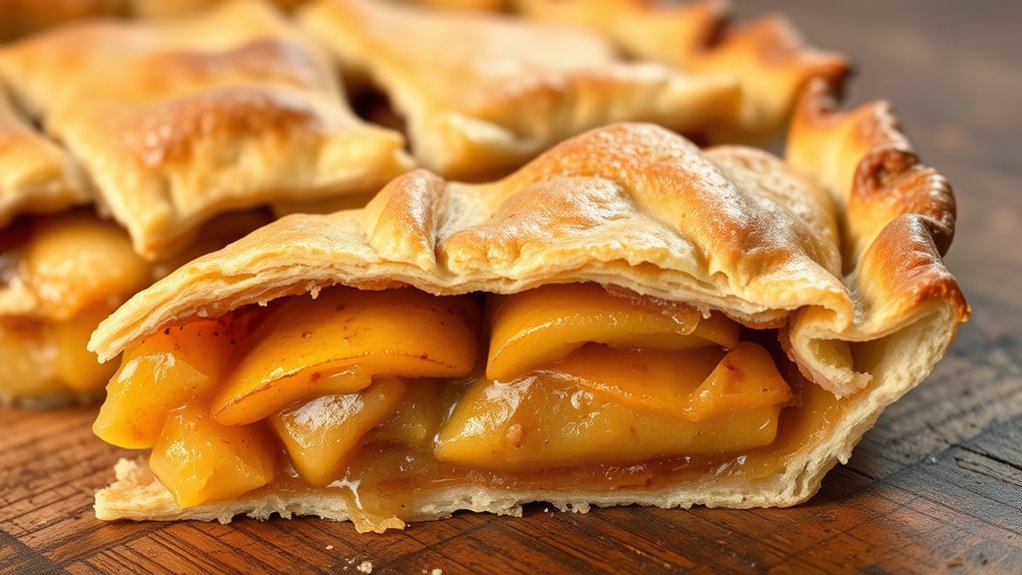

To achieve a flaky crust, combine cold fat with minimal handling to create layers that melt during baking, while controlling gluten development for tenderness. Juicy filling relies on caramelizing sugars, which enhances flavor and thickens the apples for that perfect bite. Proper oven temperature ensures the crust turns golden and flaky, and the filling develops a rich, caramel hue. Continue exploring these techniques to master the science behind spectacular apple pies.
Key Takeaways
- Proper cold fat incorporation and minimal mixing create layered, flaky crusts by preventing excessive gluten development.
- Gentle handling and balanced hydration produce tender crusts with optimal gluten structure for support and texture.
- Controlled oven temperature promotes caramelization in the filling, enhancing flavor, color, and slight thickening for juiciness.
- Sugar caramelization adds depth to the filling, balancing tartness and enriching overall taste, while avoiding burning.
- Chilling dough before baking halts gluten formation, ensuring a tender, flaky crust that complements the juicy, caramelized filling.
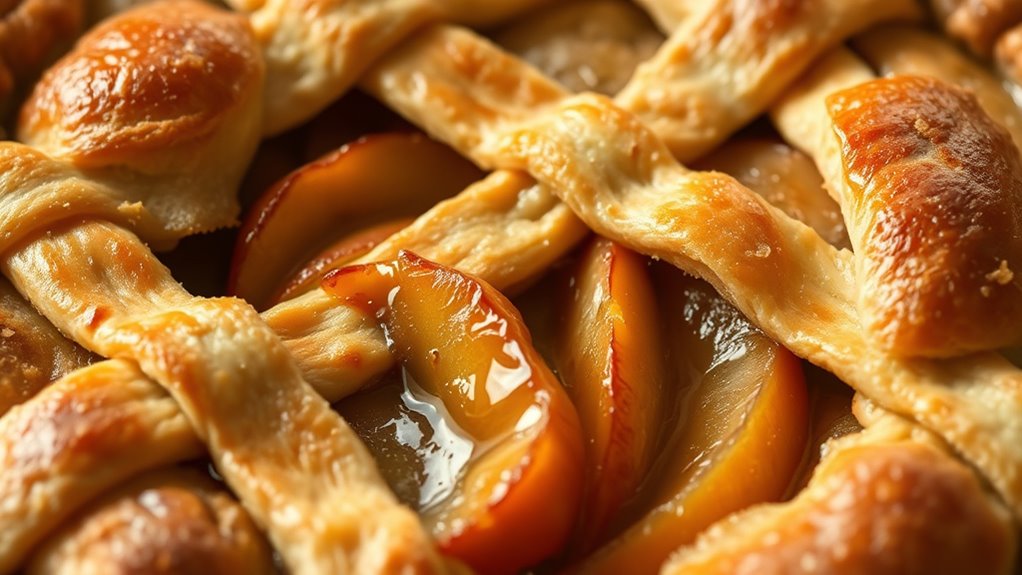
Have you ever wondered what makes a perfect apple pie? It’s not just about selecting the right apples or having a beautiful golden crust. There’s a fascinating science behind achieving that flaky crust and juicy filling that keeps everyone coming back for more. When you’re making your pie, understanding how gluten development and sugar caramelization work can elevate your baking to a whole new level.
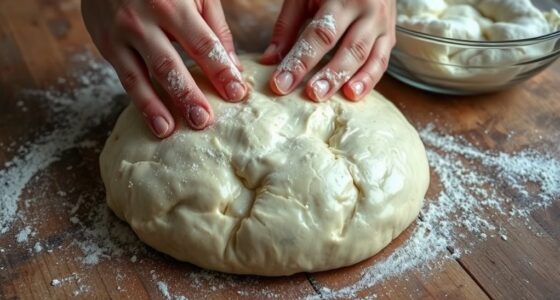
Gluten development is essential for creating a crust that’s tender yet sturdy enough to hold the filling. When you mix flour with fat and water, gluten proteins start to form a network that gives the dough its structure. But if you overmix, you risk developing too much gluten, resulting in a tough crust. To keep it flaky, you want to gently combine the ingredients just until they come together. The cold butter or shortening you incorporate creates layers within the dough. During baking, these layers separate as the fat melts, producing that irresistible flakiness. Proper gluten development ensures your crust isn’t crumbly or chewy but perfectly tender and crisp. Additionally, maintaining the right hydration level in your dough helps control gluten formation and contributes to the overall texture.
Gently mix ingredients for tender, flaky crust with layered, melt-in-the-mouth goodness.
Meanwhile, sugar caramelization plays a key role in adding depth and flavor to your pie. As the sugar in your filling heats up during baking, it undergoes a chemical change called caramelization. This process transforms the sugar into complex, rich flavors and gives your filling a beautiful, inviting color. The caramelized sugars also help thicken the filling slightly, giving it that luscious, syrupy consistency you love. Achieving the right level of caramelization involves controlling oven temperature and baking time. Too little, and your filling might be bland; too much, and it could burn, creating a bitter taste. When you balance these factors carefully, you develop a sweet, aromatic flavor that complements the tartness of your apples perfectly.
During baking, both gluten development and sugar caramelization work hand in hand. The crust becomes golden and flaky, thanks to the controlled gluten formation and the heat that causes the fat to melt and create layers. Simultaneously, the filling turns a rich, caramel hue as the sugars break down and release their deep flavors. Understanding these processes helps you make adjustments—like chilling your dough to stop gluten formation or monitoring oven temperature to perfect caramelization—that lead to a consistently excellent apple pie. So next time you bake, pay attention to how these science principles influence your outcome; they’re the secret behind that classic, irresistible apple pie everyone loves.
Frequently Asked Questions
How Does Altitude Affect Apple Pie Baking?
At high altitude, you’ll notice that apple pie bakes faster and the crust may be drier. To adapt, you should adjust baking time, reducing it slightly to prevent overbaking. Also, consider modifying your recipe for high altitude baking by adding a bit more liquid or decreasing sugar. These tweaks help make sure your pie turns out perfectly juicy and flaky, even in thinner air.
What Are Alternative Flours for Gluten-Free Crusts?
Gluten-free baking opens a world of possibilities, yet it’s often a balancing act. You can use alternative flour blends like almond, rice, or sorghum flour to craft a tender crust. These options offer a contrast to traditional wheat, providing unique textures and flavors. By experimenting with different blends, you create a crust that’s just as flaky and delicious, proving that gluten-free doesn’t mean compromising on taste or quality.
Can Certain Apple Varieties Improve Pie Juiciness?
Choosing the right apple variety can substantially enhance juiciness in your pie. Varieties like Fuji, Honeycrisp, and Braeburn are known for their high water content, which boosts juiciness. When you use these apples, you’re naturally improving juiciness enhancement in your pie, delivering a more luscious filling. Opting for these apple varieties ensures your pie remains moist and flavorful, delighting anyone who bites into it.
How Does Aging Influence Pie Crust Texture?
Aging considerably impacts pie crust texture, especially if you let the dough rest for at least 30 minutes—improving dough elasticity and resulting in a more tender, flaky crust. Studies show that resting times enhance gluten development, which helps maintain crust crispness during baking. You’ll notice that a rested crust holds together better and develops a desirable crunch, making your pie more enjoyable and professional-looking.
What Are the Best Techniques for Preventing Soggy Bottoms?
To prevent soggy bottoms, you should use lattice crust techniques that allow steam to escape and promote even baking. Additionally, applying blind baking tips like chilling the crust beforehand and pre-baking it with pie weights creates a sturdy base. Make sure to brush the crust with egg wash or a thin layer of chocolate to seal the surface, helping to keep moisture out and ensuring a crisp, flaky bottom every time.
Conclusion
Now that you know the secrets behind a flaky crust and juicy filling, you’re ready to master the art of apple pie. With patience, practice, and a touch of passion, your pies will impress and inspire. Remember, perfect pies come from persistence and the pursuit of pastry perfection. So, get your ingredients, embrace the process, and enjoy every delicious, delightful bite. Baking brilliance begins with belief—believe in your baking and bask in the beautiful, baked bounty!