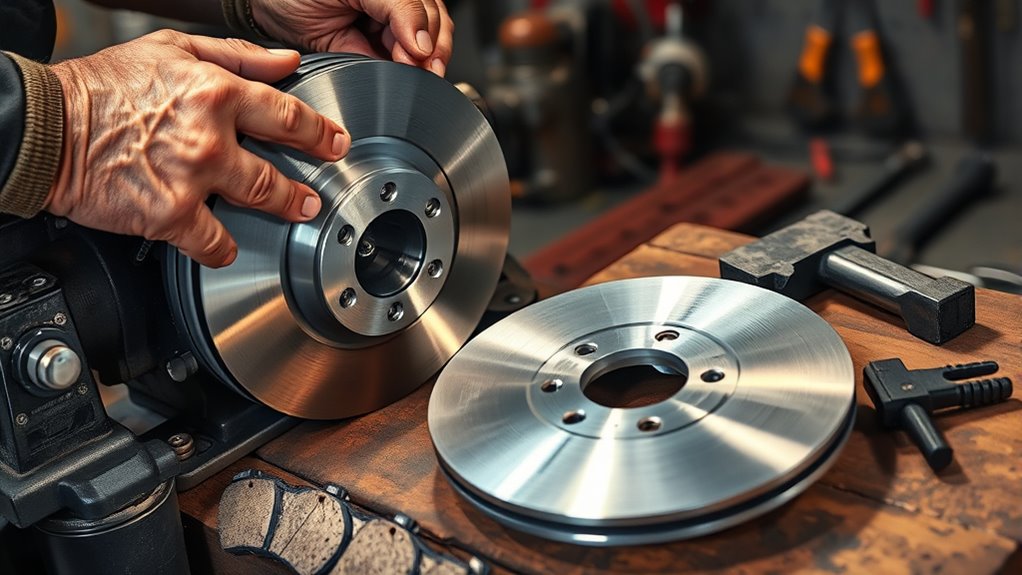

When deciding between brake lathing and rotor replacement, consider your rotor’s condition and budget. Lathing restores smoothness by resurfacing existing rotors, which works if they have minor wear or warping. However, if rotors are severely damaged or deeply scored, replacing them is better for safety and performance. Proper calibration during lathing is vital to avoid uneven braking or noise. To explore which option suits your vehicle best, keep going to discover more insights.
Key Takeaways
- Brake lathes resurface existing rotors to restore smoothness, while rotor replacement involves installing new rotors.
- Resurfacing is cost-effective for minor wear; replacement is necessary for severe warping or scoring.
- Proper calibration during resurfacing ensures safety, performance, and even rotor surface finish.
- Replacing rotors provides a fresh, reliable surface but is more expensive initially.
- The decision depends on rotor condition, budget, and the need for optimal safety and performance.
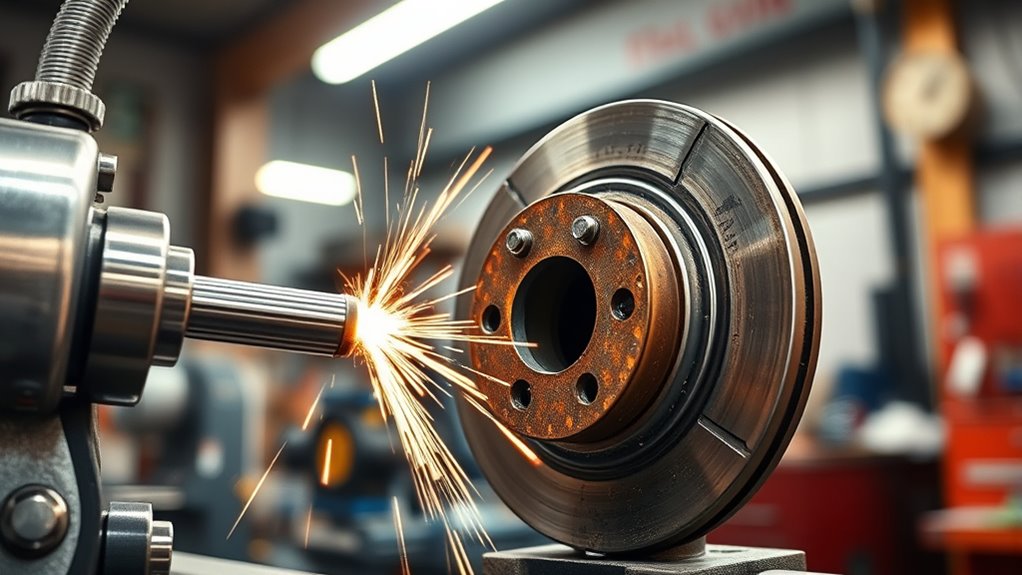
When deciding between using a brake lathe or replacing rotors, understanding their differences is fundamental for effective brake maintenance. A brake lathe is a tool that allows you to resurface existing rotors, restoring their smoothness and reducing vibrations caused by uneven wear. Conversely, rotor replacement involves installing new rotors, which can be necessary if the old ones are too warped or deeply scored. Choosing between these options depends on several factors, including the condition of your rotors and your budget. Proper calibration techniques play an essential role in guaranteeing the effectiveness of resurfacing with a brake lathe. Proper calibration of the lathe ensures that it aligns correctly with the rotor surface, producing a uniform finish. If the lathe isn’t calibrated properly, the resurfaced rotor may not perform best, leading to uneven braking or noise. Understanding how to properly calibrate the machine is critical, especially if you’re considering regular maintenance or multiple resurfacing jobs. This process involves precise measurements and adjustments that, over time, can improve the quality of your work and extend the lifespan of your rotors. Additionally, correct calibration ensures safety and optimal braking performance by preventing uneven wear and maintaining rotor integrity. Cost analysis is another key factor when deciding whether to resurface or replace rotors. Resurfacing with a brake lathe generally costs less upfront because it involves only the cost of the lathe operation and minimal parts. It’s a cost-effective solution if your rotors are slightly worn but still within manufacturer tolerances. However, if the rotors are severely warped, cracked, or below minimum thickness, resurfacing might not be a feasible option. In such cases, replacing the rotors, though more expensive initially, can prevent future safety issues and avoid the need for repeated resurfacing. It’s important to weigh the cost of resurfacing multiple times versus investing in new rotors, especially considering the long-term safety and performance. While a brake lathe offers a quick fix and can save money, it requires proper calibration techniques to achieve the best results. Misaligned resurfacing can lead to uneven braking, increased wear, or noise, which may end up costing you more in repairs later. On the other hand, rotor replacement ensures you start fresh with a new, smooth surface, but this comes at a higher initial expense. Ultimately, your decision should factor in the current condition of your rotors, your budget constraints, and your ability to perform or access proper calibration techniques. Doing so ensures you make a choice that balances safety, performance, and cost-effectiveness.

HayWHNKN Brake Disc Drum Lathe φ180-350mm Automobile Brake Hub Plate Repair Machine Car Brakes Cutting Lathe with Variable Frequency Speed Control 110V 550W
- High Efficiency: Fast processing of brake drums and discs
- Simple Operation: One-key start with easy controls
- Self-Acting Feed: Improves precision and stability
As an affiliate, we earn on qualifying purchases.
As an affiliate, we earn on qualifying purchases.
Frequently Asked Questions
How Do I Know When to Replace Rotors Instead of Turning Them?
You should replace your rotors if their thickness has worn below the minimum specified limit or if surface scoring is deep and can’t be smoothed out by turning. Measure rotor thickness with a micrometer, and check for uneven wear or cracks. If turning doesn’t restore a smooth surface or the rotor is too thin, it’s safer to substitute them to ensure proper braking performance and avoid safety risks.
Can Brake Lathes Be Used for All Vehicle Types?
Think of a brake lathe as a versatile craftsman, but even he has his limits. You might wonder if it can handle all vehicle types; the answer depends on vehicle compatibility and lathe limitations. While many lathes work on cars and light trucks, heavy-duty vehicles or specialized brakes may require different tools. Always check the lathe specs to make sure it’s suitable for your vehicle’s size and brake system.
What Are the Signs of Uneven Rotor Wear?
You’ll notice uneven rotor wear when your brakes pulsate or vibrate during stops. Rotor corrosion can cause rough spots, leading to uneven pad contact. If you see visible grooves, scoring, or rust buildup, these also signal uneven wear. Regularly inspecting your rotors helps catch issues early. Uneven pad wear often accompanies these signs, so addressing corrosion and wear promptly ensures peak brake performance and safety.
How Long Does a Brake Lathe Operation Typically Take?
You can expect a brake lathe operation to take about 30 minutes to an hour, depending on your vehicle’s make and model. While you’re at it, it’s a good idea to contemplate brake lathe maintenance to ensure everything runs smoothly. Keep in mind, rotor replacement costs might be higher if the rotors are too warped or damaged, so balancing these options helps you save time and money in the long run.
Are There Safety Concerns With Using a Brake Lathe at Home?
Using a brake lathe at home can pose safety risks if you’re not careful. Always wear personal protective equipment like safety glasses and gloves to protect yourself from debris. Make sure the equipment is properly calibrated before use to guarantee safe operation. Keep the workspace clean, follow the manufacturer’s instructions, and stay alert. Taking these precautions helps prevent accidents and ensures you work safely with the brake lathe.
Conclusion
Choosing between a brake lathe and rotor replacement depends on your situation, but consider this: resurfacing your rotors with a lathe can save you up to 70% compared to full replacement. If the rotors are still within specs, a brake lathe is a smart, cost-effective choice that extends their life. Ultimately, understanding your rotor’s condition helps you make the best decision, saving you money and ensuring your brakes perform safely.