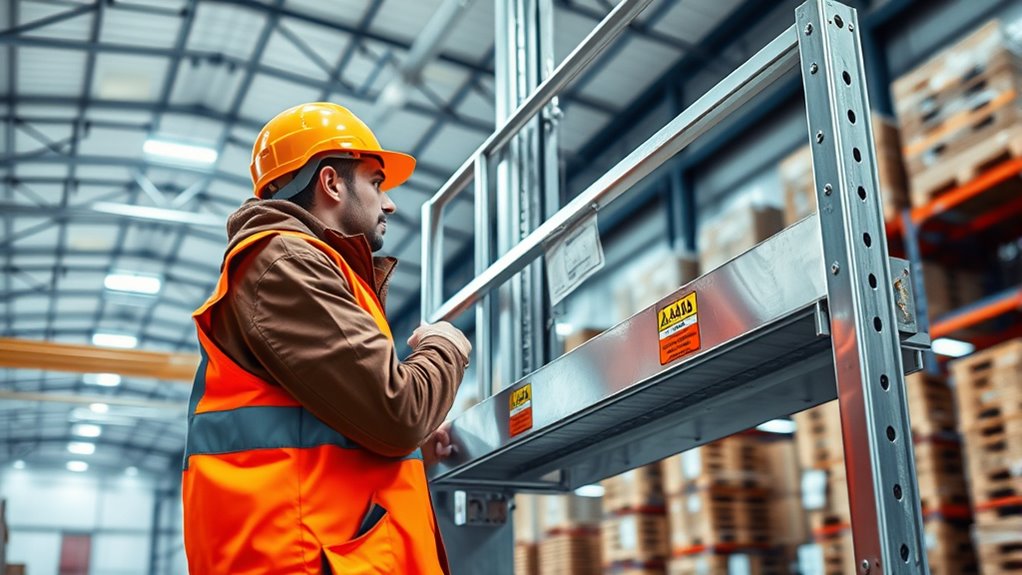

To guarantee lift safety and procedures, you should always follow clear protocols, perform pre-operation inspections, and communicate effectively with your team. Make sure you’re trained on load limits, safety devices, and emergency steps, and never exceed rated capacities. Your proactive approach and adherence to safety guidelines help prevent accidents, protect everyone involved, and promote a safe work environment. Continuing to explore these practices will give you even more insight into maintaining safe lifting operations.
Key Takeaways
- Conduct thorough pre-operation inspections and verify all safety devices are functioning properly.
- Ensure all personnel are trained on equipment use, load limits, and emergency procedures before operation.
- Maintain clear communication among team members throughout lifting activities to prevent misunderstandings.
- Follow established emergency protocols promptly to minimize risks during unexpected incidents.
- Foster a safety-conscious culture where shared responsibility and ongoing training promote safe lifting practices.
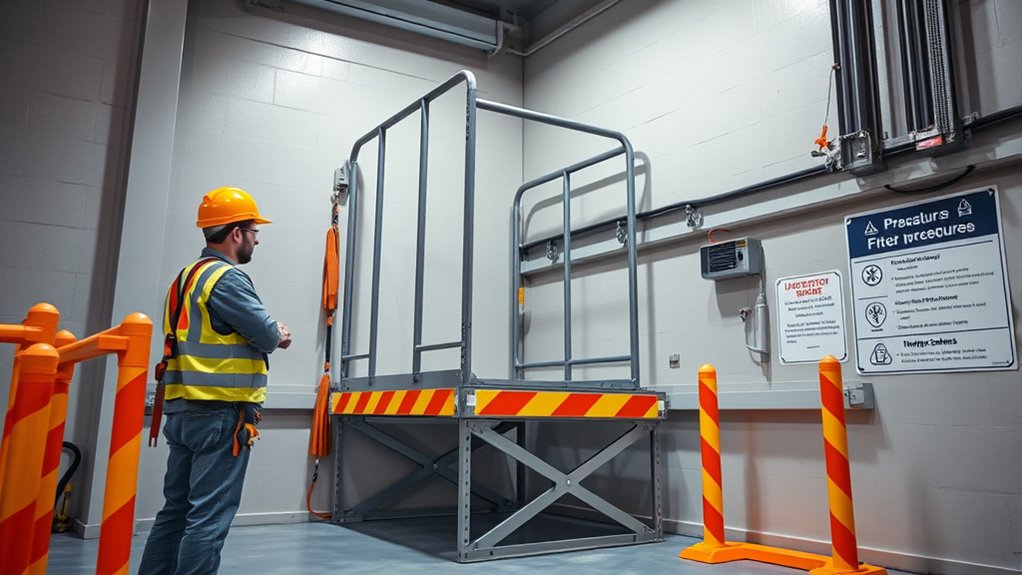
Lift safety is fundamental to prevent accidents and guarantee smooth operations. When working with lifting equipment, understanding and following proper procedures can make all the difference. One of the most critical aspects of ensuring safety is knowing the emergency protocols. These protocols are designed to guide you through unexpected situations, such as equipment failure, power outages, or accidents involving personnel. Familiarizing yourself with these procedures beforehand ensures you’re prepared to respond swiftly and effectively, minimizing risks and preventing injuries. Emergency protocols should be clearly outlined, easily accessible, and regularly reviewed with all team members. This way, everyone knows their role in an emergency, which helps to avoid confusion and delays during critical moments.
Alongside knowing what to do in emergencies, adhering to training requirements is fundamental. Proper training provides the knowledge and skills needed to operate lifting equipment safely. It covers everything from inspecting the machinery before use to understanding load capacities and signaling procedures. Training requirements can vary depending on the type of lift and the environment, but they generally include both theoretical instruction and practical experience. When you’re well-trained, you’re less likely to make mistakes that could cause accidents. Additionally, ongoing training sessions are important to keep skills sharp and update you on new safety protocols or equipment. Employers are responsible for ensuring that all personnel involved in lifting operations complete the necessary training before handling equipment. This not only complies with safety regulations but also fosters a culture of safety awareness. Incorporating advanced techniques can further enhance safety practices and operational efficiency.
It’s essential that you approach lift safety with a proactive mindset. This involves conducting thorough pre-operation inspections, ensuring that all safety devices are in place and functioning correctly. Always verify that you understand the load requirements and never exceed the rated capacity of the lift. Maintaining clear communication with your team during operations helps prevent misunderstandings that could lead to mishaps. If an emergency arises, following established protocols swiftly can prevent escalation. Proper training enables you to recognize potential hazards early and take preventive actions, reducing the likelihood of accidents. Remember, safety is a shared responsibility, and adhering to training requirements along with knowing emergency protocols ensures everyone returns home safely at the end of the day.

Aerial Lift Daily Inspection Checklist Book: Aerial Lift & Scissor Lift Inspection Forms | Daily Equipment Safety Checklist | Maintenance Log for … Sites | 6 x 0.23 x 9 inches , 100 Pages
As an affiliate, we earn on qualifying purchases.
As an affiliate, we earn on qualifying purchases.
Frequently Asked Questions
How Often Should Lift Safety Training Be Refreshed?
You should refresh your lift safety training every three years or sooner if regulations change or if you notice a decline in safety practices. Regular refresher courses ensure you stay updated on best practices and new protocols. It’s essential to prioritize ongoing education to maintain a safe work environment. By keeping your training current, you’ll be better prepared to handle lift operations safely, reducing risks and promoting a safer workplace for everyone involved.
What Are Common Signs of Lift Malfunction?
You should look out for common signs of lift malfunction during regular inspections. These include unusual noises, slow or jerky movements, warning lights, and visible damage like cracks or worn cables. Always follow safety protocols and perform thorough lift inspections frequently. If you notice any of these signs, stop using the lift immediately and report the issue. Prompt action helps prevent accidents and guarantees safe operation.
How Do Weather Conditions Affect Lift Operation?
Did you know that 60% of lift accidents happen during adverse weather? Weather impact can substantially affect lift operation, especially in extreme conditions like high winds, rain, or snow. Climate considerations are vital, as they can cause equipment to malfunction or become unsafe. Always check weather forecasts and follow protocols, since poor weather can compromise lift stability, endangering users and staff alike. Stay vigilant and prepared for changing weather conditions.
Who Is Responsible for Routine Lift Maintenance?
You are responsible for routine lift maintenance, including conducting lift inspections and identifying when component replacement is necessary. Regular inspections help catch potential issues early, ensuring the lift operates safely and efficiently. If you notice any worn or damaged parts, you must replace components promptly to prevent failures. Staying proactive in maintenance keeps everyone safe and maintains compliance with safety standards, reducing the risk of accidents or downtime.
What Emergency Procedures Are in Place for Lift Failures?
Did you know that 90% of lift failures are preventable with proper procedures? In emergencies, you should follow established emergency protocols, which include stopping the lift immediately, alerting maintenance, and evacuating passengers safely. Lift failure protocols prioritize quick actions to minimize risk, so always stay calm, communicate clearly, and follow your training. Knowing these procedures helps guarantee everyone’s safety during unforeseen lift malfunctions.

NEIKO 20736A (6) Piece Set, Magnetic Tool & Telescoping Mirror Set, Adjustable Telescoping Magnetic Pickup Tool, Flashlight 15lb Retriever Tool, 360 Swivel, Magnet Mirror, Magnetic Tools for Mechanic
EXTENDABLE MAGNET PICKUP TOOL: Various Expandable lengths, up to nearly 3 feet! Strong magnet to sweep and be…
As an affiliate, we earn on qualifying purchases.
As an affiliate, we earn on qualifying purchases.
Conclusion
By following these lift safety procedures, you protect yourself and everyone around you—your vigilance can prevent accidents that could change lives forever. Remember, neglecting safety isn’t just risky; it’s like playing with fire in a fireworks factory. Keep safety top of mind, stay alert, and always prioritize proper procedures. Your commitment could be the difference between a safe day and a catastrophe that echoes for a lifetime. Stay safe, stay vigilant, and always respect the power of lifts.

Aerial Lift Certification Training Kit – OSHA Compliant Aerial Lift Operator COMPLETE Training With Certificates Of Completion, Operator Cards, Student Hand Outs, Hands On Evaluation Checklist & More
BUY ONCE & GET FREE TEMPLATES FOR LIFE TO TRAIN ALL YOUR EMPLOYEES!
As an affiliate, we earn on qualifying purchases.
As an affiliate, we earn on qualifying purchases.

Gifdeeha Emergency Shower Sign, Signage White/Red Plastic Acrylic, 10" X 3' with Double Side Tape, Adhesive, Easy Mounting
Size:Our Signs Feature An Eye-Catching Design To Ensure That They Attract The Attention Of Everyone Who Passes By…
As an affiliate, we earn on qualifying purchases.
As an affiliate, we earn on qualifying purchases.