
A calibration technician is a skilled professional responsible for ensuring that measurement instruments and equipment give accurate, reliable data. You verify that tools work correctly, adjust them when needed, and perform routine maintenance to prevent issues. By following strict standards and documenting your work, you help maintain quality, safety, and compliance across various industries. If you want to understand what it takes to keep measurement tools on point, you’ll find helpful details ahead.
Key Takeaways
- A calibration technician ensures measurement instruments provide accurate and reliable data through calibration and maintenance.
- They verify and adjust equipment using traceable standards to meet industry accuracy and safety requirements.
- Their role involves routine inspection, cleaning, and preventive maintenance to extend instrument lifespan.
- They document calibration activities to ensure compliance and traceability during audits and inspections.
- They play a vital role in maintaining quality, safety, and operational efficiency across various industries.
A calibration technician plays a essential role in ensuring that precision instruments and equipment provide accurate measurements. Your main responsibility is to verify that the tools used in various industries—such as manufacturing, aerospace, healthcare, and research—are functioning correctly. When you perform calibration, you’re adjusting and fine-tuning equipment so it delivers precise results. This process directly impacts measurement accuracy, which is indispensable for maintaining quality standards, safety, and compliance with regulations. If instruments aren’t properly calibrated, the data they produce can be flawed, leading to errors, costly mistakes, or safety hazards. That’s why your work as a calibration technician is so critical.
To do your job effectively, you need to understand the importance of equipment maintenance. Regular calibration is a key aspect of maintaining equipment, but it’s just one part of a complete maintenance program. You routinely inspect, clean, and service instruments to prevent drift or degradation over time. By performing preventive maintenance, you help extend the lifespan of equipment, reduce downtime, and ensure that measurements stay within acceptable tolerances. When you catch issues early through routine checks, you prevent larger problems from developing, which ultimately saves your organization money and keeps operations running smoothly.
Your work involves a detailed understanding of different calibration procedures, tools, and standards. You often work with traceable standards, which are benchmarks that are internationally recognized for their accuracy. Using these standards, you compare the readings of the equipment you’re calibrating to ensure they match the known values. If discrepancies are found, you adjust the instruments accordingly. This meticulous process guarantees that measurements are reliable and consistent over time. Your expertise ensures that the equipment maintains measurement accuracy, which is indispensable for quality control and regulatory compliance. Additionally, understanding the color accuracy of calibration instruments can be crucial for specific applications requiring precise visual measurements.
Moreover, as a calibration technician, you must stay updated with industry standards and technological advancements. This may involve continuous training and certification to keep your skills sharp. You also document all calibration activities meticulously, creating records that serve as proof of compliance during audits or inspections. Your attention to detail ensures that all calibration activities are traceable and verifiable, adding an extra layer of confidence in the equipment’s performance.
In essence, your role combines technical skill, precision, and diligence. You’re the backbone of accurate measurement in your workplace, safeguarding the integrity of data, maintaining equipment health, and supporting overall operational excellence. Your work ensures that every measurement taken is trustworthy, which is fundamental to making informed decisions, maintaining safety standards, and achieving quality in your organization.
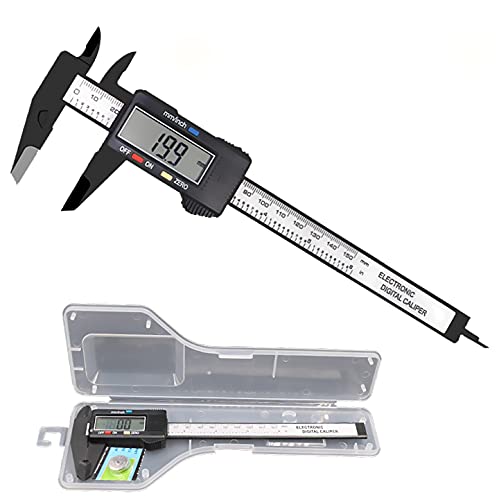
Digital Caliper, inch and Millimeter Conversion,LCD Screen displays 0-6" Caliper Measuring Tool, Automatic Shutdown, Suitable for DIY/Jewelry Measurement
- Multiple Measurement Modes: Inner, outer, depth, and step measurements
- Safe Plastic Pins: No short circuit risk during measurement
- High Measurement Accuracy: Range: 0-6 inches, ±0.2mm precision
As an affiliate, we earn on qualifying purchases.
As an affiliate, we earn on qualifying purchases.
Frequently Asked Questions
What Certifications Are Required to Become a Calibration Technician?
You typically need certifications like the ISO 17025 proficiency testing or specific calibration standards training. Completing technician training programs helps you gain practical skills and knowledge required for calibration tasks. These certifications demonstrate your competence in maintaining calibration standards and guarantee you’re qualified to perform precise measurements. By acquiring these credentials, you show employers you’re capable of maintaining high accuracy and quality in calibration processes.
How Does Calibration Impact Quality Control Processes?
Think of calibration as a compass guiding your quality control journey. It guarantees measurement accuracy, so you can trust your data and maintain compliance standards. By regularly calibrating equipment, you prevent errors that could compromise product quality, reduce waste, and meet regulatory requirements. This process acts as a safeguard, keeping your operations aligned with industry standards and ensuring your products consistently meet customer expectations and safety regulations.
What Industries Most Commonly Employ Calibration Technicians?
You’ll find calibration technicians most commonly employed in industries like manufacturing, aerospace, healthcare, and automotive. They guarantee measurement accuracy through precise calibration and regular equipment maintenance, which is crucial for maintaining quality standards. These industries rely heavily on accurate measurements to meet safety and regulatory requirements. As a calibration technician, your role is essential for keeping equipment reliable and ensuring products and services meet strict industry specifications.
How Often Should Calibration Be Performed on Measuring Equipment?
You should calibrate your measuring equipment as often as necessary to guarantee peak measurement accuracy and flawless equipment maintenance. Typically, this means performing calibration every six months to a year, but critical tools may need monthly checks. Ignoring calibration risks catastrophic errors and compromised safety. Regular calibration keeps your equipment precise, preventing costly mistakes and ensuring your processes stay reliable and compliant. Don’t wait for errors—calibrate proactively!
What Tools and Software Do Calibration Technicians Typically Use?
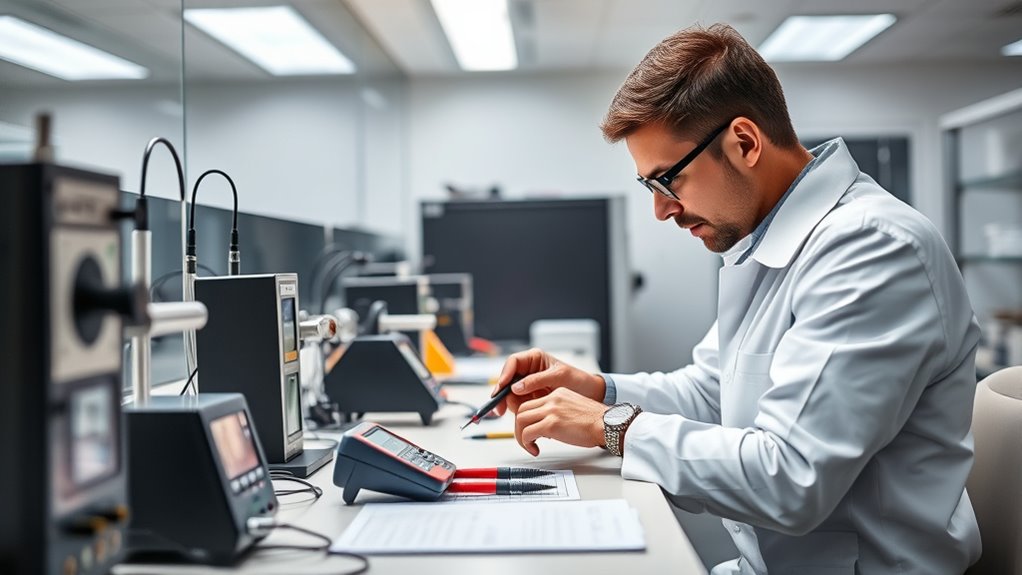
You typically use precise tools like oscilloscopes, multimeters, and specialized calibration equipment to guarantee measurement standards are accurate. Software programs assist in managing calibration procedures, recording results, and generating reports. These tools help you verify that measuring instruments meet required standards, maintain accuracy, and comply with regulations. By using the right tools and software, you ensure calibration procedures are thorough, consistent, and reliable, maintaining the integrity of your measurement processes.
Conclusion
As a calibration technician, you guarantee precision in a world driven by accuracy. While your work may seem routine, it holds the power to prevent failures and save lives. In the quiet hum of instruments, you balance reliability with complexity, knowing that your skill keeps everything running smoothly. It’s a simple task with profound impact—reminding you that even the smallest calibration can shape the larger picture of safety and trust.