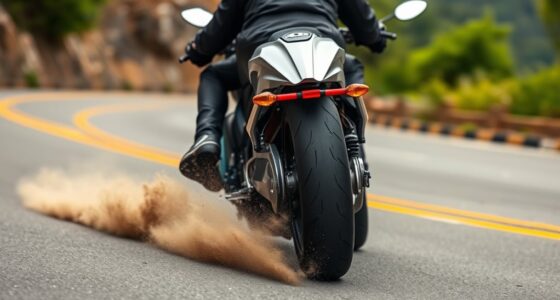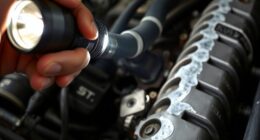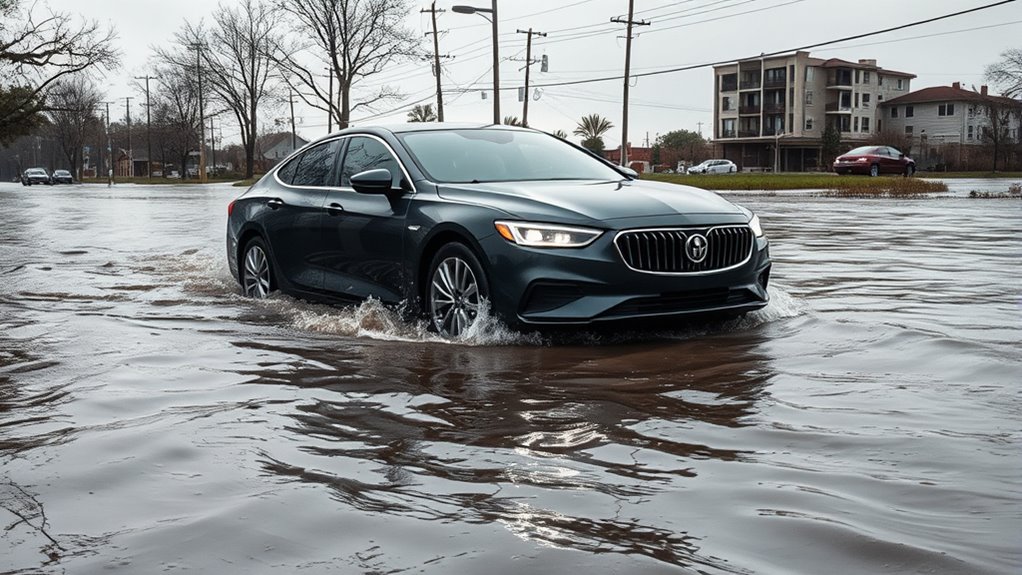

After flood exposure, don’t jump into driving right away. Carefully inspect your vehicle for signs of water damage; check the exterior, interior, and critical systems like brakes and fluids. Look for corrosion, mud, or debris, and make certain lights and visibility are clear. Avoid driving if you notice any issues or if the vehicle feels unsteady. Properly evaluating and repairing your car can prevent accidents and costly damage—continue to learn the essential steps to keep safe.
Key Takeaways
- Conduct a thorough exterior and interior inspection for water damage, mud, debris, or corrosion before attempting to drive.
- Check critical systems such as brakes, fluids, lights, and signals to ensure proper function and detect any water contamination.
- Avoid driving if interior moisture, mold, or electrical issues are present; seek professional assessment if needed.
- Test brakes carefully in a safe area for responsiveness and noise, and confirm visibility and lighting functions.
- Prioritize safety by inspecting the vehicle thoroughly and delaying driving until all damages or risks are addressed.
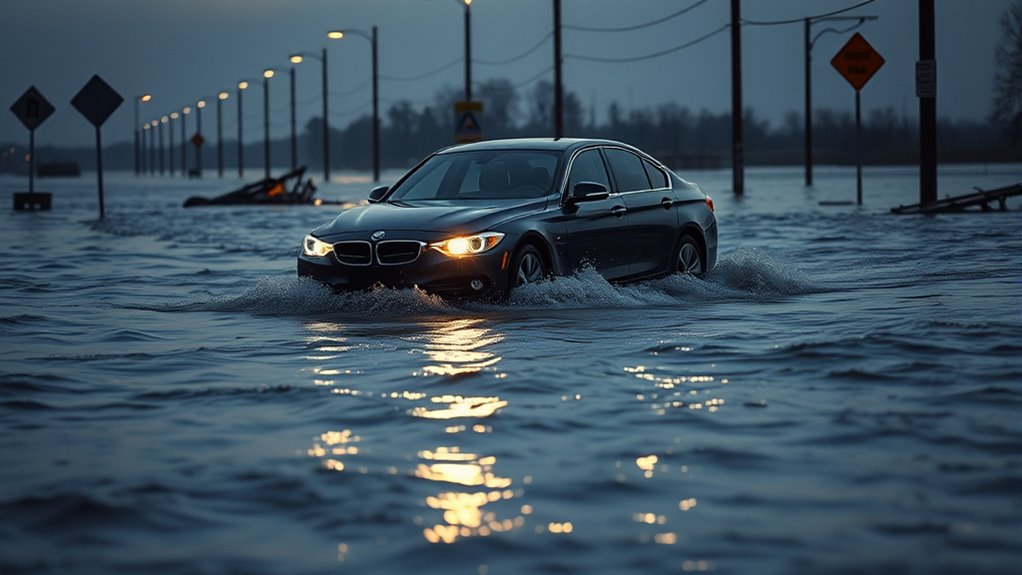
After a flood, driving can be dangerous even if the water has receded. Flood water safety should be your top priority before you consider hitting the road again. Floodwaters can hide serious hazards, including submerged debris, washed-out roads, and weakened infrastructure. Just because the water has gone down doesn’t mean your vehicle is ready to resume normal activity. You need to approach the situation with caution and perform thorough vehicle inspection tips to guarantee your safety.
Start by checking your vehicle carefully. Floodwater can cause extensive damage unseen to the naked eye, particularly to critical systems like brakes, transmission, and electrical components. Before you turn the key, inspect the exterior for signs of water damage, such as mud, silt, or corrosion. Don’t forget to examine the tires for any damage or deflation, since uneven or damaged tires can compromise control on slick or unstable surfaces.
Next, move inside the vehicle to assess the interior. If water has entered the cabin, it can lead to mold growth or electrical shorts that may cause long-term issues or even pose safety risks. Check the seats, carpets, and dashboard for moisture. If you notice any lingering dampness, it’s best to have a professional evaluate the vehicle before driving. Remember, floodwater can seep into essential components and cause corrosion or failure over time, so a thorough inspection is indispensable. Additionally, AI-driven diagnostics can help identify hidden damage that may not be immediately visible.
Don’t forget to test your brakes thoroughly before hitting busy roads. Floodwater can wash away the brake fluid or cause rust to develop on brake components, reducing your stopping power. Gently apply the brakes in a safe area to see if they respond normally. If you notice any sponginess, unusual noises, or decreased responsiveness, avoid driving and seek professional help.
Additionally, check your vehicle’s fluid levels—oil, transmission fluid, and coolant—since floodwaters can contaminate these systems. If the fluids look milky or discolored, it’s a sign that water has entered the system, and a flush or repair might be necessary before driving.
Finally, guarantee your lights, signals, and windshield wipers work properly. Visibility is essential, especially after a flood when roads may be damaged or debris-laden. If you’re unsure about your vehicle’s condition, don’t take any risks. It’s wise to have a mechanic perform a detailed inspection. Remember, prioritizing flood water safety and vehicle inspection tips isn’t just about protecting your car—it’s about safeguarding yourself and others on the road. Taking these precautions can prevent accidents and costly repairs down the line, so always err on the side of caution after flood exposure.

NEIKO 20736A (6) Piece Set, Magnetic Tool & Telescoping Mirror Set, Adjustable Telescoping Magnetic Pickup Tool, Flashlight 15lb Retriever Tool, 360 Swivel, Magnet Mirror, Magnetic Tools for Mechanic
EXTENDABLE MAGNET PICKUP TOOL: Various Expandable lengths, up to nearly 3 feet! Strong magnet to sweep and be…
As an affiliate, we earn on qualifying purchases.
As an affiliate, we earn on qualifying purchases.
Frequently Asked Questions
Can Flood-Damaged Vehicles Be Safely Repaired for Driving?
Flood-damaged vehicles can be safely repaired only after a thorough flood damage assessment. You should have a professional inspect critical components like the engine, electrical systems, and brakes. Proper vehicle repair safety is essential; if repairs aren’t done correctly, the vehicle could be dangerous to drive. Never assume a flood-damaged car is safe without expert evaluation and proper repairs, as hidden damage may still pose risks.
What Insurance Coverage Is Available After Flood-Related Vehicle Damage?
You can access insurance coverage after flood damage by starting with a complete flood damage assessment. Once you’ve documented the damage, file an insurance claim promptly. Your insurer will guide you through the insurance claim process, which may include inspections and assessments. Keep records of all repairs, estimates, and communications. Most standard auto policies cover flood damage if you have comprehensive coverage, but always check your policy details.
How Long Should I Wait Before Driving After Flood Exposure?
You should wait until a professional vehicle inspection confirms your car is safe to drive. Flood exposure can cause hidden water damage to the engine, brakes, and electrical systems. Don’t rush back on the road; driving too soon risks further damage or accidents. Have a mechanic thoroughly examine your vehicle for water damage before resuming driving. This ensures your safety and prevents costly repairs down the line.
Are There Specific Signs Indicating My Vehicle Is Unsafe to Drive?
If your vehicle shows signs like strange odors, dashboard warning lights, or difficulty starting, it might be unsafe to drive. Water damage can cause electrical issues that compromise your car’s safety and performance. Always inspect for corrosion or dampness under the dashboard and seats. If you notice any of these signs, have a professional mechanic check your vehicle before driving, as hidden water damage or electrical issues could lead to accidents.
Can Flooding Affect My Vehicle’s Emissions or Environmental Safety?
Floodwater pollution can quietly seep into your vehicle’s engine, impacting its emissions and environmental safety. When floodwater enters essential parts, it’s like a toxic shadow cast over your car’s performance, increasing emission impact and potentially releasing harmful pollutants. You might not see the damage right away, but over time, the pollution can worsen. It’s important to inspect and repair your vehicle to prevent environmental harm and guarantee safe emissions.

Rain-X 600001 Windshield Repair Kit – Quick and Easy Durable Resin Based Windshield Repair Kit for Chips and Cracks, Good for Round Damage Below 1" in Diameter and Cracks Smaller Than 12" in Length
Stops The Spread of Chips and Cracks – Rain-X Windshield Repair Kit Helps You Minimize The Appearance And…
As an affiliate, we earn on qualifying purchases.
As an affiliate, we earn on qualifying purchases.
Conclusion
After experiencing a flood, you might think it’s safe to get back on the road right away. But sometimes, the tiniest signs—like a strange smell or sluggish brakes—can reveal hidden dangers. Coincidentally, just last week, someone ignored these signs and faced costly repairs. Remember, taking the extra time to inspect your vehicle isn’t just smart — it’s a chance to avoid surprises on the road. Stay cautious, and your journey will be safer and smoother.

KAIWEETS Brake Fluid Tester Pen with Corrosion Resistance Probe, High-Precision Brake Fluid Moisture Tester with Data Hold Function, Buzzer Alarm, 3 Colors Backlight, Calibrated for DOT3, DOT4, DOT5.1
Durable and Corrosion-Resistant : Featuring a corrosion-resistant probe, this brake fluid tester is designed for long-lasting performance. The…
As an affiliate, we earn on qualifying purchases.
As an affiliate, we earn on qualifying purchases.

ANCEL AD310 Classic Enhanced Universal OBD II Scanner Car Engine Fault Code Reader CAN Diagnostic Scan Tool, Read and Clear Error Codes for 1996 or Newer OBD2 Protocol Vehicle (Black)
CEL Doctor: The ANCEL AD310 is one of the best-selling OBD II scanners on the market and is…
As an affiliate, we earn on qualifying purchases.
As an affiliate, we earn on qualifying purchases.