Solar tenders for stored vehicles connect renewable energy with vehicle parking facilities by integrating solar panels into structures or nearby land. This approach allows you to generate clean energy during the day, store excess power in batteries, and use it to charge electric vehicles—even at night or on cloudy days. It reduces reliance on fossil fuels and helps create sustainable urban spaces. Keep exploring to discover how these systems are transforming vehicle storage with eco-friendly solutions.
Key Takeaways
- Solar tenders promote renewable energy use by integrating solar panels with vehicle storage facilities.
- They enable charging stored electric vehicles directly from solar power, reducing grid dependency.
- Incorporating battery storage ensures vehicle access during low sunlight or cloudy periods.
- Solar tenders support urban sustainability goals by lowering carbon emissions and fostering clean energy infrastructure.
- Modular designs allow scalable capacity, optimizing energy generation and vehicle storage efficiency over time.
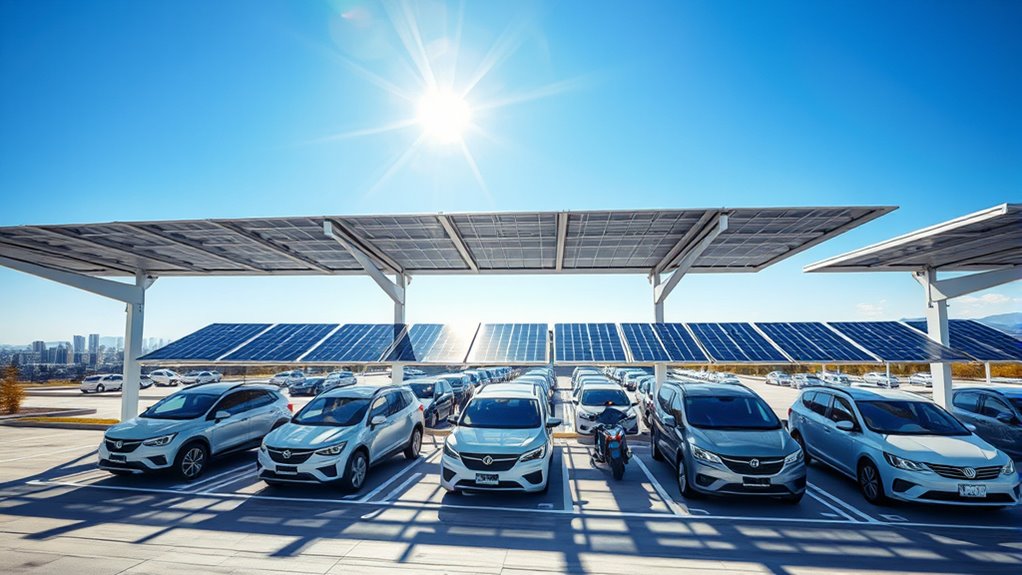
As cities seek sustainable solutions for vehicle storage, solar tenders are emerging as an innovative option. These tenders leverage renewable energy sources, harnessing sunlight to power parking facilities while reducing reliance on fossil fuels. By integrating solar panels directly into storage structures or adjacent land, you can generate clean energy during daylight hours, making your vehicle storage more environmentally friendly. This approach not only cuts down your carbon footprint but also creates opportunities for cost savings over time.
One of the key advantages of solar tenders lies in their ability to incorporate battery storage systems. As you generate excess energy during sunny periods, this surplus can be stored in batteries for use during nighttime or cloudy days. This means your stored vehicles remain protected and accessible regardless of weather conditions or time of day, ensuring a reliable power supply. Battery storage enhances the efficiency of solar tenders by balancing energy supply and demand, allowing you to manage energy flow more effectively and avoid wastage.
Battery storage ensures reliable energy for vehicle access, balancing supply and demand and reducing waste.
In practical terms, deploying solar tenders with integrated battery storage can transform your parking or vehicle storage facilities into self-sufficient hubs. You can charge electric vehicles directly from the stored renewable energy, promoting cleaner transportation options. This setup reduces your dependence on grid electricity, especially if the grid relies heavily on fossil fuels, further amplifying your sustainability efforts. Plus, with the increasing affordability of battery storage technology, you can optimize your energy management without significant upfront costs.
Moreover, solar tenders can be tailored to meet specific needs, whether for public parking lots, private garages, or large-scale vehicle depots. The modular nature of solar panel installations allows you to expand capacity as demand grows. Incorporating battery storage not only ensures continuous operation but also provides opportunities for energy resale or participation in grid stabilization programs, potentially generating additional revenue streams.
Implementing solar tenders with renewable energy and battery storage also aligns with broader urban goals of reducing greenhouse gas emissions and promoting renewable energy adoption. It demonstrates your commitment to sustainable development and can enhance community support and regulatory incentives. As technology advances, expect these systems to become more efficient, more affordable, and easier to maintain, making them an attractive option for transforming vehicle storage into a clean energy hub. Reliable backup power systems can further enhance the resilience of these facilities during outages or energy disruptions.

12V RV Air Conditioner with Heat 8.5K BTU Universal RV Rooftop AC Unit Heater Combo Quiet 2 in 1 Heating and Cooling for Truck, Trailer, Boat, Motorhome, Camper, Caravan
- Roof-Mounted Design: Space-saving and easy to install
- Universal Compatibility: Fits RVs, trucks, and electric vehicles
- Full-Range Air Circulation: Provides even heating and cooling
As an affiliate, we earn on qualifying purchases.
Frequently Asked Questions
What Are the Main Benefits of Solar Tenders for Stored Vehicles?
Solar tenders for stored vehicles boost your fleet efficiency by providing a reliable, sustainable power source. They help you achieve significant energy savings by harnessing solar energy, reducing reliance on grid power and lowering operational costs. With solar tenders, you guarantee your stored vehicles are charged efficiently, environmentally friendly, and cost-effective, making your fleet more sustainable and responsive to energy demands.
How Do Solar Tenders Impact Vehicle Storage Infrastructure Costs?
Did you know solar tenders can cut vehicle storage infrastructure costs by up to 30%? By harnessing solar energy, you reduce reliance on traditional power sources, lowering overall expenses. Solar tenders streamline the setup process, making infrastructure more affordable and sustainable. You’ll find that integrating solar energy into your storage facilities not only saves money but also promotes eco-friendly practices, ultimately improving your operational efficiency and environmental impact.
Are There Specific Regulations for Implementing Solar Tenders in Vehicle Yards?
Yes, you need to follow specific regulations when implementing solar tenders in vehicle yards. You must guarantee regulatory compliance with local laws and safety standards, which often include electrical safety, fire prevention, and environmental guidelines. It’s vital to coordinate with authorities and obtain necessary permits before installation. By adhering to these regulations, you’ll safeguard your infrastructure, ensure legal operation, and promote safe, efficient solar tender integration into your vehicle yard.
What Maintenance Is Required for Solar Systems in Vehicle Storage Facilities?
You need to perform regular system inspections to guarantee your solar setup operates efficiently. This includes cleaning panels, checking for damage, and verifying wiring connections. Battery maintenance is also essential; regularly inspect and test batteries for capacity and replace them when needed. Keeping detailed records of maintenance activities helps prevent issues, prolongs system lifespan, and maximizes energy output, ensuring your solar system remains reliable in your vehicle storage facility.
How Do Solar Tenders Influence the Environmental Footprint of Vehicle Storage?
Solar tenders reduce your vehicle storage facility’s environmental footprint by harnessing renewable energy, lowering reliance on fossil fuels. Improved battery efficiency ensures stored energy is used effectively, while durable solar panels withstand weather, providing lasting performance. This setup minimizes emissions and energy consumption, helping you operate more sustainably. By investing in solar tenders, you support cleaner energy use, ultimately decreasing your facility’s overall environmental impact.
Conclusion
As the sun sets on traditional energy, these solar tenders shine like guiding stars for stored vehicles. They’re your ticket to a cleaner, greener journey, transforming idle spaces into vibrant power hubs. Embrace this radiant wave and watch your stored vehicles become beacons of sustainability. With each solar tender, you’re planting seeds for a brighter, more sustainable future—fueling progress with the sun’s endless promise. Let this solar revolution steer your path forward.