
If your exhaust flex pipe shows signs like unusual noises, engine performance issues, or increased emissions, it’s time for a replacement. The process involves safely lifting your vehicle, removing the damaged pipe, and installing a new one securely with clamps or welding. Proper installation helps prevent future leaks and prolongs system life. Want to know the step-by-step details to guarantee your exhaust system stays in top shape? Keep exploring for more useful tips.
Key Takeaways
- Signs of a failing flex pipe include unusual noises, decreased engine performance, and check engine lights.
- Replacing the flex pipe involves safely lifting the vehicle, removing the damaged part, and installing a new one with clamps or welds.
- Prompt replacement prevents exhaust leaks, reduces emissions issues, and protects engine components from further damage.
- Selecting durable materials and ensuring proper installation extend the lifespan of the flex pipe.
- Regular inspections help identify wear early, maintaining optimal exhaust system function and vehicle performance.
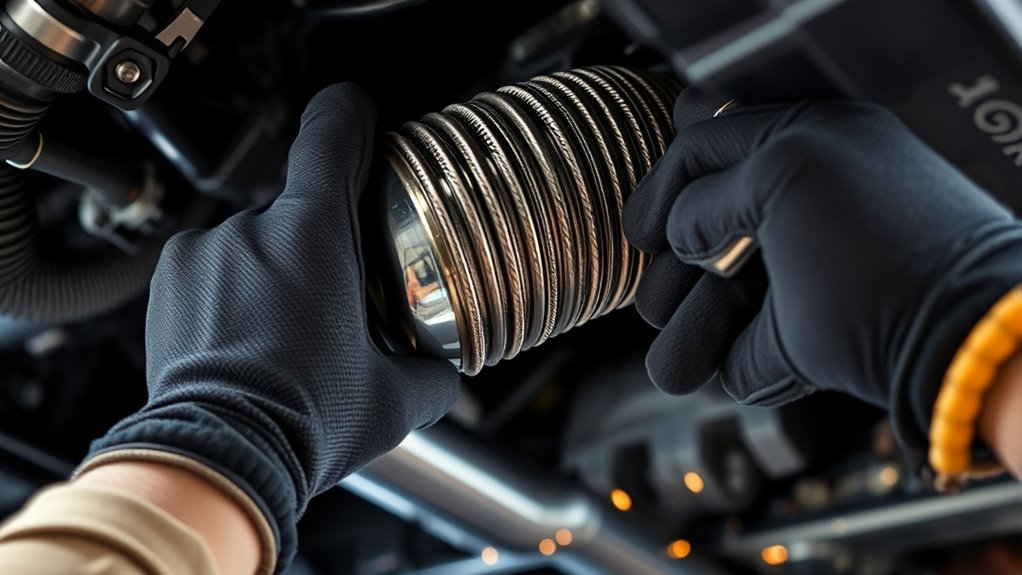
Have you noticed unusual noise or decreased performance from your vehicle? These signs could point to a problem with your exhaust flex pipe, an essential component that helps maintain proper engine function. The flex pipe is designed to absorb vibrations and movements in the exhaust system, preventing stress from cracking or breaking other parts. When it fails, you might hear hissing or banging sounds, and your engine’s performance can suffer. It’s vital to address these issues promptly, as a damaged flex pipe can compromise emission control systems and lead to increased emissions, which can harm the environment and potentially cause your vehicle to fail emissions testing.
A failing exhaust flex pipe directly impacts your engine’s performance because it disrupts the smooth flow of exhaust gases. When the flex pipe is compromised, exhaust leaks may occur, allowing gases to escape before reaching the muffler. This leakage can cause a drop in back pressure, which can result in reduced power, rough idling, or poor acceleration. Additionally, your vehicle’s onboard sensors may detect abnormal exhaust gases, triggering check engine lights or sensor errors. As these sensors monitor emissions, a damaged flex pipe can interfere with their readings, leading to issues with emission control and potentially causing your vehicle to run inefficiently. Recognizing these symptoms early can save you from costly repairs and guarantee your engine runs at peak performance.
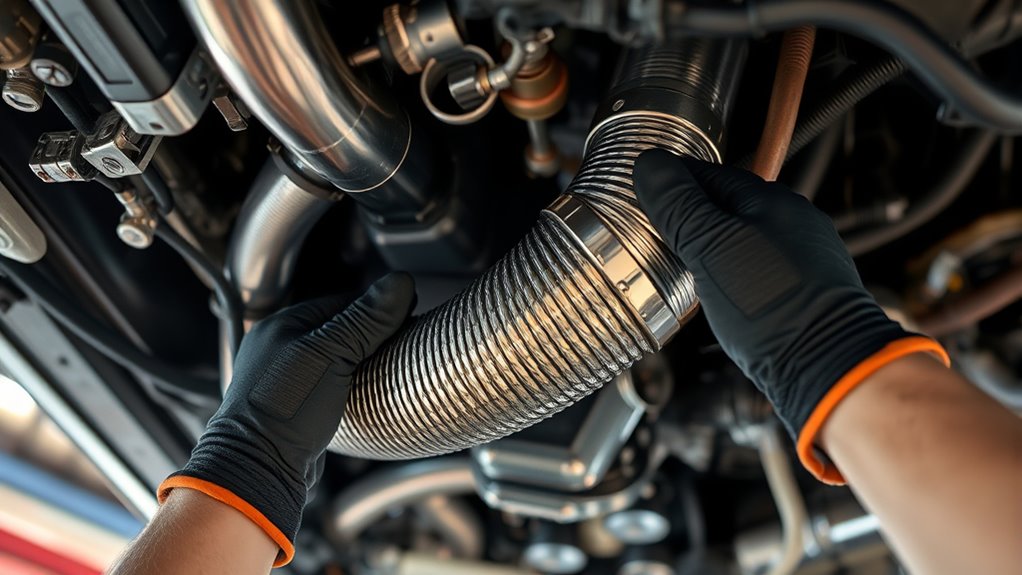
Replacing an exhaust flex pipe may seem intimidating, but it’s a manageable task if you have basic mechanical skills or a trusted mechanic. The process involves lifting the vehicle safely, locating the flex pipe in the exhaust system, and removing the damaged section. You’ll need to cut or unbolt the old pipe and install a new one, making sure it fits snugly and is properly secured with clamps or welds. During replacement, it’s a good idea to inspect adjacent parts for wear or damage, such as the exhaust manifold or catalytic converter. Proper installation ensures that the flex pipe can absorb vibrations effectively, preventing future issues and maintaining ideal engine performance.
Replacing a flex pipe involves lifting the vehicle, removing the damaged section, and installing a secure, snug-fitting new pipe.
Additionally, selecting the right type of exhaust flex pipe material can increase durability and lifespan, saving you money in the long run. Once replaced, your vehicle’s emission control will function more efficiently, and engine performance will improve. You’ll notice smoother acceleration, quieter operation, and restored power. Regular inspections and timely replacements of worn flex pipes prevent exhaust leaks, which helps keep emissions in check and protects the environment. Remember, addressing flex pipe issues early not only enhances your driving experience but also extends the lifespan of your vehicle’s exhaust system and engine. Taking prompt action ensures your vehicle remains reliable, efficient, and compliant with emission standards, giving you peace of mind on the road.
Frequently Asked Questions
How Long Does a Typical Exhaust Flex Pipe Last?
A typical exhaust flex pipe lasts about 5 to 10 years, depending on your driving habits and road conditions. As part of your exhaust system, it endures vibrations, heat, and corrosion, which can lead to wear over time. Regular vehicle maintenance helps identify issues early. If you notice increased exhaust noise or leaks, it’s time to replace the flex pipe to keep your exhaust system functioning smoothly and prevent further damage.
Can I Replace the Flex Pipe Myself?
Yes, you can replace the flex pipe yourself with some DIY installation skills. Just make certain you follow safety precautions, like wearing gloves and eye protection, and work in a well-ventilated area. You’ll need basic tools such as wrenches and possibly a saw if cutting is required. Take your time, follow a step-by-step guide, and remember to disconnect the battery and secure the vehicle before starting.
What Are Signs of a Failing Exhaust Flex Pipe?
You’ll notice a failing exhaust flex pipe if your car suddenly sounds louder or you hear rattling noises, especially during acceleration. You might also see increased exhaust noise or a drop in fuel efficiency. These signs indicate the pipe isn’t flexing properly anymore, which can lead to exhaust leaks and reduced performance. Addressing these issues promptly helps keep your vehicle running smoothly and prevents further damage.
How Much Does It Cost to Replace an Exhaust Flex Pipe?
The cost estimation for replacing an exhaust flex pipe typically ranges from $150 to $300, depending on your vehicle and labor rates. You might consider repair options like patching if the damage is minor, but replacement guarantees durability. It’s best to get a professional diagnosis to confirm the issue and get accurate estimates. Remember, investing in quality parts and skilled labor ensures your exhaust system functions properly and lasts longer.
Are Aftermarket Flex Pipes as Reliable as OEM?
Aftermarket flex pipes can be quite reliable, but their quality varies. When comparing aftermarket options to OEM, you often find that OEM parts are designed to meet strict standards, ensuring better durability and fitment. However, some high-quality aftermarket flex pipes match OEM standards and offer a more affordable solution. Ultimately, it’s crucial to research the brand’s reputation and reviews to guarantee you’re choosing a dependable aftermarket flex pipe that compares well to OEM quality.
Conclusion
Replacing your exhaust flex pipe is like giving your car a much-needed revitalization. With the right tools and a bit of patience, you can handle this job yourself and save money. Just remember to double-check your work for leaks or loose fittings before hitting the road. Think of it as tuning up a musical instrument—you want everything to sound just right. Once done, enjoy smoother performance and a quieter ride!