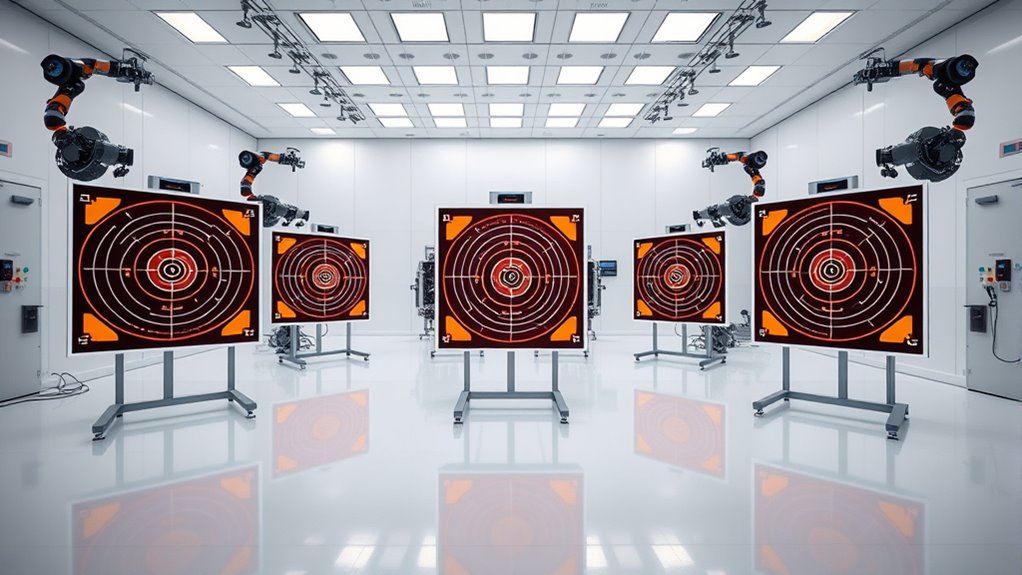

ADAS targets and calibration rooms are crucial for ensuring your vehicle’s sensors and cameras are precisely aligned. These specialized environments minimize external interference and provide accurate measurement references, which are essential for proper calibration. Proper placement of targets and strict adherence to calibration procedures guarantee your safety systems work correctly. If you want to learn more about how these processes improve your vehicle’s performance and safety, keep exploring the details behind calibration setups.
Key Takeaways
- Calibration rooms are specially designed environments that minimize external interference for accurate sensor and camera calibration.
- ADAS targets are precisely marked calibration tools used to verify and align vehicle sensors during calibration procedures.
- Proper sensor placement according to manufacturer guidelines is essential for effective calibration and system safety.
- Calibration rooms feature controlled lighting and minimal vibrations to ensure measurement accuracy of ADAS components.
- Regular calibration using targets in dedicated rooms maintains the reliability of driver-assistance systems and ensures safety.

ADAS targets and calibration rooms play a crucial role in guaranteeing your vehicle’s advanced driver-assistance systems function correctly. When you bring your vehicle in for calibration, the process relies heavily on precise sensor placement and meticulous calibration procedures. These components are essential because they ensure that the sensors, cameras, and radar units are aligned accurately, allowing your vehicle’s safety features to operate as intended.
Proper sensor placement is the foundation of effective calibration. When technicians set up calibration targets, they position them at specific locations and distances according to manufacturer guidelines. This precise placement guarantees that the sensors can accurately detect obstacles, lane markings, and other critical data points. If sensors aren’t correctly aligned or if calibration targets are misplaced, the system’s ability to interpret its environment can become compromised, reducing the effectiveness of features like adaptive cruise control and lane-keeping assist.
Proper sensor placement is vital for accurate calibration and system performance.
Calibration procedures follow strict protocols designed to replicate real-world driving conditions. These procedures often involve multiple steps, including initial checks, physical alignment, and software calibration. During the process, your vehicle is placed in a calibration room that’s equipped with specialized equipment and calibration targets. The technician may use a combination of static and dynamic calibration methods, depending on the system involved. Static calibration involves the vehicle remaining stationary while sensors are aligned with targets, whereas dynamic calibration might require test drives to ensure the sensors work correctly in motion.
Calibration rooms are designed to minimize external interference, ensuring that measurements remain accurate. These rooms have controlled lighting, minimal vibrations, and precisely marked calibration targets that help technicians verify sensor accuracy. The entire process requires attention to detail, as even minor deviations in sensor placement or calibration procedures can lead to misaligned systems, affecting safety features. Additionally, understanding the ethical hacking principles like meticulous procedures can help technicians recognize vulnerabilities or inconsistencies during calibration.
You should understand that calibration isn’t a one-and-done process. Regular recalibration might be necessary, especially after collisions, sensor replacements, or significant repairs. Keeping your vehicle’s sensors properly calibrated ensures your ADAS features perform reliably, helping you maintain safety on the road. When you visit a professional calibration facility, make sure they follow manufacturer guidelines and use the correct calibration procedures, including accurate sensor placement and the proper setup of calibration targets. This approach guarantees your vehicle’s advanced systems are tuned correctly, providing you with the safety and confidence you expect from modern driver-assistance technologies.
Frequently Asked Questions
How Often Should Calibration Rooms Be Inspected for Safety Compliance?
You should inspect calibration rooms for safety compliance at least every six months, or more frequently if recommended by safety standards. Regular inspections guarantee the environment remains safe and meets all necessary regulations. Keep an eye out for any signs of wear, damage, or hazards that could compromise calibration accuracy or worker safety. Consistent inspection frequency helps maintain high safety standards and prevents potential issues before they become serious problems.
Are There Portable ADAS Calibration Options for On-Site Repairs?
Imagine strapping a giant laser pointer to your car’s hood—welcome to portable ADAS calibration options. Yes, you can perform on-site calibration with portable solutions designed for quick, accurate adjustments right at the repair shop or customer’s driveway. These mobile tools eliminate the need for room setups, saving time and money. So, if you’re tired of moving vehicles or waiting, go portable—calibration comes to you, hassle-free.
What Training Is Required for Technicians Performing ADAS Calibrations?
You need to complete specialized ADAS technician certification to perform calibrations correctly. This training covers calibration procedure standards, guaranteeing you understand proper procedures and safety protocols. The certification prepares you to accurately calibrate various systems and use different tools, whether in a dedicated calibration room or on-site. Staying current with manufacturer updates and industry best practices is essential to maintain your certification and ensure precise, safe ADAS calibrations.
How Do Environmental Factors Affect Calibration Accuracy?
Environmental factors can severely skew calibration accuracy, so you need to take into account environmental stability. Sudden shifts in sunlight, shadows, or temperature can distort sensor readings, compromising calibration precision. Wind, humidity, and uneven surfaces also influence results. To ensure accurate calibrations, you must control these conditions, creating a stable environment that supports precise, reliable sensor alignment. By managing these factors, you help ensure your ADAS systems function flawlessly in real-world conditions.
What Are the Costs Associated With Establishing a Calibration Room?
Setting up a calibration room costs fluctuate depending on calibration equipment and facility setup. You’ll need to invest in precise calibration targets, high-quality cameras, and specialized tools, which can be substantial. Additionally, costs include constructing a dedicated space, ensuring proper lighting, and installing environmental controls. Expect to spend from several thousand to tens of thousands of dollars, depending on the room’s size and sophistication, to ensure accurate ADAS calibration.
Conclusion
Now that you know the importance of ADAS targets and calibration rooms, remember they’re the backbone of safe, sophisticated driving. Proper positioning and precise calibration prevent problems on the pavement, ensuring your vehicle’s vision is clear and confident. By paying attention to these pivotal points, you protect both yourself and others. Keep your calibration room clean, your targets true, and your journey safe—successfully steering toward a safer, smarter driving future.