A charge air cooler is a vital part of your turbocharged engine that cools the hot, compressed air before it enters the cylinders. By lowering the air temperature, it increases air density, helping your engine produce more power and run more efficiently. It also reduces the risk of knocking and mechanical stress. Proper maintenance keeps it working effectively, ensuring peak engine performance. To discover how these systems work and their benefits, keep exploring further.
Key Takeaways
- Charge air coolers reduce the temperature of compressed air, increasing its density for better engine performance.
- They function as heat exchangers, transferring heat from hot compressed air to ambient air.
- Cooling the air prevents knocking and reduces thermal stress on engine components.
- Regular maintenance ensures efficient heat transfer and prevents contaminants or leaks.
- Properly functioning charge air coolers improve fuel efficiency, power output, and engine longevity.
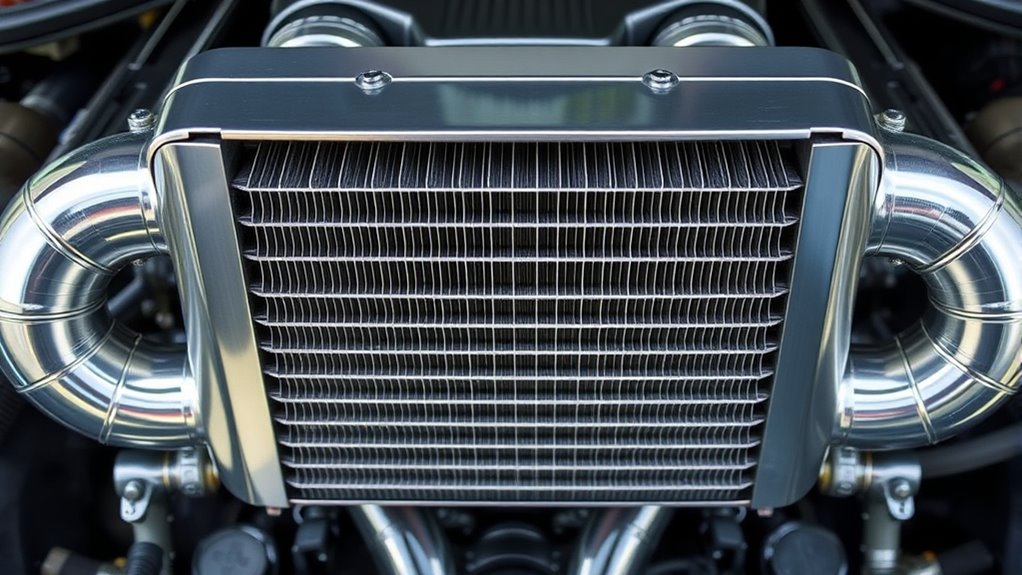
Charge air coolers are essential components in turbocharged and supercharged engines, as they help improve performance and efficiency. When your engine compresses air to boost power, it also heats up considerably. Hot air reduces the compressor’s efficiency and can lead to knocking or engine damage. That’s where charge air coolers come into play, as they cool the compressed air before it enters the engine. By lowering the air’s temperature, these coolers increase the air’s density, allowing more oxygen to reach the combustion chamber. This results in better combustion, increased power output, and improved fuel efficiency.
You’ll find that charge air coolers operate by passing the compressed air through a heat exchanger, typically made of aluminum or other good heat-conducting materials. As the hot, high-pressure air flows through the cooler, it exchanges heat with ambient air, which is usually expelled through a fan or natural airflow. The cooler, denser air then reaches the engine, aiding in more complete combustion. This process not only enhances engine performance but also reduces the risk of knocking, which can occur if the intake air is too hot. Additionally, cooler intake air can extend the lifespan of engine components by reducing thermal stress.
Proper maintenance of your charge air cooler is also essential to prevent the buildup of contaminants that can impair heat transfer. Regular inspections and cleaning help ensure optimal function and longevity. Maintaining good airflow and checking for leaks or cracks are crucial steps to keep the system working efficiently and to prevent potential damage to your engine. Proper care of the charge air cooler not only sustains performance but also aligns with the importance of local knowledge of laws that can impact vehicle modifications and maintenance practices.
Frequently Asked Questions
How Often Should a Charge Air Cooler Be Inspected or Maintained?
You should inspect your charge air cooler every 10,000 to 15,000 miles or as recommended by your vehicle’s maintenance schedule. Regular inspections help identify leaks, dirt buildup, or damage early. Follow proper maintenance procedures, like cleaning and checking for corrosion, to guarantee peak performance. Consistent care prevents overheating and improves efficiency, extending the lifespan of your charge air cooler. Stay proactive to keep your engine running smoothly.
Can a Damaged Charge Air Cooler Cause Engine Overheating?
Yes, a damaged charge air cooler can cause engine overheating because it hampers heat exchange, leading to reduced cooling efficiency. This can result in higher intake air temperatures, causing turbo lag and decreased engine performance. If your cold air intake system isn’t functioning properly due to cooler damage, it can further increase temperatures. Regular inspection and maintenance help prevent these issues, ensuring ideal cooling and avoiding overheating.
What Are the Signs of a Failing Charge Air Cooler?
Think of your engine as a race car, and the charge air cooler as its essential radiator. When it starts to fail, you’ll notice cooler leaks and reduced power, like losing coolant in a radiator. These signs indicate the cooler isn’t working efficiently, causing your engine to struggle. If you ignore these symptoms, it could lead to further damage. Keep an eye out for leaks and power dips to catch issues early.
Are There Different Types of Charge Air Coolers for Various Engines?
Yes, there are different types of charge air coolers for various engines. You’ll find coolers made from materials like aluminum or copper, each offering distinct heat transfer benefits. Design variations, such as tube-and-fin or bar-and-plate, cater to specific engine needs and space constraints. Choosing the right cooler depends on your engine’s performance demands and operating conditions, ensuring ideal cooling and efficiency.
How Does Ambient Temperature Affect Charge Air Cooler Efficiency?
Imagine your engine’s performance hanging in the balance—ambient temperature plays a vital role here. When it’s hot outside, your charge air cooler’s cooling efficiency drops, making it harder to keep intake air cool. Conversely, cooler ambient temperatures boost cooling efficiency, helping your engine breathe easier and run smoother. So, ambient temperature directly impacts how effectively your charge air cooler can do its job, affecting overall engine performance.
Conclusion
Now that you understand how charge air coolers work, you can appreciate their essential role in boosting engine performance. Did you know that properly cooled intake air can increase power output by up to 15%? By keeping the intake temperature low, you not only improve efficiency but also extend your engine’s lifespan. So, next time you drive, remember the coolers working behind the scenes to keep your engine running smoothly and powerfully.