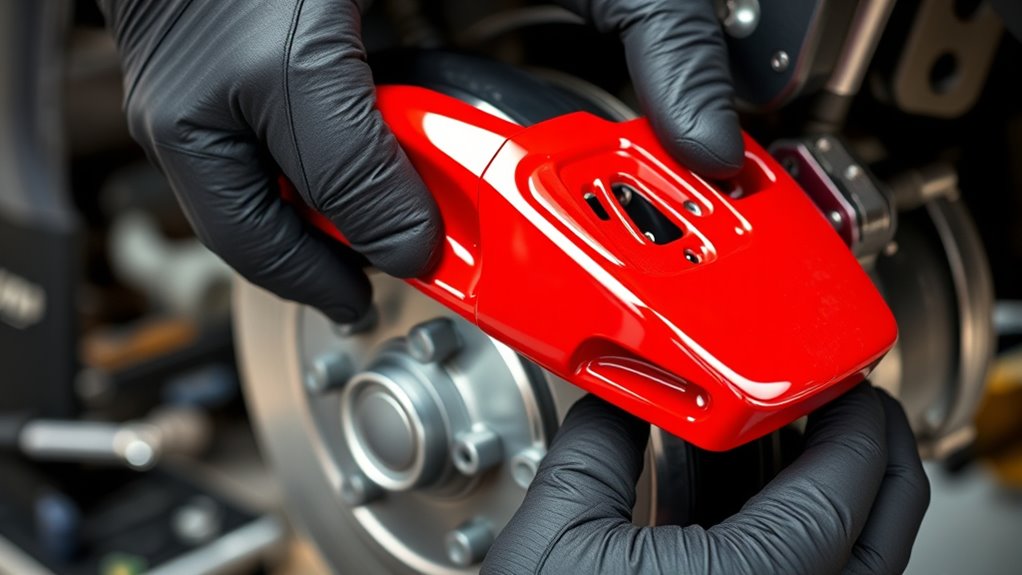
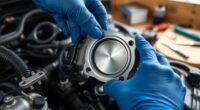
If your brake caliper is sticking, leaking, or causing uneven braking, it may need replacement. To do so, lift your vehicle safely, remove the wheel, and inspect the caliper for damage, corrosion, or piston issues. You’ll need to replace the old caliper, bleed the brake system thoroughly, and check for proper pedal response. Proper installation and maintenance guarantee safe, effective braking—keep going for detailed steps and tips to make the process smoother.
Key Takeaways
- Recognize signs like uneven braking, sticking brakes, or leaks indicating caliper replacement needs.
- Inspect calipers for leaks, corrosion, piston damage, or sticking to determine if replacement is necessary.
- Remove the faulty caliper, install a new one, and bleed the brake system to remove air.
- Check brake fluid level and quality regularly to ensure proper caliper function and prevent issues.
- Routine inspections and maintenance improve safety, prolong caliper lifespan, and ensure optimal braking performance.
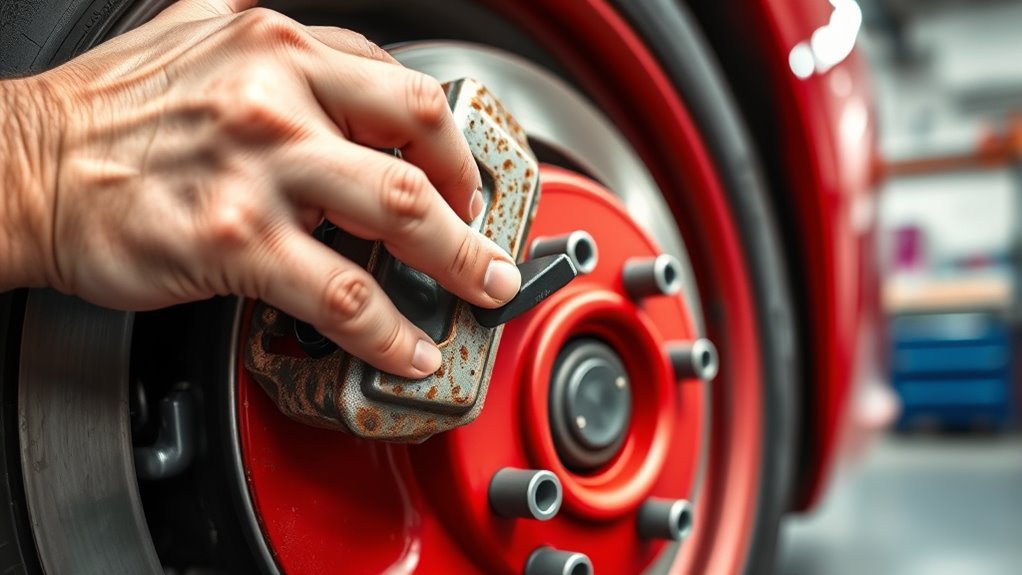
If you notice uneven braking, sticking brakes, or a dragging sensation, your brake calipers might need replacing. These issues often point to caliper problems that can affect your vehicle’s safety and performance. Before jumping into replacement, it’s essential to understand the role of brake calipers and the importance of regular maintenance. Proper brake fluid maintenance is vital because contaminated or low brake fluid can lead to caliper malfunction. Brake fluid helps transfer force from the brake pedal to the calipers, so keeping it clean and at the right level ensures smooth operation. When inspecting your calipers, don’t forget to perform a caliper piston inspection. This involves checking whether the piston moves freely within the caliper housing; a stuck or seized piston can cause uneven brake pad wear and uneven braking.
When you suspect caliper issues, the first step is to lift the vehicle safely and remove the wheel. Once you have access, visually inspect the caliper for leaks, corrosion, or damage. A leaking caliper often indicates a damaged seal, which can cause brake fluid loss and impaired brake function. During caliper piston inspection, look for corrosion or pitting on the piston surface. A corroded piston may stick, preventing proper retraction after braking, which leads to overheating and uneven pad wear. If you notice the piston is stuck or difficult to move, it’s a clear sign that the caliper needs repair or replacement. Keep in mind that sometimes a simple rebuild with new seals can restore proper function, but in many cases, replacing the caliper is the safer, more reliable choice.
Replacing a brake caliper involves more than just swapping out the old part. You need to bleed the brake system thoroughly to remove air and restore proper brake fluid pressure. This process is part of brake fluid maintenance, which ensures your braking system operates smoothly. After installing the new caliper, check the brake pedal response and ensure there are no leaks. It’s also wise to re-inspect the caliper piston after installation to confirm it moves freely and that the brake system is functioning correctly. Regular brake fluid maintenance and caliper piston inspections help prolong the life of your calipers and prevent future issues. Properly maintained calipers improve braking performance and keep you safe on the road. Additionally, consider caliper alignment to ensure even pad wear and optimal braking efficiency over time.
Frequently Asked Questions
How Long Does a Brake Caliper Replacement Typically Take?
You can expect a brake caliper replacement to take about 1 to 2 hours. During this time, you’ll need to drain the brake fluid, remove the old caliper, and replace it with a new one, ensuring the caliper piston moves freely. Afterwards, you’ll refill the brake fluid and bleed the system to remove air. The process is straightforward but depends on your experience and whether any additional repairs are needed.
Can I Drive Safely With a Faulty Brake Caliper?
You shouldn’t drive with a faulty brake caliper; it’s like steering a ship through stormy seas. A compromised caliper piston can cause uneven braking, risking your safety. Brake fluid leaks or reduced pressure can turn your ride into a dangerous tango with failure. Trust your instincts—if braking feels off, it’s time to pull over and get that caliper checked. Your safety, and those around you, depend on it.
What Are the Signs of a Failing Brake Caliper?
You’ll notice signs of a failing brake caliper if your brake fluid level drops unexpectedly or if you experience uneven brake pad wear. You might also feel the car pulling to one side when braking or hear squealing noises. These symptoms indicate the caliper isn’t applying pressure evenly, causing brake fluid leakage or uneven pad wear. Address these issues promptly to make certain of safe braking performance and avoid more costly repairs.
Is It Necessary to Replace Both Calipers at Once?
Think of your brake system as a team; if one player is injured, you might need to replace both to keep harmony. You don’t always need to replace both calipers at once, but during a caliper maintenance or brake system inspection, if one shows wear or damage, it’s wise to verify the other. Replacing both ensures balanced braking, preventing uneven wear and maintaining your vehicle’s stopping power.
How Much Does It Cost to Replace a Brake Caliper?
The cost to replace a brake caliper typically ranges from $300 to $700 per caliper, including parts and labor. Your cost estimate depends on your vehicle make, model, and repair options. You might find cheaper or more expensive options depending on whether you choose OEM or aftermarket parts. It’s best to get quotes from local shops and weigh repair options to make certain you get quality service at a fair price.
Conclusion
Replacing your brake calipers might seem like a simple task, but it’s a vital step in ensuring your safety on the road. Just as a worn-out caliper can compromise braking performance, neglecting this repair can lead to costly repairs or accidents. Think of it as balancing precision with safety—you want your brakes to be as responsive as your driving confidence. Prioritize this maintenance, and you’ll enjoy peace of mind every time you hit the road.