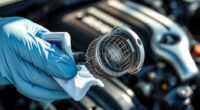
Replacing your fuel pump is essential for maintaining your vehicle’s performance if you notice difficulty starting, stalling, or loss of power. Start by disconnecting the battery, accessing the fuel tank, and carefully disconnecting fuel lines and electrical connections. Remove the old pump, inspect related components, and install the new one securely. Once everything’s reassembled, turn on the ignition to ensure proper operation. To get detailed steps and tips, keep going—more helpful guidance follows.
Key Takeaways
- Signs of a faulty fuel pump include difficulty starting, stalling, and reduced engine performance.
- Regular maintenance helps detect issues early and prevents costly repairs.
- Safety precautions involve disconnecting the battery and managing fuel spills during replacement.
- The process includes removing the old pump, inspecting related parts, and installing the new pump securely.
- Post-replacement checks ensure proper function, no leaks, and optimal vehicle performance.

If your vehicle is experiencing difficulty starting, stalling, or losing power, a faulty fuel pump might be the culprit. The fuel pump is a essential component of your vehicle’s fuel system, responsible for delivering the right amount of fuel from the tank to the engine. When it fails or begins to wear out, your vehicle’s performance can suffer markedly. Recognizing the signs early can save you from more costly repairs down the road. Regular vehicle maintenance should include checking the fuel system, especially if you notice issues like sputtering or a drop in fuel efficiency.
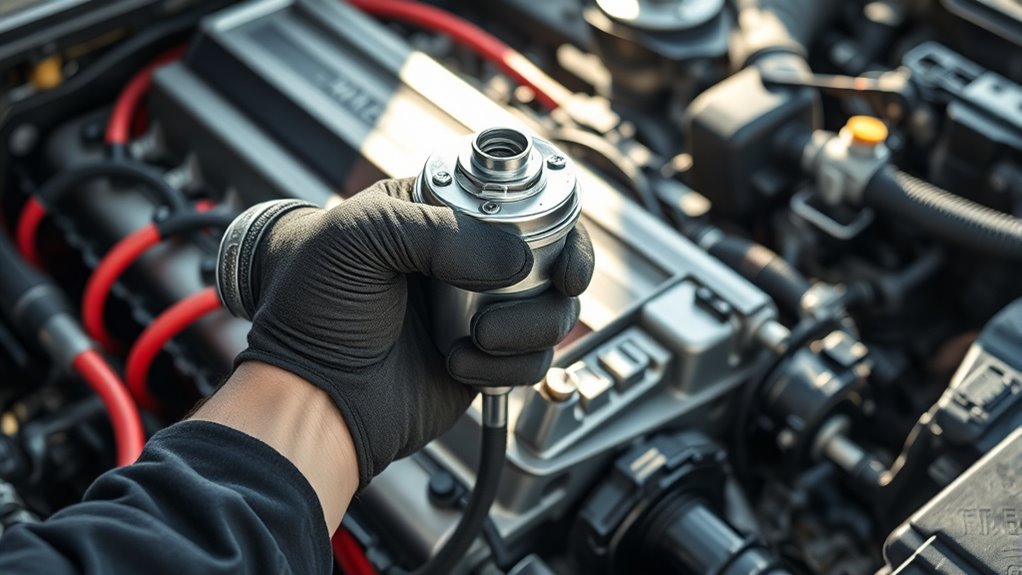
Replacing a fuel pump isn’t something you want to ignore, as it’s imperative to keep your vehicle running smoothly. The process involves removing the old pump and installing a new one, which requires some mechanical knowledge and the right tools. Before starting, you should disconnect the battery to prevent any electrical hazards. Then, access the fuel tank—often by removing it or gaining entry through an access panel—depending on your vehicle’s design. Once you locate the pump, you’ll need to disconnect fuel lines and electrical connections carefully. Remember, fuel lines can be under pressure, so take precautions to avoid spills or fire hazards. Proper understanding of the fuel system components can help ensure a safe and effective replacement.
During the replacement, it’s essential to inspect other parts of the fuel system, such as filters or hoses, and replace them if needed. This is a good opportunity to guarantee everything is in proper working order and to prevent future problems. After installing the new pump, reconnect all lines and electrical connections securely. Before fully reassembling everything, turn on the ignition to check if the pump is functioning correctly—listening for the pump’s hum or using diagnostic tools can help verify proper operation. Once everything is reassembled, start your vehicle and test its performance in various conditions to confirm the repair was successful.
Frequently Asked Questions
How Long Does a Fuel Pump Replacement Typically Take?
A fuel pump replacement usually takes about 1 to 3 hours, depending on your vehicle and experience. You’ll want to take into account the fuel pump lifespan, which can be 100,000 to 200,000 miles, so replacement isn’t often needed. Make sure you have the right replacement tools, like a socket set and jack, to speed up the process. Taking your time ensures a proper fix and helps avoid future issues.
Can I Drive My Car With a Failing Fuel Pump?
You probably shouldn’t drive your car with a failing fuel pump, as it can cause engine stalling or failure. Surprisingly, a failing pump can reduce fuel efficiency by up to 15% and impact emission control systems, leading to higher emissions. Driving in this condition risks further damage and costly repairs. For your safety and the vehicle’s health, it’s best to get the pump checked and replaced promptly before hitting the road again.
What Are the Signs of a Failing Fuel Pump?
When your fuel pump starts to fail, you might notice poor fuel efficiency because the engine isn’t getting the right amount of fuel. You could also experience ignition issues, like difficulty starting or stalling. Sometimes, your car may sputter or hesitate during acceleration. These signs indicate your fuel pump isn’t working properly, and ignoring them could lead to further engine problems. Stay alert to keep your vehicle running smoothly.
Is It Necessary to Replace the Fuel Filter During Pump Replacement?
Yes, replacing the fuel filter during a fuel pump replacement is generally necessary. When you change the fuel pump, it’s a good idea to also replace the fuel filter to guarantee ideal fuel flow and prevent debris from clogging the new pump. The filter can become dirty or clogged over time, so replacing it as part of the process helps maintain your vehicle’s performance and avoid future issues.
How Much Does a Fuel Pump Replacement Usually Cost?
Sure, replacing your fuel pump usually costs between $400 and $1,000, depending on your vehicle and location. It’s almost like a surprise fee, right? Consider cost considerations carefully and ask about warranty options—they might save you money if something goes wrong. Don’t forget, investing in a quality replacement can prevent future headaches and additional expenses. So, be prepared and shop around for the best deal!
Conclusion
Replacing your fuel pump might seem intimidating, but with the right tools and a bit of patience, you can do it yourself. Just remember, even the most seasoned mechanics once faced a stubborn pump, like a knight battling a dragon. Don’t rush—take your time, follow the steps carefully, and you’ll save money and learn a lot along the way. Before you know it, you’ll be back on the road, ready to conquer your journey like a true automotive hero.