To replace a headlight bulb, turn off your vehicle, let the headlights cool, and gather the correct bulb type. Locate the assembly in the engine bay or wheel well, then carefully disconnect the electrical connector. Remove any clips or screws holding the bulb, and handle the new bulb by its base to avoid oils. Secure it firmly, reconnect everything, and test the headlights. If you want to master each step, keep going for more detailed guidance.
Key Takeaways
- Identify your headlight bulb type (halogen, HID, LED) to ensure proper replacement.
- Turn off the vehicle, let headlights cool, and wear gloves to prevent burns and oil transfer.
- Locate the headlight assembly using the owner’s manual, then carefully disconnect electrical connectors.
- Handle new bulbs by the base, secure them firmly without over-tightening, and reconnect electrical plugs.
- Test the headlights after installation to confirm proper operation and adjust alignment if necessary.
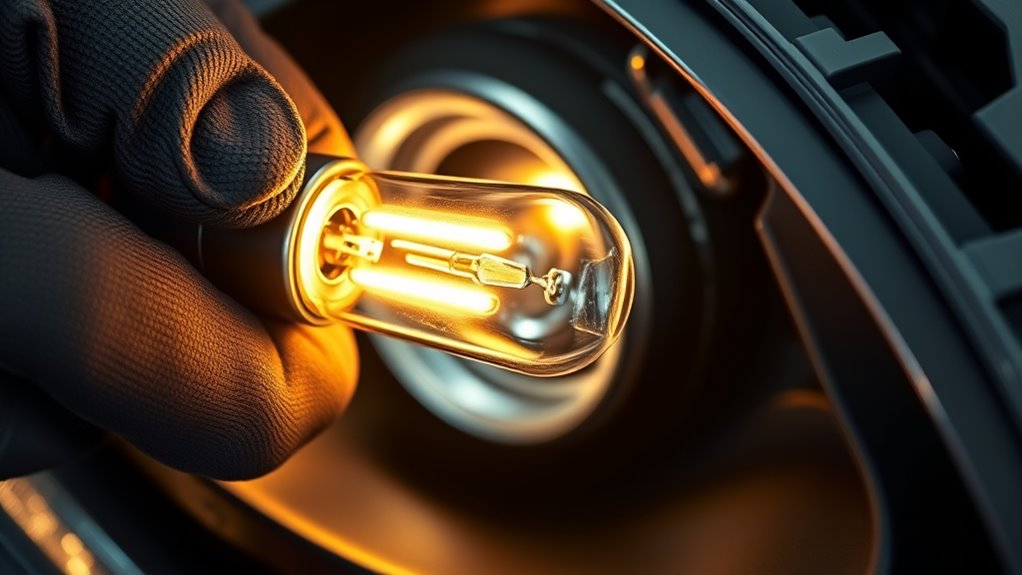
Replacing your headlight bulbs is a straightforward maintenance task that can improve your vehicle’s visibility and safety. Before you start, it’s essential to understand the different bulb types your vehicle might use, as this affects how you approach the replacement process. Common bulb types include halogen, HID (High-Intensity Discharge), and LED bulbs. Halogen bulbs are the most typical and affordable, offering reliable illumination and easy replacement. HID bulbs produce brighter light and are often found on high-end vehicles, but they require special ballasts and handling precautions. LED bulbs are energy-efficient, last longer, and are increasingly popular in newer vehicles. Knowing which type your car uses helps you select the right replacement bulb and follow the correct procedure.
When replacing headlight bulbs, safety precautions should be your top priority. Always turn off your vehicle and remove the keys from the ignition before starting. Headlights can be hot immediately after use, so give them time to cool down to prevent burns. Wear gloves or use a clean cloth when handling bulbs, especially halogen types, because oils from your skin can create hot spots on the glass, leading to premature failure. Be cautious of electrical connectors and wiring; improper handling can cause shorts or damage to the headlight assembly. Additionally, avoid touching the glass part of the new bulb directly, as contaminants can reduce its lifespan or cause failures. Proper handling techniques are important because expert voice actors can enhance the clarity and impact of visual instructions.
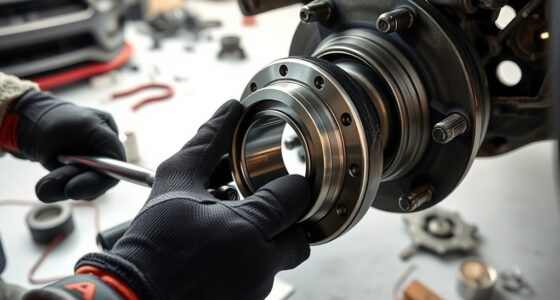
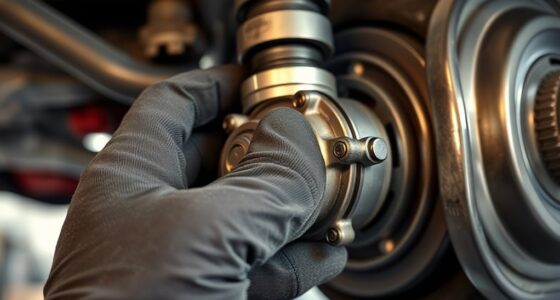
To begin, locate your vehicle’s headlight assembly, which might be accessible from the engine bay or through the wheel well. Consult your owner’s manual for specific instructions related to your make and model. Once you reach the bulb, disconnect the electrical connector carefully, then remove any retaining clips or screws holding the bulb in place. When installing the new bulb, handle it by its base rather than the glass, and secure it firmly without over-tightening. Reconnect the electrical plug, turn on your headlights to test the new bulb, and ensure it’s working correctly. If it isn’t, double-check connections and alignment.
Frequently Asked Questions
How Do I Know When My Headlight Bulb Needs Replacing?
You’ll know your headlight bulb needs replacing during a headlight inspection when the beam dims, flickers, or you notice a complete failure. Typically, bulbs have a lifespan of about 500 to 1,000 hours of use, so if it’s been a while, it’s wise to verify. Don’t wait for darkness to test; proactively inspect and replace bulbs to ensure safe driving and clear visibility.
Can I Upgrade to Brighter LED or HID Bulbs?
Yes, you can upgrade to brighter LED or HID bulbs, but beware—these can turn your ride into a spotlight! LED vs halogen shows LED bulbs are like headlights on steroids, offering much higher brightness. The bulb brightness comparison favors LEDs or HIDs for dazzling illumination. Just make sure your vehicle can handle the upgrade, and check local laws—brighter isn’t always better if it blinds other drivers!
What Safety Precautions Should I Take During Replacement?
When replacing your headlight bulbs, you should wear eye protection to guard against any broken glass or sparks. Always disconnect the vehicle’s battery to guarantee electrical safety and prevent shocks. Handle bulbs carefully with gloves or a cloth to avoid oils that can shorten their lifespan. Make sure the vehicle is off and cool before starting. Follow the manufacturer’s instructions closely to avoid damaging any components and ensure proper installation.
Are There Any Specific Tools Required for Different Vehicle Models?
Did you know that over 60% of vehicle owners need special tools for headlight replacements? Yes, depending on your car’s make and model, you might require vehicle-specific tools to access or replace the bulb properly. Some models demand unique screwdrivers, clips, or connectors. Always check your vehicle’s manual for model-specific requirements, so you can gather the right tools beforehand and avoid unnecessary frustrations during the process.
How Long Does a Typical Headlight Bulb Last?
A typical headlight bulb lasts about 500 to 1,000 hours of use, depending on bulb longevity and driving conditions. You should plan for replacement intervals every 1 to 2 years to guarantee peak visibility and safety. Keep an eye on dimming or flickering headlights, which indicate it’s time for a new bulb. Regular checks help you avoid sudden burnout and maintain proper illumination on the road.
Conclusion
Once you master the basics of headlight bulb replacement, you’ll find it’s surprisingly straightforward—almost like the right tools seem to appear just when you need them. It’s funny how a simple task can make you feel more confident behind the wheel, especially when a sudden night drive reminds you of the importance of good visibility. So, keep these tips in mind; after all, sometimes the smallest upgrades make the biggest difference in your driving experience.