You should check your wheel alignment whenever you notice uneven tire wear, your car pulls to one side, or steering feels off-center. Proper alignment keeps your tires balanced, extends their life, and guarantees safe handling. It also improves fuel efficiency and prevents costly suspension damage. Regular checks are especially important after hitting potholes or curbs. Continuing with good maintenance habits can save you money and keep your vehicle running smoothly—learn more about when and why it matters.
Key Takeaways
- Regularly check alignment after hitting potholes, curbs, or after suspension repairs.
- Signs like uneven tire wear or vehicle pulling indicate the need for alignment.
- Proper alignment improves handling, safety, fuel efficiency, and tire lifespan.
- Ignoring misalignment can cause suspension damage and costly repairs.
- Routine inspections help maintain even tire wear and prevent premature replacements.

Proper wheel alignment is vital for your vehicle’s ideal performance and safety. When your wheels are properly aligned, your tires wear evenly, which extends their lifespan and saves you money in the long run. Misalignment can cause uneven tire wear, leading to premature replacements and increased expenses. Additionally, correct alignment plays a key role in maintaining maximum fuel efficiency. When your wheels are out of alignment, your engine has to work harder to move the vehicle straight, consuming more fuel and increasing your overall costs. Recognizing the signs of misalignment helps you address issues early, preventing further damage and ensuring your car operates smoothly.
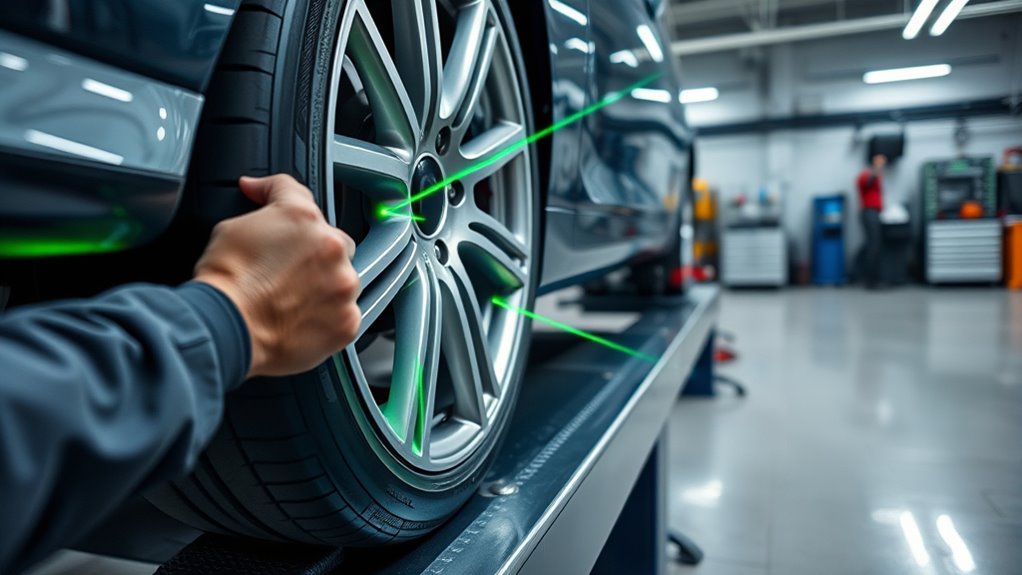
Proper wheel alignment ensures even tire wear, better fuel efficiency, and a safer driving experience.
One of the most noticeable indicators that you need a wheel alignment is uneven tire wear. If you notice bald spots, feathering, or one side of the tire wearing faster than the other, it’s time to get your wheels checked. Ignoring these signs can lead to compromised handling and safety risks, especially during sudden maneuvers or adverse weather conditions. When tires wear unevenly, it also affects grip and braking performance, making your vehicle less responsive and increasing the likelihood of accidents. Regular inspections, especially after hitting a pothole or curb, help you catch alignment issues before they escalate. Proper maintenance is essential for avoiding costly repairs and ensuring your vehicle performs at its best.
Fuel efficiency is another vital factor influenced by wheel alignment. When your wheels are misaligned, your vehicle’s tires don’t roll smoothly, creating unnecessary drag. This resistance causes your engine to exert more effort, which burns more fuel. Over time, even a slight misalignment can lead to noticeable decreases in miles per gallon. Correcting alignment issues not only improves your vehicle’s handling but also helps you save money at the pump. Since fuel prices continue to rise, maintaining proper alignment becomes a simple yet effective way to reduce your operating costs.
Getting your wheel alignment checked regularly is an investment in your vehicle’s longevity and safety. It’s especially important after major road impacts or if your steering feels off-center or pulls to one side. Routine maintenance, including alignment checks, ensures your tires wear evenly, your vehicle handles as intended, and your fuel consumption remains efficient. While it might seem minor, neglecting wheel alignment can lead to bigger problems down the line, including suspension damage or the need for more frequent tire replacements. Staying proactive with alignment helps you enjoy a safer, more economical driving experience, keeping your car running smoothly for miles to come.
Frequently Asked Questions
How Often Should I Check My Wheel Alignment?
You should check your wheel alignment every 6,000 to 10,000 miles or if you notice uneven tire wear, steering issues, or a crooked steering wheel. Regularly, get your tires balanced and suspension inspected to maintain proper alignment. These checks help prevent uneven tire wear, improve handling, and extend your vehicle’s lifespan. If you hit a pothole or curb, it’s a good idea to schedule an alignment check promptly.
Can Poor Alignment Affect My Fuel Efficiency?
Poor alignment can seriously skew your savings by sabotaging your fuel efficiency. When your tires aren’t properly aligned, you may notice sluggish steering response and uneven tire pressure, which cause your vehicle to work harder. This extra effort burns more fuel, costing you more money. Regularly checking your alignment guarantees your tires roll smoothly, steering stays steady, and fuel consumption stays sensible. Keep your car aligned to save both fuel and frustration.
Does Uneven Tire Wear Always Mean Alignment Issues?
Uneven tire wear doesn’t always mean you have alignment issues. It can result from improper tire rotation or suspension problems. To determine the cause, you should regularly rotate your tires and get a suspension inspection. If you notice inconsistent wear patterns, it’s best to have a professional check your alignment and suspension. Addressing these issues promptly can improve your vehicle’s handling and extend tire life.
How Does Wheel Alignment Impact Vehicle Safety?
Proper wheel alignment directly boosts your vehicle’s safety by enhancing steering responsiveness and suspension health. When your wheels are correctly aligned, you’ll experience smoother handling, better control, and fewer unexpected pulls or drifts. Misaligned wheels can cause uneven tire wear, reduce grip, and increase the risk of accidents. So, aligning your wheels regularly helps guarantee a safer, more stable ride, keeping you confident and in control on every journey.
Is Wheel Alignment Necessary After Hitting a Pothole?
Yes, you should get your wheel alignment checked after hitting a pothole. Pothole damage often causes misalignment, which can lead to uneven tire wear and steering issues. Look out for alignment signs like the vehicle pulling to one side or a crooked steering wheel. Addressing these problems promptly guarantees your safety, improves handling, and extends the life of your tires. Don’t ignore the signs—schedule an alignment check right away.
Conclusion
Think of your car’s wheels as the roots of a mighty tree. When they’re properly aligned, your car grows strong and straight, reaching its full potential. But if the roots are off, the branches can twist and struggle. Regular wheel alignment is like tending to those roots—keeping everything balanced and thriving. So, don’t wait for a storm; check your alignment now and keep your vehicle growing strong on every journey.