
Replacing your wheel bearing involves safely lifting your vehicle, removing the wheel, and inspecting surrounding parts. You’ll detach the brake caliper and rotor, then unbolt the hub assembly to access the bearing. Use specialized tools to press in the new bearing or seek professional help if needed. Proper installation ensures smooth handling, noise reduction, and safety. Keep exploring to understand the detailed steps and tips for a successful replacement.
Key Takeaways
- Safely lift and secure the vehicle before removing wheels and accessing the hub assembly.
- Detach brake components and unbolt the hub to access the faulty wheel bearing.
- Use specialized tools or professional assistance for pressing out and installing new bearings.
- Ensure proper seating, torque bolts correctly, and reassemble braking and suspension parts.
- Conduct post-replacement checks for proper alignment, brake function, and noise reduction.
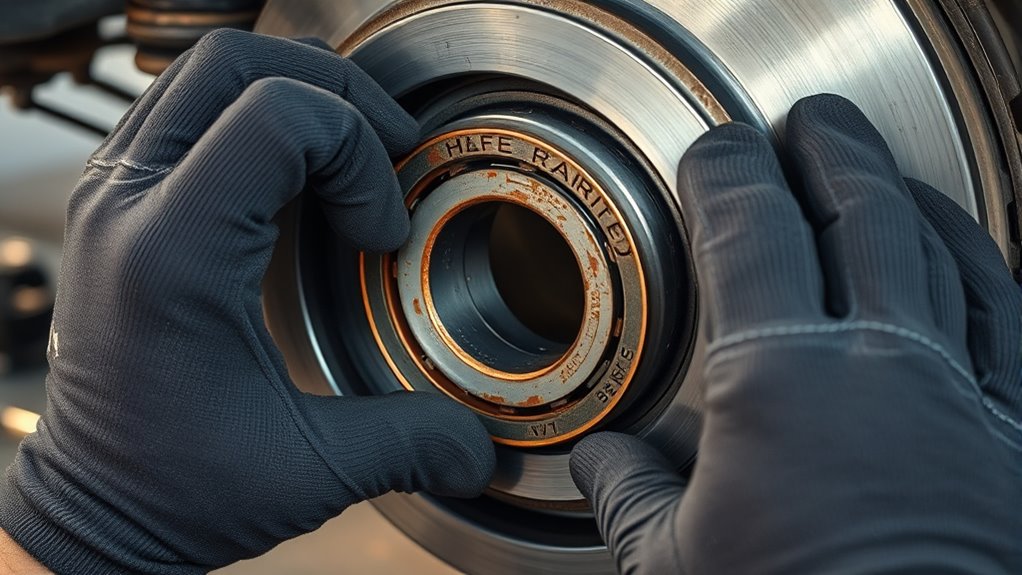
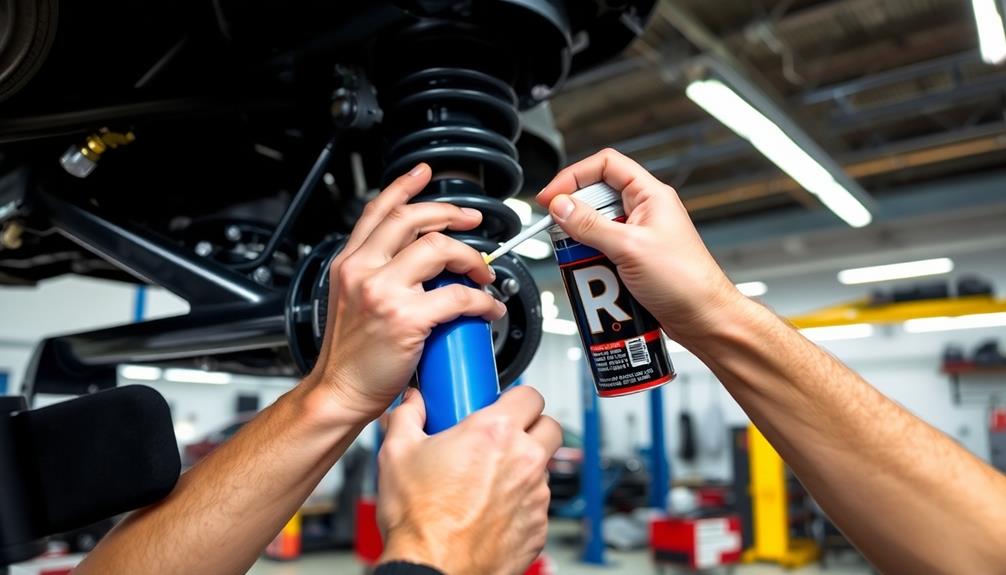
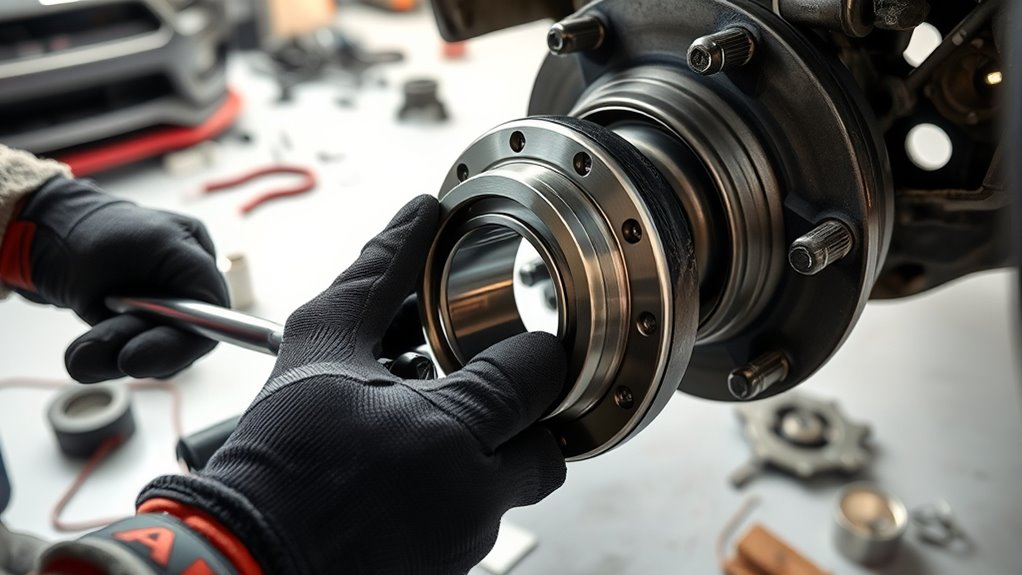
Have you noticed unusual noises or vibrations while driving? These signs often point to problems with your wheel bearing, a key component that allows your wheels to turn smoothly. When wheel bearings start to fail, you might sense a grinding or humming noise that grows louder as you accelerate. You could also feel vibrations through the steering wheel or your seat. Recognizing these early signs is essential because ignoring them can lead to more severe issues, like uneven tire wear or damage to other suspension parts. Sometimes, you might notice alignment issues, where your vehicle drifts to one side, or experience brake noise—squealing or grinding sounds when you press the brake pedal. These symptoms can be interconnected; a faulty wheel bearing can affect your vehicle’s alignment, making steering less precise, and can also cause abnormal brake noise due to uneven contact between the brake components and the rotor. Proper wheel bearing replacement is crucial for maintaining vehicle safety and performance. Replacing a wheel bearing isn’t something to put off because it impacts your safety and driving comfort. The process begins with safely lifting your vehicle using a jack and securing it on stands. Once elevated, you remove the wheel and inspect the brake components and suspension parts for wear or damage. It’s common to find that a bad wheel bearing has caused additional wear, so check for any signs of brake noise or abnormal grinding. To access the bearing, you’ll need to detach the brake caliper and rotor, then unbolt the hub assembly. Sometimes, the bearing is pressed into the hub, which means you’ll need special tools or professional help to remove and replace it properly. When installing the new bearing, ensure it’s seated correctly to prevent future issues. Afterward, reassemble everything in reverse order, torque bolts to manufacturer specifications, and put the wheel back on. Keep in mind, a proper wheel bearing replacement restores smoothness to your ride, eliminates noise, and improves overall vehicle handling. If you notice lingering brake noise or ongoing alignment issues even after replacement, it could indicate additional problems that might need addressing. Always double-check that your wheel is aligned correctly and that your brakes are functioning properly before hitting the road again. Remember, addressing wheel bearing issues promptly saves you money and prevents further damage to your vehicle’s suspension and braking systems. Regular inspections and maintenance can help you catch these problems early, ensuring safer, quieter, and more comfortable driving experiences.
Frequently Asked Questions
How Often Should Wheel Bearings Be Inspected?
You should inspect your wheel bearings every 30,000 to 60,000 miles, especially if you notice noise or roughness. Regular inspections help you monitor lubrication frequency and prevent bearing failure, extending bearing lifespan. Keep an eye out for issues like grinding or wobbling. Proper lubrication is key to maintaining bearing health, so don’t overlook inspections—doing so ensures your vehicle runs smoothly and safely over time.
Can I Drive With a Faulty Wheel Bearing?
You shouldn’t drive with a faulty wheel bearing because it jeopardizes driving safety. A failing bearing can cause noise detection issues, such as grinding or humming sounds, which are signs of trouble. Continuing to drive risks damaging other parts of your vehicle and losing control. If you notice any unusual noise or vibration, get your wheel bearings inspected and replaced promptly to guarantee safe driving conditions.
What Tools Are Essential for Wheel Bearing Replacement?
Did you know that over 60% of car repairs involve wheel bearings? To replace them, you need an essential tools overview: a jack, lug wrench, socket set, bearing puller, and possibly a hammer. Knowing bearing types helps you determine the right tools. With the proper tools, you can efficiently remove and install new bearings, ensuring your vehicle stays safe and smooth on the road.
How Long Does a Typical Wheel Bearing Replacement Take?
A typical wheel bearing replacement takes about 1.5 to 3 hours, depending on your vehicle and experience. During this time, you’ll notice bearing noise diminish, signaling the fix is functioning. Keep in mind, the replacement cost varies, but investing in quality parts guarantees longevity and smooth driving. You can often save time and money by doing it yourself if you have the right tools and some mechanical skill.
Are There Different Types of Wheel Bearings?
Imagine your vehicle’s smooth glide, supported by different types of wheel bearings. Yes, there are several types, like ball bearings and roller bearings, each with unique bearing materials and designs. You’ll find comparison charts helpful to see how they differ in load capacity and durability. Choosing the right bearing depends on your driving needs, ensuring your ride remains seamless and safe.
Conclusion
Replacing your wheel bearing might seem intimidating at first, but with the right tools and steps, you can do it yourself. Think of it like giving your car a needed upgrade—once done, you’ll enjoy smoother rides and improved safety. Even if you’re worried about the complexity, remember that patience and careful work make all the difference. With a little effort, you’ll save money and gain confidence in maintaining your vehicle.