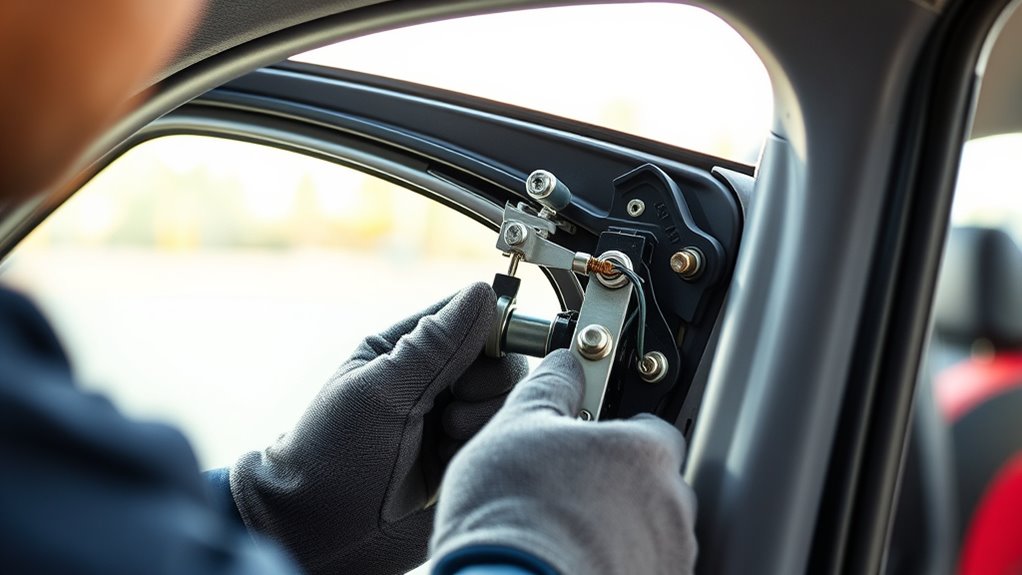

If your window isn’t moving smoothly or gets stuck, a window regulator might be faulty. The process involves disconnecting the power, removing the door panel, detaching the glass, and replacing the old regulator or motor. It’s best to replace the entire regulator assembly if the motor or gear is worn out. Proper tools and careful handling are essential for a successful repair. Keep going to get detailed steps and tips to make the job easier.
Key Takeaways
- Identify signs of regulator failure, such as unresponsive or stuck windows, strange noises, or uneven movement.
- Diagnose whether the issue stems from the motor, internal gears, or mechanical components.
- Disconnect power and carefully detach the glass before removing the old regulator assembly.
- Replace the entire regulator with a new unit, ensuring proper alignment and secure attachment.
- Test window operation before fully reassembling the door panel to confirm successful replacement.

If your car window won’t roll up or down smoothly, it’s likely time to replace the window regulator. The window regulator is responsible for moving your window glass up and down, and when it malfunctions, it can leave you stuck with a jammed or unresponsive window. During power window repair, you’ll often discover issues with the regulator motor or the mechanical components that drive the glass. Regulator motor issues are common causes of window failure, especially if you hear strange noises or notice inconsistent movement. Replacing the entire regulator assembly is usually necessary because these parts are designed to work together, and a faulty motor typically means the entire unit needs attention.
When you suspect the regulator motor is the problem, it’s essential to diagnose correctly. If your window makes grinding or clicking sounds when you press the switch, and the glass doesn’t move, then the motor might be burnt out or struggling to generate enough power. Sometimes, the motor’s internal gears wear down, causing slippage or complete failure. If you’ve already tried troubleshooting by checking the fuse and wiring, but the window still won’t operate, then replacing the regulator is the next logical step. Keep in mind that power window repair can be straightforward if you’re comfortable with basic tools, but it can also be tricky because of tight spaces and delicate wiring. Additionally, understanding the specialized components involved can help ensure a successful repair.
Removing and replacing the regulator requires disconnecting the power source and carefully detaching the glass from the regulator assembly. Once the old regulator is out, installing the new one involves aligning it properly with the window track and securing it with bolts. Make sure the regulator motor is functioning correctly before reassembling everything. Testing the window before fully reinstalling the door panel can save you time if something isn’t working properly. If the replacement regulator includes a new motor, this can help prevent future issues and provide a more reliable power window operation.
Frequently Asked Questions
How Long Does a Window Regulator Replacement Typically Take?
A window regulator replacement usually takes about 1 to 2 hours, depending on your vehicle and the complexity of the repair. The timing estimates can vary if additional parts need replacement or if access is difficult. You should expect a straightforward repair to be quicker, while more involved repairs may take longer. Keep in mind that the repair duration also depends on your mechanic’s experience and the tools they use.
Are There Any Signs Indicating a Failing Window Regulator?
You’ll notice your window acting like a stubborn mule if the window regulator is failing. Common signs include unusual window noise when moving it up or down and glass difficulty, such as it not staying in place or moving slowly. If your window suddenly becomes jerky or won’t stay put, those are red flags. Catching these signs early can save you time and money on repairs.
Can I Replace a Window Regulator Myself?
Yes, you can replace a window regulator yourself if you’re comfortable with manual tools and have some mechanical skills. You’ll need basic tools like screwdrivers and pliers. Keep in mind, repair costs are lower if you do it yourself, but mistakes can cause more damage. Follow a step-by-step guide, take your time, and make certain of safety. If unsure, consulting a professional can prevent costly errors.
How Much Does a Window Regulator Cost?
The cost estimate for a window regulator varies, typically between $50 and $200, depending on your car’s make and model. You should consider different part options, like OEM or aftermarket, which can influence the price. Keep in mind that labor costs aren’t included in the part price, so if you hire a professional, expect to pay additional fees. Doing it yourself can save money, but guarantee you’re comfortable with the task.
Will Replacing the Regulator Fix All Window Issues?
Replacing the window regulator is like fixing a key part of a machine, but it might not solve all issues. If your window struggles to move or makes noise, a new regulator can help, but you’ll also want to check the window motor and glass alignment. Sometimes, the motor is the culprit, or the glass isn’t aligned properly, so replacing the regulator alone may not fix everything.
Conclusion
Replacing your window regulator is like giving your car superpowers—suddenly, your window glides up and down faster, smoother, and more effortlessly than ever before. Imagine never fighting with a stubborn window again, feeling like you’ve unveiled a secret code to automotive perfection. With a little effort, you’ll transform your vehicle into a high-tech fortress of convenience. Don’t wait—take control now and turn that broken window into a thing of the past!