Differentials and gear ratios work together to control how power from your vehicle’s engine reaches the wheels. The differential allows wheels on each side to turn at different speeds, which is essential for smooth turns. Gear ratios influence how much torque and speed your vehicle delivers, with higher ratios providing more power for towing or off-road use. Understanding these components helps optimize your vehicle’s performance. Keep exploring to learn how different setups affect your driving experience.
Key Takeaways
- Differentials distribute torque from the driveshaft to the wheels, allowing them to rotate at different speeds during turns.
- Gear ratios in differentials determine the torque multiplication and affect acceleration and top speed.
- A higher gear ratio (e.g., 4.10:1) increases torque for better towing and off-road performance but reduces top speed.
- A lower gear ratio (e.g., 3.23:1) improves fuel efficiency and higher cruising speeds.
- Selecting appropriate gear ratios and differential types optimizes vehicle handling, performance, and terrain capability.
Understanding differentials and gear ratios is essential for grasping how vehicles transfer power from the engine to the wheels. When you look under a vehicle, you’ll notice various axle types—solid axles, independent suspensions, or hybrid setups—that influence how power is delivered and how the vehicle handles different terrains. Each axle type has unique characteristics that determine the distribution of torque to the wheels and impact overall performance. Solid axles are sturdy and simple, often used in trucks or off-road vehicles, providing durability and equal power distribution. Independent axles, common in passenger cars, allow each wheel to move independently, offering better ride comfort and handling. Knowing the axle type helps you understand the mechanics of power delivery and why certain vehicles perform better in specific conditions. Additionally, the type of electric motor used in electric bikes, such as hub motors or mid-drive systems, affects how power is transmitted and how the bike performs across different terrains.
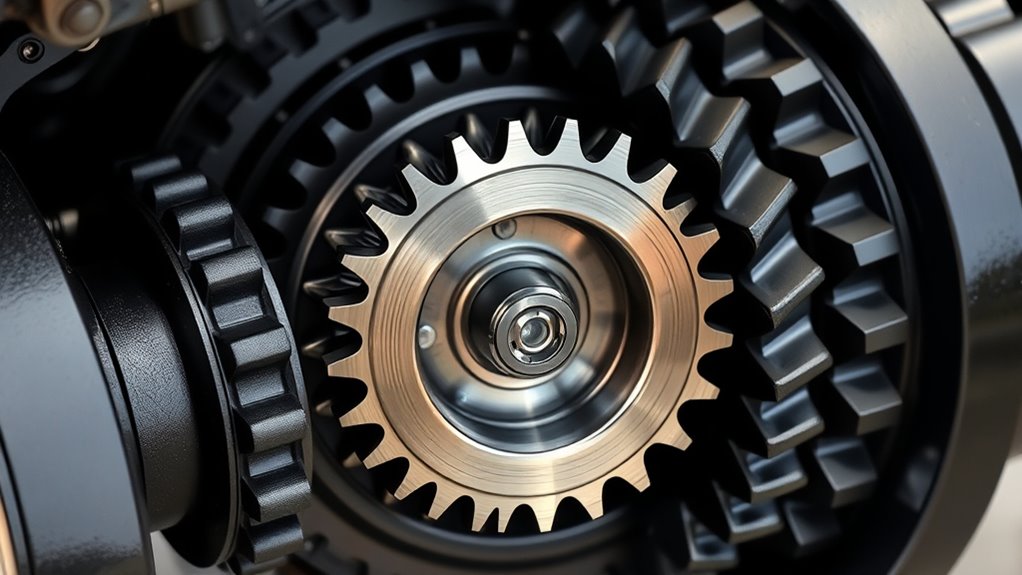
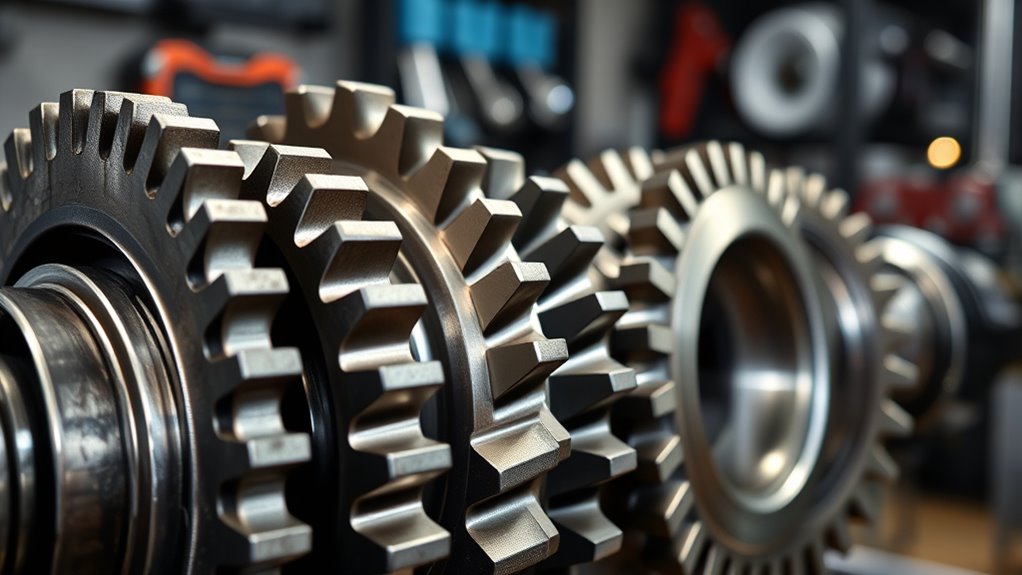
The gear ratio calculation is another critical element in understanding vehicle performance. The gear ratio refers to the relationship between the number of teeth on the driving gear (pinion) and the driven gear (ring gear). It determines how many times the engine’s output shaft turns for each wheel rotation. To calculate this, you divide the number of teeth on the ring gear by the number of teeth on the pinion gear. For example, if the ring gear has 41 teeth and the pinion has 10, the gear ratio is 4.10:1. This ratio influences acceleration, top speed, and fuel efficiency. A higher gear ratio (like 4.88:1) provides more torque and quicker acceleration, ideal for towing or off-road driving, but it tends to reduce top speed and increase engine RPM at highway speeds. Conversely, a lower gear ratio (such as 3.23:1) favors fuel economy and higher top speeds but offers less torque for heavy loads.
Understanding axle types and gear ratio calculation allows you to better appreciate how different vehicles are configured for their intended use. When you choose a vehicle or modify one, considering these factors can optimize performance for your needs. For instance, if you’re aiming for better towing capacity, selecting an axle with a robust axle type and a higher gear ratio makes sense. On the other hand, if fuel efficiency and highway cruising are priorities, opting for a different setup with a lower gear ratio and an axle designed for smooth ride quality would serve you better. The interplay between axle types and gear ratios ultimately shapes the driving experience, making it essential to grasp these concepts for proper vehicle understanding and customization. Recognizing the electric motor types used in electric bikes can further help in selecting the right model for specific terrains and performance goals.
Frequently Asked Questions
How Do Differentials Impact Vehicle Handling During Turns?
During turns, the differential adjusts torque distribution between your wheels, ensuring smoother handling. It allows the outer wheel to spin faster than the inner wheel, maintaining ideal wheel traction. This balance helps you maintain control and stability, especially in sharp corners. By managing torque distribution effectively, the differential enhances your vehicle’s ability to handle turns confidently, reducing skidding and improving overall maneuverability.
Can Gear Ratios Be Adjusted for Off-Road Performance?
Yes, you can adjust gear ratios for off-road performance by installing a custom gear set. Off-road tuning often involves selecting a lower gear ratio, which provides more torque and better control on rough terrain. This customization helps you improve your vehicle’s ability to handle steep inclines and challenging obstacles. By tailoring your gear ratios, you guarantee ideal performance, making off-road adventures smoother and more responsive.
What Maintenance Is Required for Differentials Over Time?
Your differential needs more attention than a celebrity’s fan mail! Regularly check and change the differential fluid to prevent catastrophic wear. Don’t forget to inspect and replace seals when they start leaking; otherwise, you risk major damage. Proper maintenance keeps your differential running smoothly, saves you money, and avoids unexpected breakdowns. Make it a habit—your vehicle’s health depends on it!
How Do Limited-Slip Differentials Differ From Open Ones?
Limited-slip differentials differ from open differentials by providing better traction during acceleration or uneven surfaces. While an open differential allows wheels to spin freely, a limited-slip uses clutch plates or other mechanisms to limit wheel spin, distributing torque more evenly. This helps prevent wheel slip and improves handling, especially in off-road or slippery conditions. You’ll notice increased stability and control with a limited-slip, especially during challenging driving situations.
Are There Differences in Gear Ratios for Electric Versus Gas-Powered Vehicles?
You’ll find that electric vehicles often have different gear ratios compared to gas-powered cars, mainly to optimize battery efficiency and motor torque. Electric motors deliver instant torque, so they typically use fewer or more optimized gear ratios to maximize acceleration and range. In contrast, gas vehicles need gear ratios that balance fuel efficiency and power. These differences help electric cars achieve better performance and efficiency tailored to their unique powertrain.
Conclusion
As you explore differentials and gear ratios, you realize how these hidden components guide your vehicle’s performance. Sometimes, it feels like the right gear just clicks into place at the perfect moment, almost by chance. It’s a reminder that even in mechanics, small adjustments can lead to big results. So, next time you’re shifting gears, remember—sometimes, the right setup isn’t planned; it’s a fortunate coincidence that keeps you moving forward smoothly.