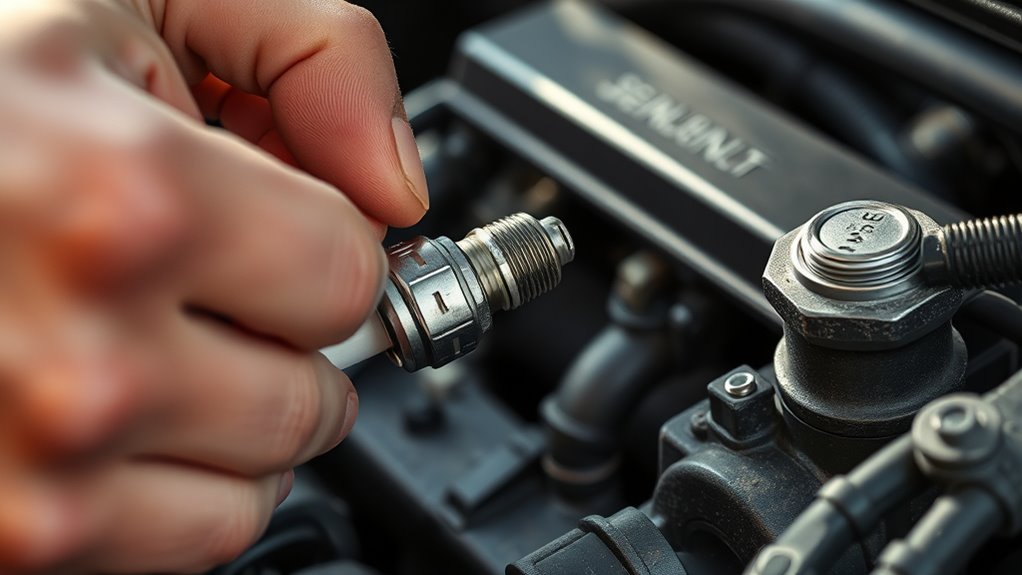

To replace spark plugs yourself, start by disconnecting the battery and letting the engine cool. Remove the wires or coils, then use a spark plug socket to carefully twist out the old plugs. Measure and adjust the gap on new plugs using a gap tool to match your vehicle’s specifications. Thread the new plugs in by hand, tighten them properly, and reconnect the wires. If you keep exploring, you’ll gain even more helpful tips.

Get business pricing on garage and car supplies
- Business-only prices and quantity discounts
- Tax-exempt purchasing
- Multiple users, one account, clear invoices
Key Takeaways
- Check your vehicle’s owner manual for the recommended spark plug gap and specifications before starting.
- Use a spark plug gap tool to measure and adjust the gap to ensure proper ignition and engine performance.
- Disconnect the negative battery terminal and note the firing order before removing old spark plugs.
- Carefully thread new plugs by hand, then tighten to the manufacturer’s specified torque to prevent damage.
- After installation, reconnect wires or coil packs securely and verify proper engine operation.
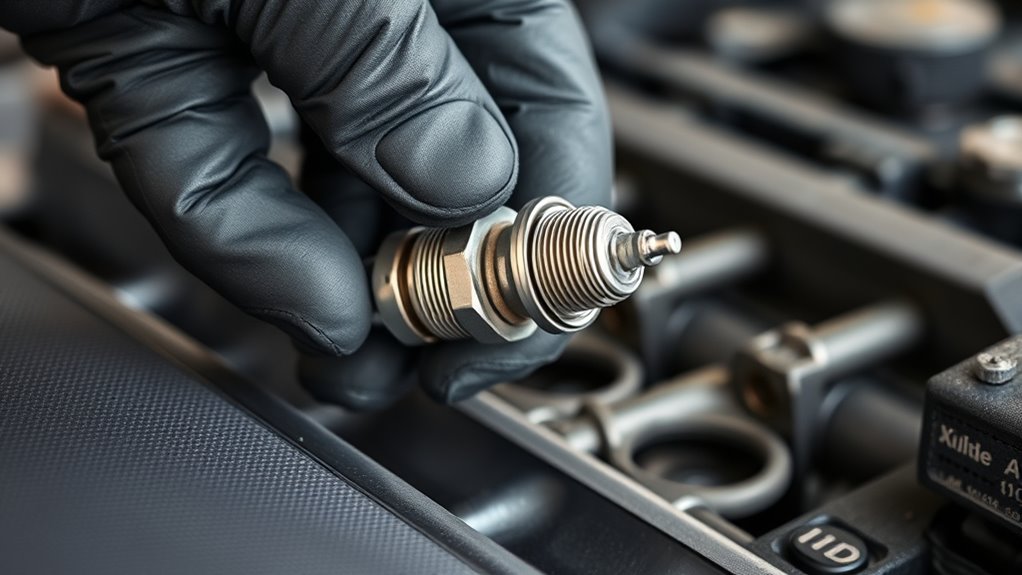
Replacing your spark plugs yourself is a straightforward way to improve your vehicle’s performance and save money. When it comes to doing the job right, paying attention to the spark plug gap is vital. The spark plug gap is the distance between the center and ground electrode, and if it’s not set correctly, your engine won’t run smoothly. Most spark plugs come with a recommended gap specified in your vehicle’s owner manual or on the spark plug packaging. You’ll need a spark plug gap tool to measure and adjust this gap precisely before installing the new plugs. Setting the correct gap ensures proper ignition and combustion, which directly influences your engine’s power and fuel efficiency. Proper gap setting is essential for optimal engine operation and longevity.
While replacing the spark plugs, it’s also a good opportunity to check your ignition timing. Proper ignition timing ensures the spark ignites the air-fuel mixture at just the right moment in the combustion cycle. If the timing is off, you might notice rough idling, poor acceleration, or increased fuel consumption. Although ignition timing is usually controlled by your vehicle’s computer, older models rely on mechanical timing, which you can adjust if needed. When installing new plugs, double-check that they are seated correctly and tightened to the manufacturer’s specifications. Over-tightening can damage the ceramic insulator, while under-tightening can lead to misfires or damage from vibrations. Proper torque ensures a good seal and peak performance.
Before starting, make sure your engine is cool to prevent injury and ease the removal of old plugs. Disconnect the negative battery terminal to avoid any accidental sparks. Remove the spark plug wire or coil pack from each plug carefully, noting their positions, especially if your vehicle has a specific firing order. Use a spark plug socket and ratchet to loosen and remove the old plugs. When installing the new ones, thread them in by hand first to avoid cross-threading, then tighten them carefully. Once installed, reattach the wires or coil packs securely.
As an affiliate, we earn on qualifying purchases.
Frequently Asked Questions
Can I Replace Spark Plugs Without Removing the Engine Cover?
Yes, you can replace spark plugs without removing the engine cover, but it depends on your vehicle’s design. You’ll need to carefully access the spark plugs, which might require engine cover removal for better spark plug access. Sometimes, the cover is in the way, making it hard to reach the plugs. If you’re comfortable and have the right tools, removing the engine cover guarantees easier and safer spark plug replacement.
What Are the Signs of a Faulty Spark Plug?
You’ll notice a faulty spark plug if your engine misfires, causing rough idling or hesitation. Ignition issues might lead to difficulty starting your car, and you may see a decrease in fuel efficiency. You might also experience increased emissions or engine knocking. These signs indicate your spark plugs aren’t firing properly, so it’s important to check and replace them promptly to keep your vehicle running smoothly and efficiently.
How Do I Prevent Cross-Threading During Installation?
To prevent cross-threading during installation, you should carefully align the spark plug’s threads with the hole, ensuring proper thread alignment before turning. Hand-tighten the plug first to feel for smooth engagement. Then, use a torque wrench to tighten it to the manufacturer’s torque specifications. This prevents over-tightening and cross-threading, ensuring the spark plug seats properly and maintains a secure connection for ideal engine performance.
What’s the Ideal Gap Size for Different Engine Types?
Think of the spark plug gap as the heartbeat of your engine’s performance. For most gas engines, your ideal spark plug gap ranges from 0.028 to 0.060 inches, but it varies with engine compatibility. Always check your vehicle’s owner manual or specifications to find the precise gap size. Setting the correct spark plug gap guarantees smooth operation, better fuel efficiency, and prevents misfires, keeping your engine running like a well-oiled machine.
How Often Should I Check Spark Plug Wires During Replacement?
You should check your spark plug wires during each inspection, ideally every 30,000 miles or as recommended by your vehicle’s manual. Regular spark plug inspection helps identify wear or damage early, ensuring peak performance. Replace spark plug wires if you notice cracks, corrosion, or if they’re brittle. Keeping to a consistent wire replacement frequency prevents misfires and maintains engine efficiency, saving you time and costly repairs down the line.
Conclusion
Now that you’ve learned the basics of replacing your spark plugs, you’re better equipped to give your engine a gentle nudge back to life. With a little patience and attention, you’ve taken a small step that can lead to smoother rides and better performance. Think of it as tending to a delicate garden—each careful touch helps your vehicle flourish silently and reliably. Trust your hands, and enjoy the quiet confidence that comes with DIY care.
Halloween Picks
halloween
As an affiliate, we earn on qualifying purchases.