
To DIY clean your throttle body, first make certain the engine is cool and disconnect the negative battery terminal. Remove the air intake hose to access the throttle body, then spray a specialized cleaner onto a cloth or soft brush. Gently scrub away carbon deposits on the throttle plate and surrounding areas, being careful around sensors and wiring. Reassemble everything, reconnect the battery, and start the engine to let it idle. If you want to master the full process, keep going.
Key Takeaways
- Ensure the engine is cool and disconnect the negative battery terminal before starting.
- Remove the air intake hose to access the throttle body carefully.
- Spray throttle body cleaner onto a cloth or brush and clean the throttle plate and surrounding areas gently.
- Reassemble the intake hose, reconnect the battery, and start the engine to let it idle for calibration.
- Perform idle adjustments if necessary to ensure smooth engine operation and optimal performance.

Over time, dirt and carbon buildup can cause your throttle body to become dirty, leading to rough idling, sluggish acceleration, and decreased fuel efficiency. When this happens, your engine struggles to maintain a smooth and consistent idle, often causing stalling or surging. Cleaning your throttle body is a straightforward way to restore proper airflow and improve your vehicle’s performance. An essential step in this process is understanding how your air intake system and idle adjustment work together. The air intake draws in air needed for combustion, and when it’s clogged or dirty, it hampers airflow, making your engine work harder. Cleaning the throttle body clears out the accumulated deposits, ensuring air moves freely through the intake system. Regular maintenance of your throttle body can also help prevent costly repairs and extend the lifespan of your engine components.
Dirty throttle bodies cause rough idle, sluggish acceleration, and poor fuel economy—cleaning restores airflow and engine performance.
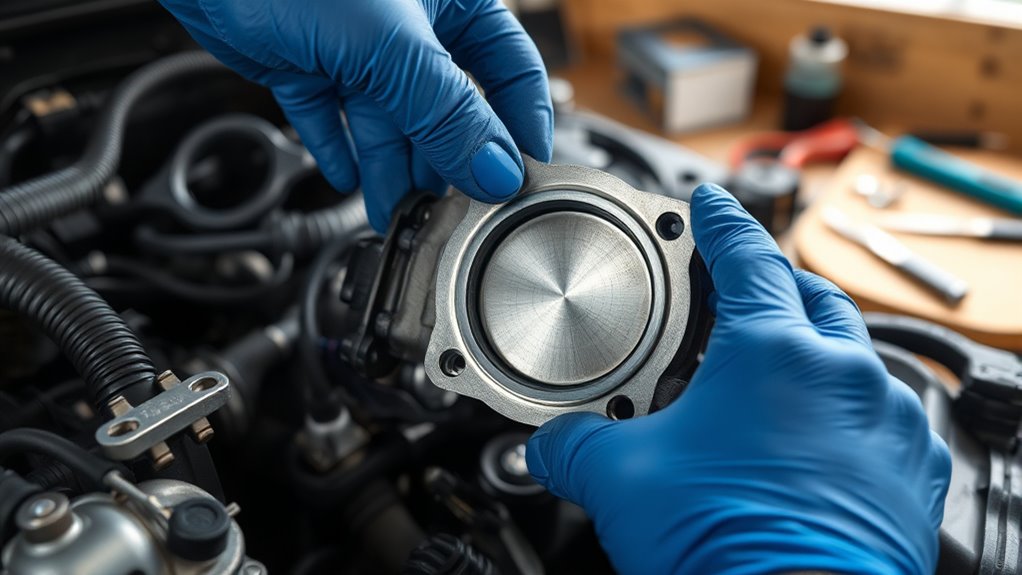
Before you begin, make sure your engine is cool. Disconnect the negative terminal of your battery to prevent any electrical issues. Locate the throttle body, which is usually connected to the air intake hose, often near the top of the engine. Once identified, remove the air intake hose carefully. You’ll see the throttle plate inside the body, which opens and closes to regulate airflow. Over time, carbon deposits can cause the throttle plate to stick or not close completely, impacting idle quality. This is where a proper idle adjustment becomes important after cleaning, as you may need to recalibrate the throttle position for ideal engine performance.
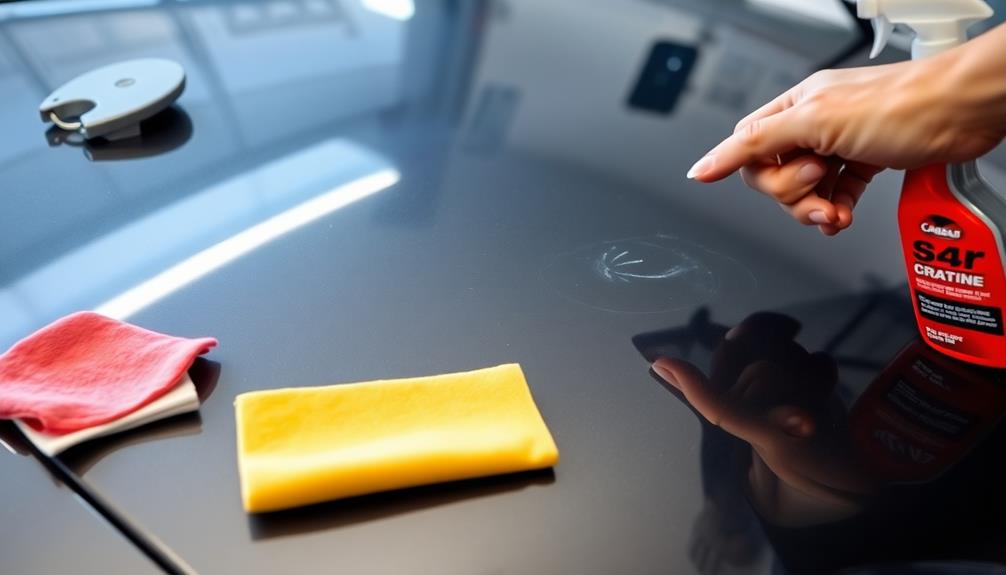
To clean the throttle body, use a throttle body cleaner or a carburetor cleaner designed for this purpose. Spray it onto a clean cloth or a soft brush and gently scrub the inside of the throttle body, focusing on the throttle plate and surrounding areas. Be cautious not to damage any sensors or wiring. Wiping away the carbon buildup restores the smooth operation of the throttle plate, allowing for better air intake and more precise control of engine parameters. Once cleaned, you might need to perform an idle reset or adjustment, which involves starting your engine and letting it idle for a few minutes so the ECU can recalibrate the idle settings.
After cleaning, reconnect the air intake hose securely, reconnect the battery, and start your engine. Observe how it idles; if it’s rough or unstable, you might need to perform an idle adjustment. This can typically be done via your vehicle’s onboard computer or manually, following your vehicle’s specific procedures. Proper maintenance of your throttle body ensures that your air intake remains unobstructed, your idle remains stable, and your engine runs efficiently. Regular cleaning and understanding the air intake system are essential for keeping your engine running smoothly and efficiently.
Frequently Asked Questions
How Often Should I Clean My Throttle Body?
You should clean your throttle body every 30,000 to 50,000 miles or when you notice rough idling or poor acceleration. Regular air filter replacements help prevent buildup that can affect throttle performance. During cleaning, you might need to do an idle adjustment afterward. Keeping up with these maintenance tasks guarantees your engine runs smoothly, improves fuel efficiency, and extends the life of your throttle body.
Can I Use Household Cleaners for Throttle Body Cleaning?
You shouldn’t use household cleaners on your throttle body because they can cause chemical risks and damage sensitive components. These cleaners often contain harsh chemicals that aren’t designed for automotive parts, potentially leading to corrosion or residue buildup. Instead, opt for a specialized throttle body cleaner, which is formulated to safely remove dirt and grime without harming your engine’s parts. Always follow safety guidelines when cleaning to avoid unnecessary risks.
What Tools Are Essential for DIY Throttle Body Cleaning?
Think of your tools overview like assembling a puzzle—you’ll need the right pieces for a smooth job. For DIY throttle body cleaning, you’ll need a screwdriver, a socket set, and a soft cloth. A throttle body cleaner spray is essential for cleaning techniques. Don’t forget safety gloves and eye protection. These tools help you remove grime effectively and guarantee a thorough clean, making your engine run smoothly again.
Is It Necessary to Disconnect the Battery Before Cleaning?
Yes, you should disconnect the battery before cleaning your throttle body to guarantee battery safety and avoid electrical hazards. Taking this step prevents accidental short circuits or electrical shocks while working on the vehicle’s electrical system. Always follow proper electrical precautions, such as wearing gloves and working in a dry environment. Disconnecting the negative terminal is especially important, giving you peace of mind and safeguarding your vehicle’s electronics during the cleaning process.
How Can I Tell if My Throttle Body Needs Cleaning?
You can tell if your throttle body needs cleaning by noticing irregular idle speed, sluggish acceleration, or stalling, and by checking sensor readings that seem off. When these symptoms occur, your throttle body might be dirty, affecting airflow and performance. Regularly inspecting for buildup, listening for rough idling, and monitoring engine diagnostics help you identify the need for cleaning before issues worsen.
Conclusion
So, there you have it—your secret weapon against the dreaded sluggish throttle. Who knew that a simple can of cleaner and a bit of elbow grease could transform your car’s performance from sluggish to sublime? Next time your engine stutters, just remember: you’re now a DIY maestro, wielding the power to restore smooth acceleration. Because nothing says “I care” like tackling your own throttle body—one spray at a time.