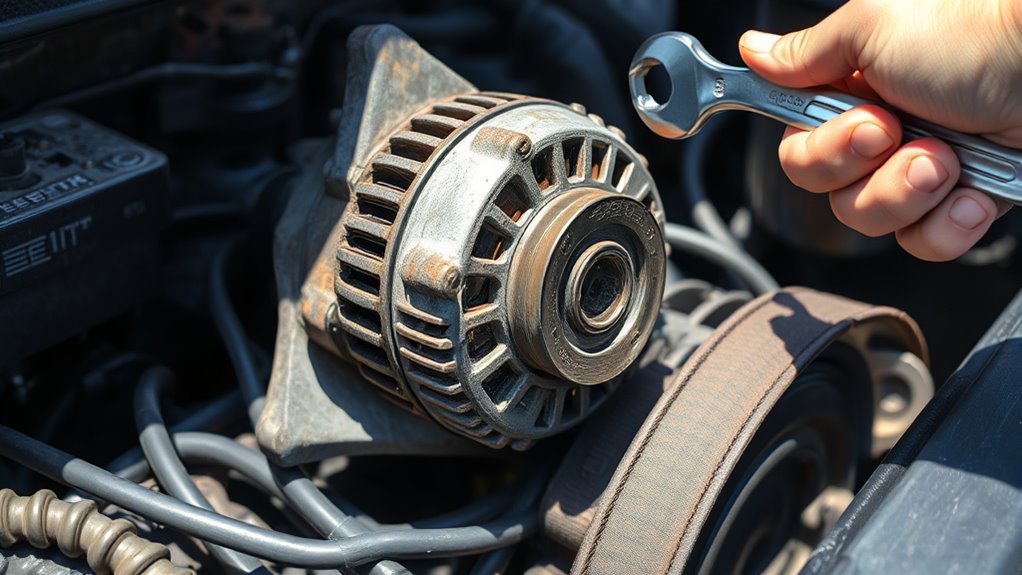

If your alternator overcharges, you risk damaging your battery, causing overheating, swelling, or leaks, and potentially harming other electronic components. This often happens when the voltage regulator fails, letting excess voltage flow into your system. To fix it, you should have your alternator and regulator tested, and replace faulty parts promptly. Addressing overcharging early can save you from costly repairs later—keep going to discover how to prevent and fix this common issue.
Key Takeaways
- Overcharging occurs when the voltage exceeds 14.8V, mainly due to a faulty voltage regulator or alternator components.
- Risks include battery overheating, swelling, leaking, and reduced lifespan of the battery and electrical systems.
- Signs of overcharging include flickering warning lights, dimming headlights, and battery overheating or failure.
- Testing with a multimeter (13.8–14.8V) helps diagnose overcharging; high readings indicate potential issues.
- Fixes involve replacing or repairing the voltage regulator or alternator and addressing electrical system faults promptly.
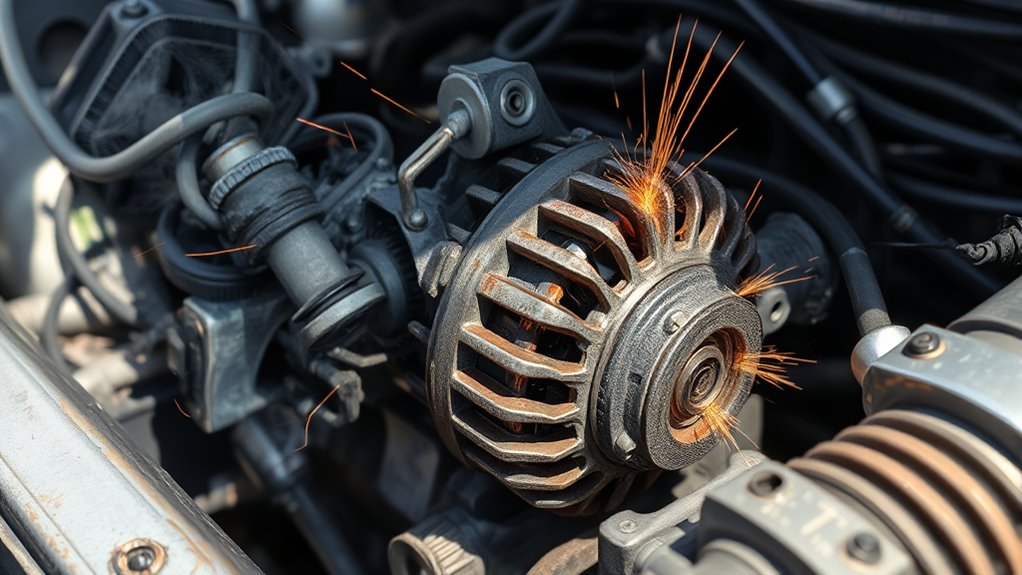
If your vehicle’s alternator is overcharging, it can cause serious damage to your car’s electrical system and battery. Overcharging occurs when the alternator produces a voltage higher than the recommended level, typically above 14.8 volts. This excess voltage can lead to overheating of your battery and other electronic components, ultimately shortening their lifespan. To prevent these issues, it’s essential to keep an eye on your battery health and perform regular alternator testing. When you notice signs like the battery warning light flickering or dimming headlights, it’s time to investigate the root cause.
Overcharging alternators can damage your battery and electrical system, so regular testing helps prevent costly repairs.
One of the first steps you should take is to check your battery health. A healthy battery maintains its charge and handles electrical loads efficiently, but overcharging can cause it to swell, leak, or even fail prematurely. When the alternator overcharges, it pushes too much current into the battery, which can accelerate corrosion and damage internal plates. This not only reduces your battery’s capacity but also increases the risk of sudden breakdowns. If you suspect your battery isn’t holding a charge as well as it used to, it’s wise to have it tested alongside your alternator. Many auto parts stores offer free alternator testing, where they measure the output voltage and verify it stays within safe limits.
Performing alternator testing is essential to diagnosing overcharging. During this process, a mechanic or even you with a multimeter can measure the voltage at the battery terminals with the engine running. Ideally, the voltage should remain steady around 13.8 to 14.8 volts. If readings consistently spike above this range, it indicates that your alternator is overcharging. Some modern vehicles also feature built-in diagnostic systems that monitor electrical components and alert you to potential issues. Remember, a faulty voltage regulator is often responsible for overcharging; this component controls alternator output and should be replaced if found defective. Additionally, understanding cybersecurity vulnerabilities in vehicle electronic systems can help prevent malicious interference that could affect your vehicle’s electrical performance.
Addressing an overcharging alternator involves replacing or repairing the faulty components, such as the voltage regulator or the alternator itself. Ignoring the problem can lead to a cascade of electrical failures, including fried sensors, damaged wiring, and a ruined battery. Regular maintenance, including battery health checks and alternator testing, helps catch these issues early. By staying vigilant and addressing signs of overcharging promptly, you safeguard your vehicle’s electrical system, extend your battery’s lifespan, and avoid costly repairs down the line.
Frequently Asked Questions
How Can I Tell if My Alternator Is Overcharging Without a Meter?
You can tell if your alternator is overcharging by watching for an alternator warning light on your dashboard, which often indicates electrical issues. Additionally, if you notice voltage fluctuations—like flickering headlights or dimming interior lights—it’s a sign of overcharging. Pay attention to any unusual electrical behavior, and if these symptoms occur, get your vehicle checked promptly to prevent damage and guarantee your alternator isn’t overcharging.
What Are the Environmental Impacts of Alternator Overcharging?
When your alternator overcharges, it can cause environmental harm by increasing battery corrosion, leading to harmful chemical leaks into soil and water. This overcharging also contributes to power pollution, as excess electrical energy is wasted and often results in increased emissions from energy production. You might unknowingly promote environmental degradation, so addressing overcharging helps protect ecosystems and reduces your vehicle’s overall environmental footprint.
Can Overcharging Damage Other Vehicle Components?
Yes, overcharging can damage other vehicle components. When your alternator overcharges, it can cause battery damage, leading to leaks or failure. The excess voltage may also harm sensitive electrical parts, increasing the risk of electrical fires. You should have your charging system inspected promptly to prevent these issues. Proper maintenance ensures your vehicle runs smoothly and avoids costly repairs from overcharging-related damage.
How Often Should I Check My Alternator’s Voltage?
You should check your alternator’s voltage at least once every few months, especially if you notice electrical issues. Perform alternator testing with a multimeter to make certain proper voltage regulation, typically around 13.8 to 14.4 volts when the engine runs. Regular checks help catch overcharging early, preventing damage to your battery and other electrical components. If the voltage is outside this range, have your alternator inspected and repaired promptly.
Are There Any DIY Solutions to Fix Overcharging Issues?
Think of fixing overcharging like tuning a guitar—small adjustments make a big difference. You can check and replace the alternator belt if it’s loose or worn, which affects the alternator’s performance. Additionally, inspect and replace the voltage regulator if it’s faulty, as it controls the charging process. While some fixes are DIY-friendly, always exercise caution, and consider professional help if you’re unsure—safety first!
Conclusion
If you ignore alternator overcharging, you’re risking more than just a dead battery—you could set your entire vehicle ablaze or turn your engine into a ticking time bomb. Don’t let a small electrical hiccup turn into a catastrophic disaster; tackle the issue head-on with proper fixes. By staying vigilant and addressing overcharging promptly, you’ll preserve your car’s life, save thousands in repairs, and keep yourself safe from an electrical inferno.