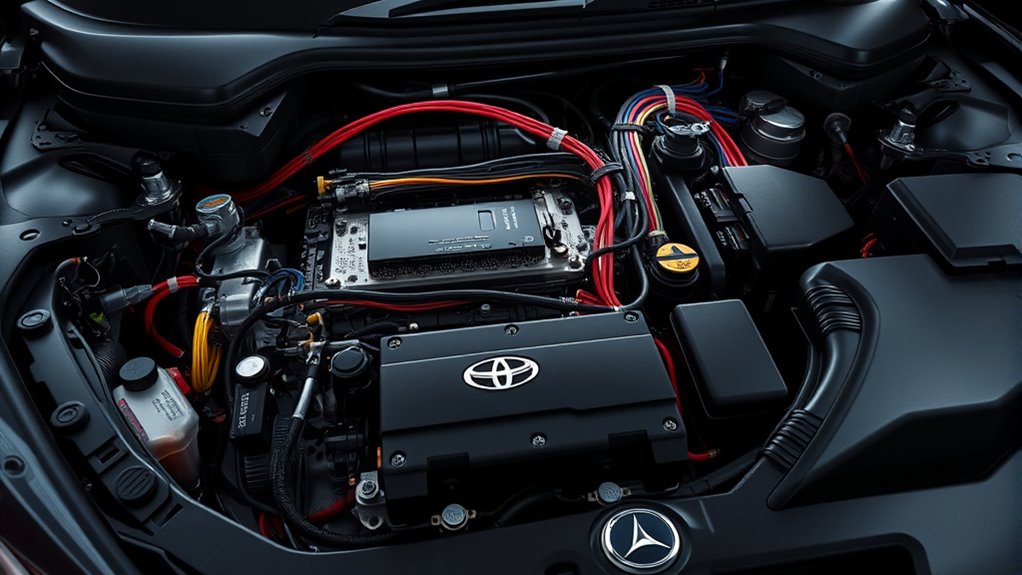

A body control module (BCM) is an essential part of your vehicle’s electrical system, acting as the central brain that manages functions like lighting, door locks, windows, and wipers. It processes inputs from switches and sensors to send signals to various actuators, ensuring smooth operation of interconnected systems. When the BCM malfunctions, multiple features can fail simultaneously, making troubleshooting challenging. Keep exploring to learn how these modules keep your vehicle running reliably.
Key Takeaways
- BCMs coordinate and control various vehicle electrical systems like lighting, locks, and wipers.
- They process inputs from sensors and switches to send signals to actuators.
- BCM malfunctions can cause multiple system failures and dashboard warning lights.
- Diagnostics involve error code scans, wiring checks, and reprogramming or replacing the module.
- They communicate with other modules, enabling features like adaptive headlights and keyless entry.

Body control modules (BCMs) are essential electronic components in modern vehicles that manage a wide range of functions, from lighting and door locks to engine performance. As you drive, these modules act as the central hub for many of your vehicle’s electrical systems, coordinating signals and commands to guarantee everything works smoothly. Understanding how BCMs operate can help you better grasp your vehicle’s complex electronic architecture and recognize potential issues before they become major problems.
Your vehicle’s electrical systems rely heavily on the BCM to function correctly. For example, when you press a button to lock or unlock your doors, the BCM processes that input and sends signals to the door lock actuators. Similarly, it controls interior lighting, window operations, and even the operation of your windshield wipers. Because these functions are interconnected, a malfunction in the BCM can cause multiple systems to fail simultaneously, making troubleshooting more challenging. That’s why diagnostic procedures are vital when your vehicle exhibits problems related to electrical components. Using specialized tools, technicians can scan the BCM for error codes, analyze data logs, and identify faulty modules or wiring issues. These procedures are essential for pinpointing problems quickly and accurately, saving you time and money.
A malfunction in the BCM can cause multiple electrical systems to fail simultaneously, complicating troubleshooting efforts.
You might not realize it, but modern vehicles are increasingly dependent on the BCM’s ability to communicate with other control modules, like the engine control unit (ECU) or transmission control module. This interconnected network allows for seamless operation of complex functions, such as adaptive headlights or keyless entry systems. When a BCM issue occurs, it can disrupt these interactions, leading to warning lights on your dashboard or malfunctioning features. Recognizing early signs, such as intermittent electrical problems or unresponsive systems, can prompt you to seek diagnostic testing before the problem worsens. Additionally, AI security measures are being integrated into vehicle systems to protect against cyber threats targeting electronic control modules.
In many cases, troubleshooting BCM problems involves checking the electrical connections and wiring harnesses linked to the module. A thorough diagnostic procedure will include testing for power supply issues, ground faults, and communication errors between modules. Sometimes, the solution may be as simple as replacing a faulty relay or reprogramming the BCM. Other times, it may require replacing the entire module. Whatever the case, understanding the role of the BCM in your vehicle’s electrical systems empowers you to make informed decisions, whether you’re addressing a minor glitch or working with a professional mechanic. Ultimately, proper diagnosis and maintenance of the BCM guarantee your vehicle’s electrical systems operate reliably, keeping you safe and confident on the road.
Frequently Asked Questions
How Can I Tell if My BCM Is Faulty?
If your BCM is faulty, you’ll notice electrical issues like flickering lights, power window problems, or trouble starting your vehicle. Use diagnostic tools to scan for error codes related to the body control module. These tools can pinpoint faults and help you determine if the BCM is malfunctioning. Addressing these electrical issues promptly can prevent further damage and keep your vehicle running smoothly.
Is BCM Replacement Expensive?
Yes, BCM replacement can be expensive, often ranging from a few hundred to over a thousand dollars depending on your vehicle. You’ll need diagnostic tools to confirm if the BCM is faulty, which can add to repair costs. The overall cost depends on whether you do the repair yourself or hire a professional. Keep in mind that a faulty BCM can cause multiple electronic issues, so proper diagnosis is essential before replacing it.
Can I Reset the BCM Myself?
You can try a DIY reset, but it’s not always straightforward. For BCM troubleshooting, disconnect the battery, wait a few minutes, then reconnect it to reset the module. However, if issues persist, professional help might be necessary. Be prepared to reprogram or reinitialize the BCM, as some resets require specialized tools. Always consult your vehicle’s manual or a mechanic to avoid unintended problems and guarantee proper BCM functioning.
How Does Weather Affect the BCM?
Weather impact can critically influence your BCM, as extreme temperatures and moisture can cause it to malfunction. Climate influence, especially in humid or cold environments, may lead to corrosion or electrical issues within the module. You might notice your vehicle acting up during weather changes, like dashboard errors or startup problems. To prevent damage, make sure your car is properly insulated and protected from harsh weather conditions, which helps maintain your BCM’s performance.
Are BCM Issues Covered Under Warranty?
Yes, BCM issues are often covered under your vehicle’s warranty. If a diagnostic tool reveals the problem due to a manufacturing defect or early failure, repair costs may be covered. However, if damage results from neglect or external factors, you might need to pay out of pocket. It’s best to have your vehicle inspected promptly to determine coverage and minimize repair costs, ensuring you avoid unnecessary expenses.
Conclusion
Think of your body control module as the brain of your car’s electronics—when it’s working right, everything runs smoothly. I once watched a mechanic quickly diagnose a car’s strange behavior, just like a conductor leading an orchestra. Without this tiny yet powerful module, your vehicle’s systems would be chaotic. So, next time your car behaves perfectly, remember it’s thanks to this unseen hero working behind the scenes, keeping everything in harmony.