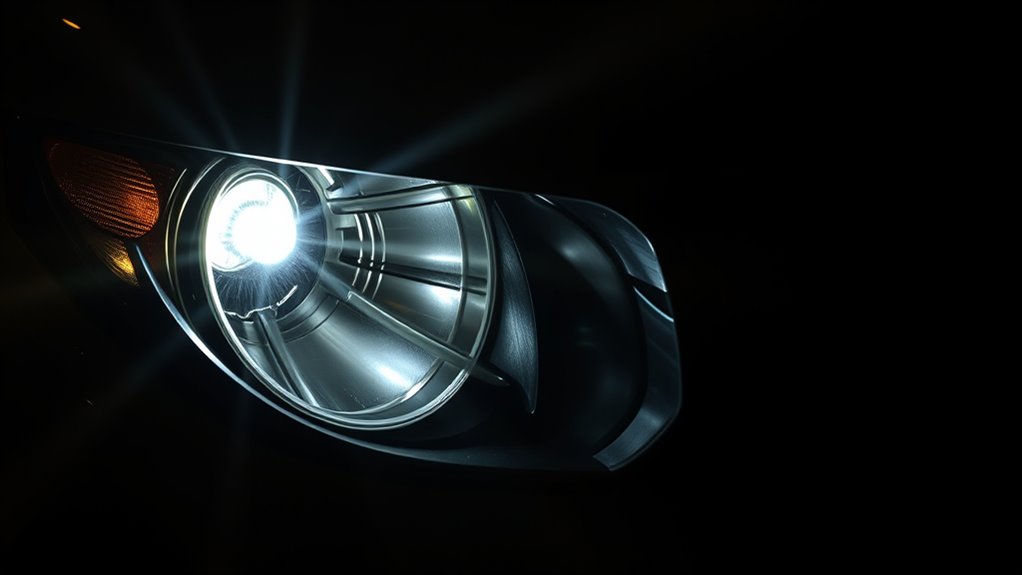

If your headlights dim or flicker, start by checking the wiring and connections for corrosion, loose connections, or damage, as these are common causes. Next, test your alternator’s output with a multimeter to verify it’s providing a steady voltage. Fluctuations might signal a failing alternator or wiring issues. Addressing these problems early can save you from more extensive electrical repairs—continue to explore how to diagnose and fix these issues effectively.
Key Takeaways
- Check for voltage fluctuations at headlights using a multimeter to identify inconsistent power supply.
- Inspect the alternator’s output to ensure it provides stable voltage during engine operation.
- Examine wiring harnesses and connectors for fraying, corrosion, or loose connections causing electrical interruptions.
- Look for damaged insulation or exposed wires that may lead to inconsistent headlight performance.
- Address any identified issues promptly to prevent further electrical system damage and restore headlight brightness.

Have you ever wondered how electricians pinpoint electrical issues so quickly and accurately? When your headlights start to dim or flicker unexpectedly, it can be unsettling, and you might worry about a major problem. The truth is, these issues often stem from specific electrical components or connections that need attention. One common culprit is alternator issues. Your alternator is responsible for charging your vehicle’s battery and powering the electrical system while you drive. If it’s malfunctioning or failing, your headlights may dim intermittently because the electrical supply isn’t steady. Alternator problems can cause voltage fluctuations, which directly impact your headlights’ brightness. Recognizing this early helps prevent further damage to your vehicle’s electrical system.
Headlight flickering often signals alternator issues affecting voltage stability.
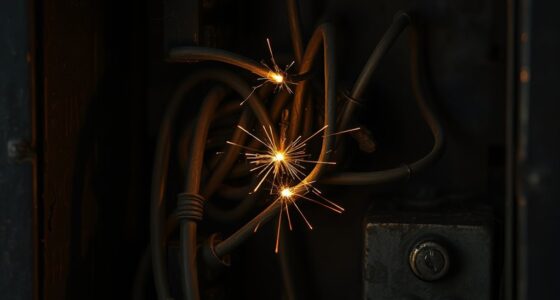
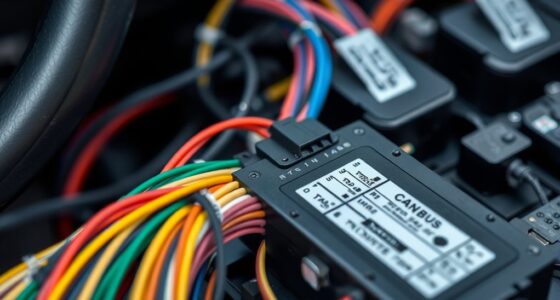
Wiring problems are another frequent cause of dimming or flickering headlights. Over time, wires can become frayed, loose, or corroded, disrupting the flow of electricity. You might notice flickering when there’s a poor connection or a broken wire somewhere in the circuit. Sometimes, wiring issues are hidden behind panels or under the hood, making them tricky to detect without proper diagnosis. But understanding that wiring plays such a critical role helps you realize that even small issues can have significant effects on your lights. Loose connectors or damaged insulation can cause intermittent contact, resulting in flickering or dimming. These problems can be exacerbated by exposure to weather, vibrations, or age, so routine inspections can help catch them early.
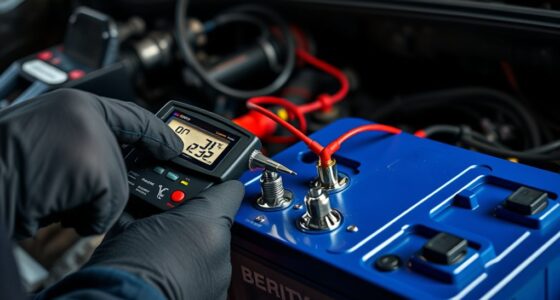
To diagnose the problem, you or a mechanic will typically start by checking the voltage at the headlights with a multimeter. If the voltage reading fluctuates or is lower than expected, it points to a power supply issue. Testing the alternator’s output can confirm whether it’s providing consistent voltage; if not, the alternator may need repairs or replacement. Inspecting wiring and connectors for signs of damage, corrosion, or looseness can reveal the root cause of flickering or dimming. Sometimes, simply tightening a loose connection or replacing a damaged wire resolves the issue swiftly. In more complex cases, the entire wiring harness may need a thorough examination to ensure no hidden faults remain. Regular maintenance and inspections can help identify electrical faults before they cause more serious problems.
Understanding these common causes helps you realize that headlights flickering or dimming doesn’t have to be a mystery. Often, it’s a straightforward fix related to alternator issues or wiring problems. Addressing these promptly not only restores proper lighting but also prevents further electrical damage to your vehicle. When in doubt, consulting a professional ensures accurate diagnosis and safe repairs, so you can drive confidently without worrying about sudden lighting issues.
Frequently Asked Questions
Can a Bad Alternator Cause Headlights to Flicker?
Yes, a bad alternator can cause your headlights to flicker. When alternator failure occurs, it struggles to supply consistent power to your vehicle’s electrical system, which includes your headlights. This fluctuation can lead to dimming or flickering lights. If you notice this issue, it’s a sign that your alternator may be failing, and you should have it checked promptly to prevent further electrical system problems or a breakdown.
How Do I Test for a Faulty Headlight Bulb?
Like a tech from a sci-fi flick, you can test a faulty headlight bulb with simple testing procedures. First, turn on your headlights and inspect if the bulb looks dim or flickering. Then, carefully remove the bulb and inspect for broken filaments or blackened areas. To confirm, replace the bulb with a known working one. If the issue persists, it’s time for a bulb replacement or further electrical diagnosis.
What Role Does the Vehicle’s Battery Play in Headlight Issues?
Your vehicle’s battery plays a vital role in headlight performance by providing the necessary power. If the battery health is poor or the voltage stability is compromised, your headlights may dim or flicker. A weak or failing battery can’t supply consistent voltage, leading to these issues. To prevent this, regularly check your battery’s condition and make certain it’s charged and functioning correctly, helping your headlights stay bright and steady.
Can Wiring Corrosion Lead to Dim or Flickering Headlights?
Yes, wiring corrosion can cause dim or flickering headlights. Corrosion effects create resistance in your wiring, disrupting the electrical flow. This weakened connection results in inconsistent power reaching your headlights, causing flickering or dimming. To fix this, you might need wiring repairs, which involve cleaning or replacing corroded wires and connectors. Addressing wiring corrosion promptly guarantees your headlights function properly and prevents further electrical issues.
Are Headlight Dimming Problems Related to the Vehicle’s Fuse or Relay?
It’s not quite the time of the pharaohs, but your headlights’ dimming could be linked to your fuse or relay. You should perform a fuse inspection to check for blown fuses and relay testing to confirm the relay isn’t faulty. A weak or failing relay can cause inconsistent power, making your headlights flicker or dim. Address these issues promptly for safe driving and maximum visibility.
Conclusion
When your headlights dim or flicker, it’s a sign you shouldn’t brush it off. Taking the time to diagnose the electrical issue can save you from bigger headaches down the road. Remember, sometimes you have to get to the root of the problem rather than just treating the symptoms. Don’t let small problems snowball; nip them in the bud before they turn into a bigger mess. Stay vigilant and keep your electrical system in check!