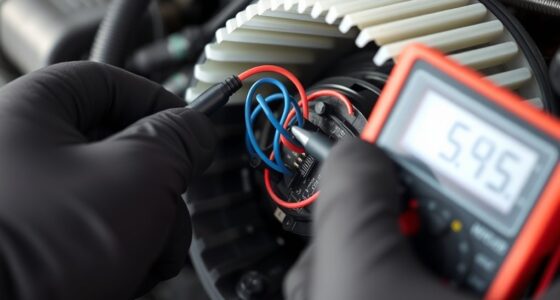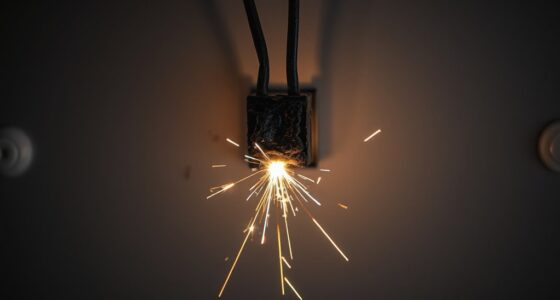
A short circuit happens when live wires accidentally connect or contact ground, causing a surge of current that can lead to overheating, sparks, or fires. An open circuit, on the other hand, occurs when there’s a break or disconnection in the wiring, stopping current flow entirely. Understanding how these faults differ helps you spot and fix electrical issues faster. Keep exploring to learn more about diagnosing and preventing these common electrical problems.
Key Takeaways
- Short circuits create a low-resistance path causing high current flow, while open circuits break the circuit, stopping current altogether.
- Short circuits often cause sparks, overheating, and potential fires; open circuits result in non-functioning devices or lights.
- Short circuits are usually accidental contacts between live wires or ground, whereas open circuits involve disconnections or broken wires.
- Troubleshooting a short circuit involves checking wiring and insulation; fixing an open circuit requires verifying continuity and connections.
- Safety concerns differ: short circuits pose fire and shock risks; open circuits mainly cause operational failures but are less hazardous.

Understanding the difference between short circuits and open circuits is essential when working with electrical systems. These two conditions can markedly impact electrical safety and how you approach circuit troubleshooting. Recognizing their signs and causes helps prevent accidents, equipment damage, and system failures. Knowing what distinguishes a short circuit from an open circuit allows you to respond quickly and effectively, ensuring safety and proper system functioning. A short circuit occurs when electrical current takes an unintended, low-resistance pathway, bypassing the normal circuit components. This usually happens when live wires come into direct contact with each other or with grounded surfaces. In such cases, a surge of current flows rapidly, often causing overheating, sparks, or even fires if not addressed promptly. Short circuits are dangerous because they can lead to electrical shocks or damage to appliances. When troubleshooting, look for signs like a blown fuse, tripped circuit breaker, or burning smell. These clues indicate a potential short circuit, and you need to identify and isolate the fault before restoring power. Proper circuit troubleshooting involves checking wiring connections, inspecting insulation, and testing components with a multimeter. Electrical safety measures, like turning off power before handling wires, are vital to avoid injury during these inspections. Additionally, understanding circuit safety principles helps prevent accidents and ensures proper handling of electrical faults. In contrast, an open circuit occurs when a break or disconnection prevents current from flowing through the circuit. Imagine a wire disconnected, a switch turned off, or a component that has failed. In these cases, the circuit remains incomplete, and no current reaches the load. Open circuits are common in situations like a blown fuse, a loose wire, or a damaged switch. They are generally less hazardous than short circuits because they don’t cause high current flows or overheating. However, they can cause operational issues, such as lights not turning on or appliances not working. To troubleshoot an open circuit, you systematically check each connection and component along the path. Using a multimeter, you verify continuity to pinpoint where the circuit is broken. Proper electrical safety practices, like disconnecting power before testing, are essential to prevent shocks or further damage.
Frequently Asked Questions
How Can I Prevent Short Circuits in Household Wiring?
To prevent short circuits in your household wiring, you should regularly inspect all wiring for damage or wear. Make sure to avoid overloading circuits and keep appliances properly grounded to prevent ground faults. Install and maintain a circuit breaker that can trip quickly if a fault occurs, protecting your home. Additionally, consult a professional electrician for routine checks and repairs to guarantee your wiring stays safe and reliable.
What Are Common Signs of an Open Circuit?
You’ll notice signs of an open circuit through a lack of circuit continuity, meaning the electrical flow is interrupted. Common signs include lights not turning on, appliances failing to operate, or visible damage like broken wires or loose connections. To identify these issues, perform a visual inspection of the wiring and connections. If you suspect an open circuit, use a multimeter to check for continuity and confirm all connections are secure and intact.
How Does Temperature Affect Circuit Failures?
You might not notice it, but temperature can quietly influence circuit failures. As temperatures rise, thermal expansion occurs, stressing circuit components and potentially compromising circuit insulation. This weakening increases the risk of open circuits, where connections break apart. Conversely, extreme cold can make materials brittle. To prevent failures, guarantee proper cooling and use temperature-resistant components, safeguarding your circuit from the subtle yet impactful effects of temperature fluctuations.
Can Open Circuits Cause Electrical Fires?
Yes, open circuits can cause electrical fires if electrical insulation fails or if circuit grounding isn’t properly maintained. When insulation breaks down, exposed wires can spark or overheat, leading to fires. Poor grounding can cause electrical faults that generate heat or sparks. Always verify your electrical insulation is intact and your circuit grounding is proper to prevent open circuits from becoming fire hazards. Regular inspections help keep your system safe.
What Tools Are Best for Diagnosing Circuit Issues?
When diagnosing circuit issues, you’ll find that reliable tools make all the difference. Use a good set of circuit testers to quickly identify faults and multimeter probes for precise voltage and continuity checks. These tools help you gently uncover hidden problems, guiding your repairs smoothly. With the right equipment in hand, you can confidently troubleshoot and restore your circuit’s health without unnecessary hassle.
Conclusion
Understanding the difference between short circuits and open circuits helps you stay safer and troubleshoot effectively. Did you know that according to industry reports, about 60% of electrical failures are caused by shorts or opens? By recognizing these issues early, you prevent potential damage and hazards. So, next time you work on a circuit, remember that catching a short or open early keeps you safe and saves you money. Stay alert, and you’ll handle circuits with confidence!