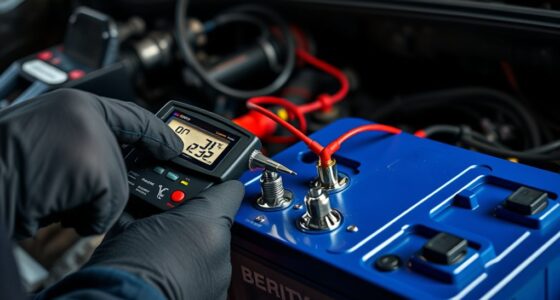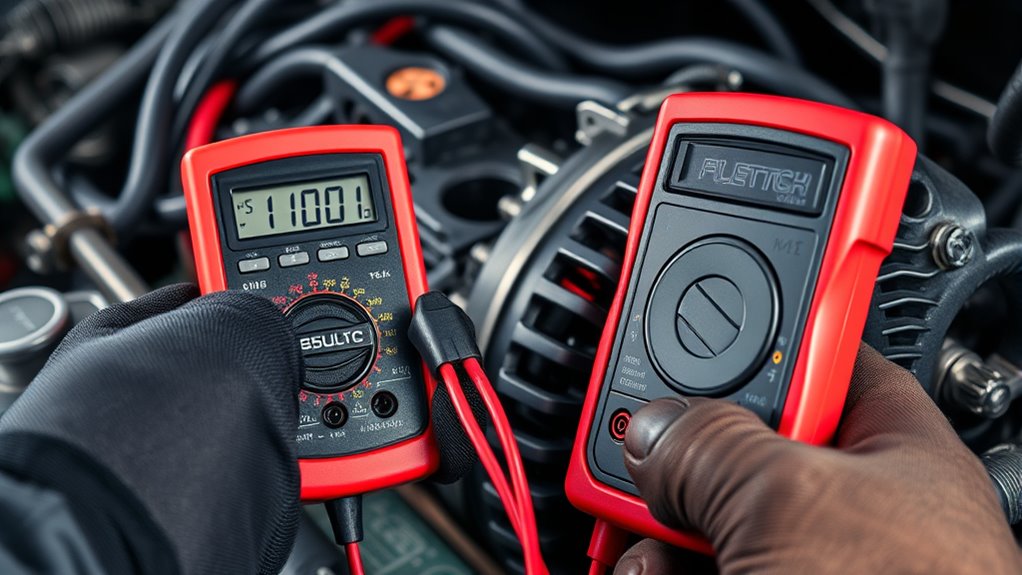

To perform charging system voltage drop testing, turn off your vehicle first. Connect your multimeter between the positive battery terminal and the chassis ground, then start the engine and keep it at idle. Measure voltage drops across different parts of the circuit and watch for readings above 0.2 volts, which indicate resistance. Identifying these issues helps you pinpoint faulty wiring or connections. Keep going to discover how to interpret results and fix common problems effectively.
Key Takeaways
- Turn off the vehicle, connect the multimeter between the battery positive terminal and chassis ground, then start the engine.
- Measure voltage drops across the alternator, wiring, connections, and battery terminals at idle and higher engine speeds.
- Look for voltage drops exceeding 0.2 volts, indicating resistance or poor connections in the charging circuit.
- Identify high resistance points caused by corroded, loose, or damaged wiring and connections.
- Use the results to determine if repair, replacement, or cleaning is necessary to ensure efficient charging system operation.
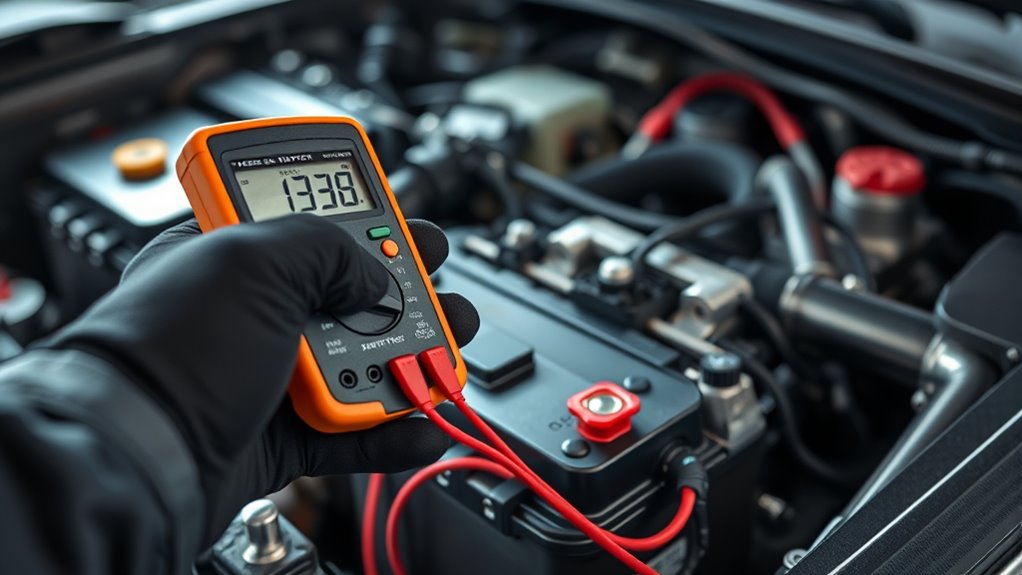
Understanding the charging system’s voltage drop is vital for diagnosing electrical issues in your vehicle. When you suspect that your alternator isn’t charging properly or that your battery isn’t holding a charge, measuring voltage drop can pinpoint where the problem lies. This process helps you identify whether the issue stems from high battery resistance, poor wiring integrity, or faulty connections. By focusing on these key areas, you can determine if the electrical flow is being hindered before reaching your battery or within the charging circuit itself.
Start by ensuring your vehicle is turned off, and then connect your multimeter to the positive terminal of your battery and a suitable ground point on the vehicle’s chassis. With the engine running at a normal idle, you’ll want to measure the voltage drop across different points in the charging system. If you notice a significant voltage drop—generally above 0.2 volts—between the alternator output and the battery, it indicates resistance somewhere along that path. High resistance can be caused by corroded or loose connections, damaged wiring, or components with increased internal resistance, such as a weak battery.
One common culprit is wiring integrity. Over time, wiring can degrade due to heat, moisture, or physical wear, leading to increased resistance in the circuit. Damaged or frayed wires or loose connectors create points where electrical current struggles to flow efficiently. When testing, pay close attention to these areas, inspecting for visible damage and ensuring all connections are tight and free of corrosion. Good wiring integrity ensures that the current from the alternator reaches the battery with minimal voltage loss.
Battery resistance also plays an essential role in voltage drop testing. A battery with high internal resistance—often due to aging, sulfation, or damage—can impede the flow of current, causing voltage drops that mimic wiring issues. If your tests reveal high voltage drops even when wiring appears intact, consider testing the battery’s internal resistance separately. Replacing an aging or compromised battery can restore proper charging voltage and resolve related electrical problems.
Additionally, referencing powerful persuasive words and emotional triggers in your diagnostics can help you better understand the urgency of addressing electrical issues promptly, preventing further damage.
Frequently Asked Questions
How Often Should Voltage Drop Testing Be Performed on a Vehicle?
You should perform voltage drop testing regularly, especially if you notice battery health issues or suspect wiring integrity problems. It’s best to check every 6 to 12 months or whenever you experience symptoms like dim headlights or slow cranking. Regular testing helps catch hidden wiring issues or poor connections early, ensuring your charging system stays reliable and your battery stays healthy. Consistent checks keep your vehicle running smoothly.
What Tools Are Essential for Accurate Voltage Drop Testing?
You need a digital multimeter and test leads to perform accurate voltage drop testing. These tools help you measure voltage differences across wiring and connections, guaranteeing proper battery maintenance and alternator performance. A quality multimeter allows you to detect small voltage drops that could indicate wiring issues or poor connections. Always use a multimeter with a capable range, and verify your test leads are in good condition for reliable readings.
Can Voltage Drop Testing Identify All Charging System Issues?
Voltage drop testing can identify many charging system issues, but it may not catch all problems. You’ll effectively spot issues with battery health and alternator efficiency, ensuring these components are functioning properly. However, some hidden faults, like internal alternator problems or wiring shorts, might require additional diagnostics. So, while it’s a valuable tool, don’t rely solely on it—complement with other tests for a complete assessment.
How Does Corrosion Affect Voltage Drop Readings?
Corrosion effects can considerably impact voltage drop readings, leading to inaccurate results. Studies show that corroded connections can increase resistance by up to 200%, skewing voltage measurements. When corrosion is present, it hampers electrical flow, causing higher voltage drops and masking underlying issues. To guarantee voltage accuracy, you must clean and inspect connections regularly, as corrosion can mislead diagnostics and prevent proper system evaluation.
Is Voltage Drop Testing Suitable for All Vehicle Types?
Voltage drop testing isn’t suitable for all vehicle types, especially if you have significant battery corrosion or suspect alternator performance issues. Corrosion can cause inaccurate readings, making it harder to diagnose electrical problems properly. For vehicles with complex or sensitive systems, you might need more specialized testing methods. Always clean corrosion first and verify alternator performance to confirm voltage drop tests give reliable results across different vehicle models.
Conclusion
By performing charging system voltage drop testing regularly, you can catch potential issues before they cause breakdowns. Did you know that up to 80% of electrical problems in vehicles are related to wiring and connections? Ensuring your system maintains proper voltage levels helps keep your vehicle running smoothly and extends its lifespan. Don’t overlook this simple test—staying proactive can save you time and money in the long run!