Engine management systems are the heart of your vehicle’s engine, optimizing performance, efficiency, and emissions. They control fuel injection, ignition timing, and adapt to driving conditions in real-time, ensuring smooth operation and reduced pollutants. Your system monitors sensors to make split-second adjustments, balancing power and economy. Understanding this system helps you see how your car responds seamlessly to your driving style. Keep going, and you’ll discover how these components work together to keep your engine running smoothly.
Key Takeaways
- Engine management systems optimize performance, efficiency, and emissions by controlling fuel injection and ignition timing.
- The ECU processes sensor data to adjust engine parameters in real-time for various driving conditions.
- Fuel injection replaces carburetors, delivering precise fuel amounts for better combustion and lower emissions.
- Ignition timing ensures optimal spark timing to maximize power and fuel efficiency while reducing knocking.
- Advanced features like variable valve timing and turbo control enhance adaptability and overall engine performance.
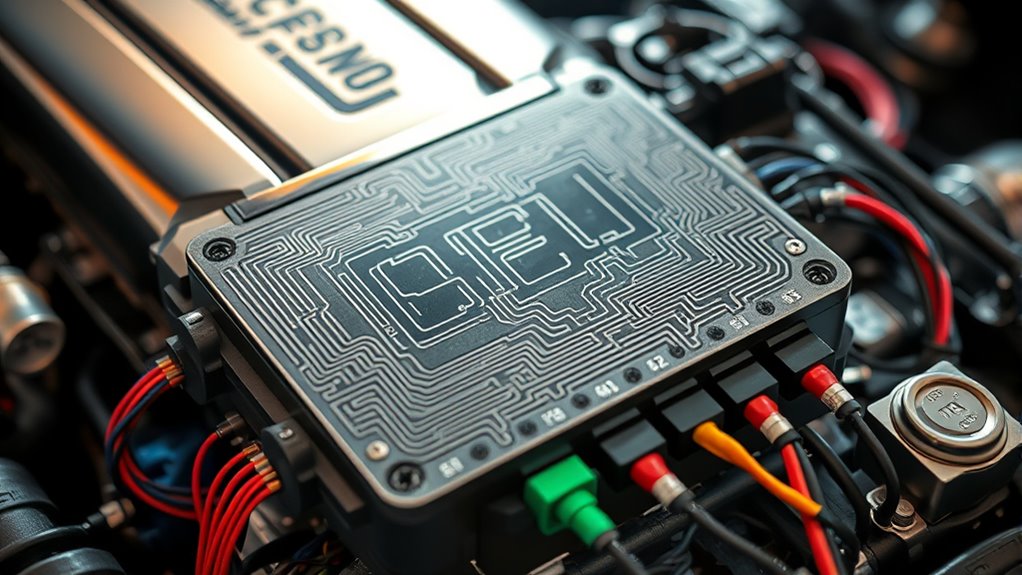
Engine management is the system that controls how your vehicle’s engine runs, guaranteeing ideal performance, efficiency, and emissions. At its core, it monitors and adjusts various components to keep your engine operating smoothly. One of the key aspects of engine management is fuel injection, which replaces older carburetor systems. Instead of relying on a simple air-fuel mixture, fuel injection delivers precise amounts of fuel directly into the engine’s cylinders. This precision improves combustion, enhances fuel efficiency, and reduces emissions. When your engine’s control unit detects the need for more power or efficiency, it adjusts the fuel injection timing and volume accordingly. This real-time control helps your vehicle respond accurately to different driving conditions, whether you’re accelerating, cruising, or climbing a hill. Additionally, high-resolution sensors**** play a crucial role in providing accurate data to the ECU, enabling more precise adjustments for optimal engine performance.
Another vital element is ignition timing, which determines when the spark ignites the fuel-air mixture inside each cylinder. Proper timing ensures that combustion occurs at the most advantageous moment, maximizing power output and minimizing fuel waste. Your engine’s management system constantly fine-tunes ignition timing based on various inputs like engine temperature, load, and RPM. If the timing is off, you might notice symptoms like rough idling, knocking, or decreased fuel economy. The system’s ability to precisely control ignition timing means your engine runs more efficiently and produces fewer harmful emissions, as combustion is cleaner and more complete.
Ignition timing ensures efficient combustion, boosting performance and reducing emissions through precise control based on engine conditions.
The engine control unit (ECU) acts as the brain of the system, processing data from sensors located throughout your vehicle. These sensors monitor parameters such as oxygen levels in the exhaust, throttle position, and intake manifold pressure. Using this data, the ECU makes split-second decisions, adjusting fuel injection and ignition timing to maximize performance. This coordination is essential for meeting regulatory standards and ensuring your engine reacts appropriately to changing conditions, like cold starts or high-altitude driving. Modern systems also incorporate features like variable valve timing and turbo boost control, further refining how your engine operates. These advancements allow for more precise control over combustion processes, improving efficiency and power output. By continuously adapting to your driving style and environmental factors, the system helps you get the most out of your vehicle. Fundamentally, engine management is about balancing power, economy, and emissions seamlessly, so you can enjoy a smooth, responsive ride while minimizing your environmental impact.
Frequently Asked Questions
How Does Engine Management Affect Fuel Efficiency?
Engine management directly impacts your fuel efficiency by optimizing fuel combustion and delivery. When your engine management system fine-tunes parameters like air-fuel ratio and ignition timing, it improves fuel optimization, helping you get more miles per gallon. Additionally, it guarantees effective emission control, reducing pollutants and preventing wasted fuel. Proper engine management consequently helps you save money, lowers emissions, and keeps your vehicle running smoothly and efficiently.
Can Engine Management Systems Be Upgraded for Better Performance?
Imagine your engine as a finely tuned orchestra, ready to perform at its peak. Yes, you can upgrade engine management systems with ECU tuning and performance chips to boost your vehicle’s performance. These upgrades fine-tune your engine’s parameters, improving power, responsiveness, and fuel efficiency. By customizing your ECU settings, you unearth smoother acceleration and better overall driving experience, turning your car into a more powerful and efficient machine.
What Are Common Signs of Engine Management System Failure?
You’ll notice that your engine management system is failing if warning lights pop up on your dashboard. Sensor issues often cause irregular engine performance, like rough idling or stalling. You might also experience reduced fuel efficiency, difficulty starting, or unexpected emissions. Pay attention to these signs, as they indicate your system isn’t functioning properly and needs inspection or repair to prevent further damage.
How Do Different Driving Conditions Influence Engine Management?
Different driving conditions substantially influence your engine management system. Your driving behavior, like rapid acceleration or heavy braking, can cause the system to work harder, affecting fuel efficiency and emissions. Environmental factors such as extreme temperatures, altitude, or road conditions also impact engine performance, prompting the management system to adjust fuel injection and ignition timing. Staying mindful of these conditions helps maintain ideal engine function and prevents unnecessary wear or issues.
Is Engine Management Software Customizable for Individual Needs?
Did you know that over 60% of car enthusiasts customize their engine management software? Yes, it’s highly customizable for your individual needs. You can explore a range of customization options, allowing user-specific tuning to optimize performance, fuel efficiency, or emissions. This flexibility means you can tailor your vehicle’s engine response precisely to your driving style, making your car more personalized and performance-focused without needing extensive mechanical modifications.
Conclusion
Now that you understand the basics of engine management, you’re equipped to optimize your vehicle’s performance like never before. Remember, mastering these systems can turn your car into a powerhouse that outshines even the most advanced machines on the road. Don’t underestimate the power of good engine management—you hold the key to revealing your engine’s full potential. With this knowledge, you’re ready to take control and make your driving experience truly extraordinary.