Evaporative emission control systems prevent fuel vapors from escaping your vehicle’s tank, helping reduce air pollution and meet environmental standards. These systems capture vapors using hoses, a charcoal canister, and valves, then allow them to be burned in the engine instead of escaping into the atmosphere. They operate silently during driving and require regular checks to stay effective. If you want to learn more about how these systems work to keep emissions low, there’s much more to discover.
Key Takeaways
- Fuel vapor systems capture and store vapors from the fuel tank to prevent atmospheric pollution.
- The charcoal canister adsorbs vapors until they are burned in the engine during operation.
- Valves and sensors regulate vapor flow and monitor system pressure for optimal performance.
- These systems reduce emissions of volatile organic compounds (VOCs), aiding environmental protection.
- Regular inspection and maintenance are essential to ensure system effectiveness and compliance.
Have you ever wondered how vehicles prevent harmful fuel vapors from escaping into the environment? It all comes down to fuel vapor systems, a essential part of a vehicle’s emission reduction techniques. These systems are designed to capture and contain vapors that evaporate from your fuel tank and fuel lines, preventing them from escaping into the atmosphere. Without such systems, these vapors could contribute greatly to air pollution and smog formation. When you start your vehicle, the fuel vapor system kicks into action, working silently in the background to keep emissions at bay.
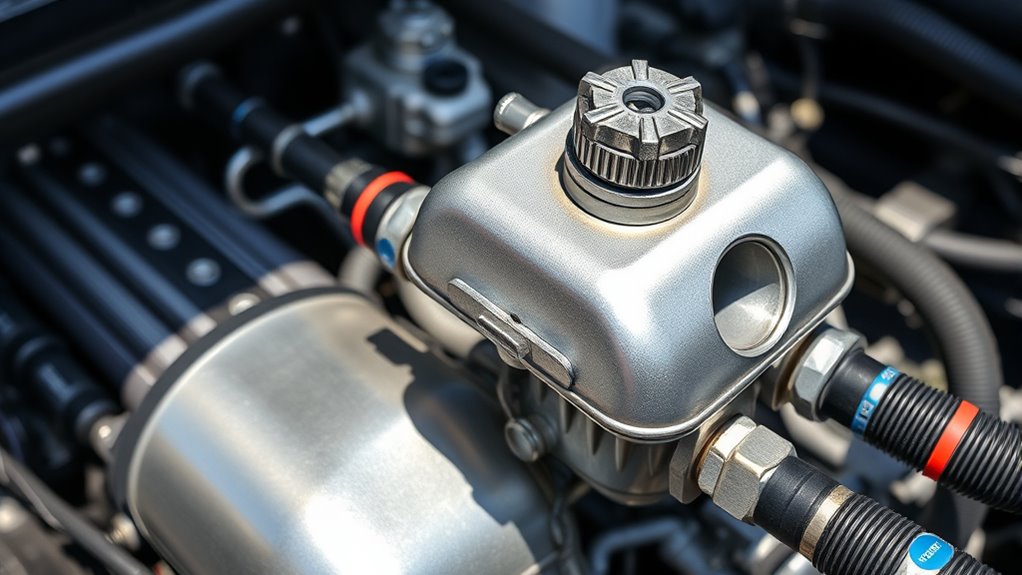
Fuel vapor systems typically consist of several components, including vapor hoses, a charcoal canister, valves, and sensors. The charcoal canister, often called the vapor canister, plays a key role by adsorbing fuel vapors onto its porous surface. When your engine is off, vapors from the fuel tank are directed to the canister, where they’re stored temporarily. During engine operation, the vehicle’s control system opens valves that allow these vapors to be drawn into the engine and burned as part of the combustion process. This not only reduces emissions but also improves fuel efficiency by recycling vapors that would otherwise be lost.
Emission reduction techniques like these are mandated by strict environmental regulations worldwide. They’re designed to minimize the release of volatile organic compounds (VOCs), which are a major contributor to smog and air pollution. By implementing fuel vapor systems, manufacturers can help vehicles meet these standards, ensuring cleaner air for everyone. You might not notice these systems working, but they’re essential for compliance and environmental protection. They operate automatically, triggered by various sensors and control modules that monitor the pressure and flow of vapors within the fuel system.
Additionally, the effectiveness of fuel vapor systems depends on regular maintenance. Faulty valves, cracked hoses, or a saturated charcoal canister can compromise their ability to control vapors properly. When these components malfunction, you might see increased emissions, a fuel smell, or even engine warning lights. That’s why routine inspections and repairs are crucial to keep the system functioning correctly and ensure you’re contributing to emission reduction efforts. In essence, your vehicle’s fuel vapor system is a small but powerful tool in the broader effort to reduce pollution, demonstrating how engineering and environmental responsibility go hand in hand to create cleaner air for everyone.
Frequently Asked Questions
How Often Should I Have My Evaporative Emission Control System Inspected?
You should have your evaporative emission control system examined at least once every two years or as specified in your vehicle’s inspection schedule. Regular inspections help catch leaks or damage early, preventing costly repairs. Follow maintenance tips like checking for visible cracks, ensuring the gas cap seals tightly, and keeping the system clean. Staying proactive with inspections ensures your vehicle runs efficiently and meets emissions standards, saving you money in the long run.
What Are Signs of a Failing Evaporative Emission Control System?
If your vehicle’s evaporative emission control system is failing, you’ll notice signs like a persistent fuel odor and a smoky smell around the vehicle. You might also see the Check Engine light come on or experience difficulty passing emissions tests. These symptoms indicate leaks or malfunctions in the system, so it’s vital to have it inspected promptly to prevent further damage and ensure your car runs smoothly and eco-friendly.
Are There Any Vehicle Models More Prone to Evaporative Emissions Issues?
Certain vehicle models, especially older ones and those with complex emissions systems, are more prone to evaporative emissions issues. You might notice vehicle-specific issues like frequent check engine lights or failed emission testing. If you own a vehicle from manufacturers with known emission control challenges, stay vigilant. Regular maintenance can help prevent problems and guarantee your vehicle passes emission tests, reducing environmental impact and avoiding costly repairs down the line.
How Do Temperature Changes Affect Evaporative Emission Control Systems?
Temperature fluctuations impact your evaporative emission control system by altering vapor pressure inside the fuel tank. When temperatures rise, vapor pressure increases, causing more fuel vapors to develop and potentially escape. Conversely, cooler temperatures lower vapor pressure, reducing vapor formation. These changes challenge the system’s ability to contain emissions effectively, making it essential to maintain proper system function and monitor for leaks, especially during extreme temperature shifts.
Can I Repair Evaporative Emission Control Components Myself?
You can attempt DIY fixes and component replacement for evaporative emission control systems if you’re comfortable with car repairs. Start by diagnosing the issue carefully, then follow step-by-step guides or repair manuals. Keep in mind, some parts like the charcoal canister or vapor lines might be tricky, so if you’re unsure, it’s best to consult a professional. Proper repairs make sure your vehicle remains efficient and emissions compliant.
Conclusion
By understanding evaporative emission control, you take a step toward protecting the environment, preserving your vehicle’s efficiency, and saving money. You control emissions, reduce pollution, and support sustainability. You maintain performance, extend your vehicle’s lifespan, and contribute to a cleaner planet. You stay informed, make responsible choices, and embrace smarter driving habits. By mastering these basics, you empower yourself to make a difference—because when you control emissions, you protect the air, the earth, and your future.