Heated oxygen sensor circuits are essential for providing accurate exhaust data, which helps manage your engine’s performance, emissions, and fuel efficiency. To keep these circuits working properly, you should check for wiring issues like frayed wires, corrosion, or loose connections. Verifying power and ground connections with a multimeter can reveal faults before replacing sensors. Understanding how the heater circuit works can help you diagnose problems quickly—continue exploring to learn more about keeping your sensor in top shape.
Key Takeaways
- Verify proper wiring connections, including power supply and ground, to ensure accurate sensor operation.
- Use a multimeter to check voltage (~12V) and continuity in the heater circuit for faults.
- Inspect wiring harnesses for damage, corrosion, or loose connections that can cause false readings.
- Test the heater element resistance against manufacturer specifications to identify open or shorted circuits.
- Regularly inspect and maintain wiring integrity to ensure sensor response time and signal stability.
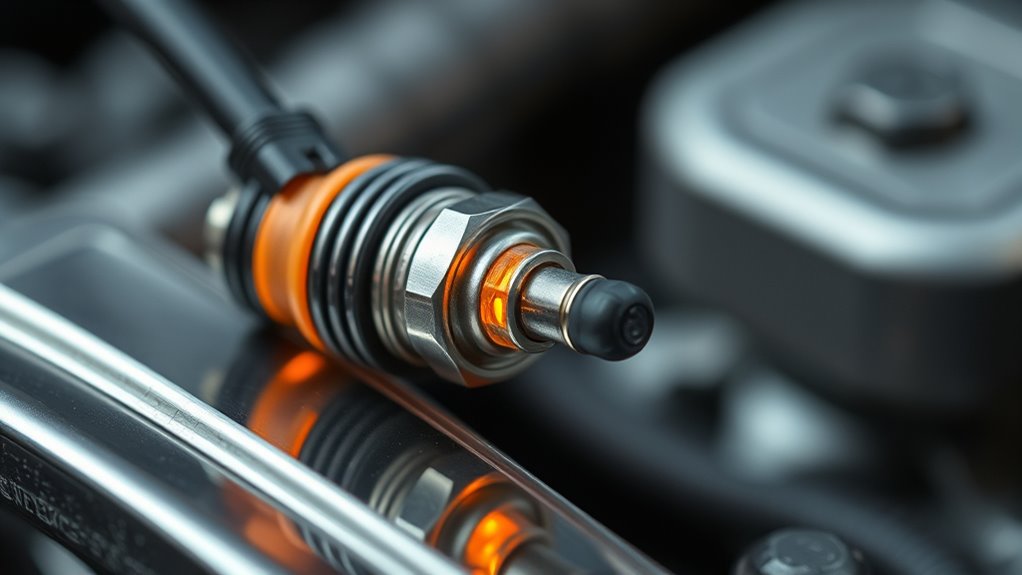
Heated oxygen sensor circuits play a pivotal role in the performance of modern vehicles by ensuring accurate readings of exhaust gases. These sensors help your engine manage fuel mixture and emissions, which directly impacts fuel efficiency and environmental compliance. To keep these systems functioning properly, understanding sensor wiring and circuit troubleshooting is essential. When the sensor wiring is damaged or improperly connected, it can lead to incorrect signal transmission, causing your vehicle’s ECU (Engine Control Unit) to misinterpret exhaust data. This may result in poor engine performance, increased emissions, or even a check engine light.
If you suspect issues with your heated oxygen sensor, start with a visual inspection of the sensor wiring. Look for frayed wires, loose connections, or corrosion around the connectors. Damaged wiring often occurs due to heat, vibration, or road debris, and can cause intermittent sensor signals or complete failure. Ensuring the wiring is intact and securely connected is your first step in troubleshooting. If the wiring seems fine, the next step involves testing the circuit with a multimeter. You’ll want to check the voltage supply to the sensor, typically around 12 volts, and verify the ground connection. A faulty ground or power supply can mimic sensor failure, so ruling out electrical issues in the circuit is essential.
When troubleshooting circuits, it’s important to understand the sensor’s wiring diagram. This diagram shows how the sensor connects to the vehicle’s wiring harness and helps you identify where a fault might occur. For example, if the sensor’s heater circuit isn’t working, it might be due to a blown fuse, a broken wire, or a defective relay. Using your multimeter, test the resistance of the heater element itself, which should fall within the manufacturer’s specifications. An open circuit indicates a broken heater element, requiring replacement. Additionally, the performance metrics of the sensor, such as response time and signal stability, are crucial for proper engine function.
Frequently Asked Questions
How Long Do Heated Oxygen Sensors Typically Last?
Heated oxygen sensors typically last around 60,000 to 100,000 miles, but this can vary depending on driving habits and vehicle conditions. You should expect to replace them within these intervals to maintain peak engine performance and fuel efficiency. Keep an eye out for symptoms like poor acceleration or increased emissions, which may indicate a sensor’s lifespan is nearing its end. Regular maintenance ensures your sensors stay in good shape longer.
Can a Faulty Heated Oxygen Sensor Cause Engine Damage?
A faulty heated oxygen sensor can sneak into your engine’s harmony like a discordant note, risking engine damage over time. You should prioritize sensor maintenance and use diagnostic techniques to catch issues early. Ignoring a bad sensor can cause inefficient fuel combustion, leading to clogged catalytic converters or engine wear. Addressing sensor problems promptly helps protect your engine’s health, ensuring it runs smoothly without costly repairs down the line.
What Are the Signs of a Failing Heated Oxygen Sensor?
You’ll notice signs of a failing heated oxygen sensor through rough idling, poor acceleration, and increased fuel consumption. Your vehicle’s diagnostic procedures may reveal check engine light triggers related to sensor calibration issues. You might also experience faulty emissions readings. Addressing these symptoms promptly helps prevent further damage. Regularly inspecting and testing the sensor ensures accurate readings, maintaining excellent engine performance and fuel efficiency.
Are Heated Oxygen Sensors Reusable After Testing?
Yes, you can reuse heated oxygen sensors after testing if they pass calibration checks. First, perform sensor calibration to guarantee accurate readings. If the sensor shows proper function and no damage, follow the replacement procedures to reinstall it correctly. Keep in mind that repeated testing or improper handling might reduce the sensor’s lifespan, so consider replacement if the sensor fails calibration or shows signs of wear.
How Does Ambient Temperature Affect Sensor Performance?
Ambient temperature critically influences sensor performance by affecting sensor calibration. When temperatures are too low, the sensor may struggle to reach ideal operating conditions, leading to inaccurate readings. Conversely, high temperatures can cause the sensor to overheat or drift, also skewing results. You need to guarantee proper calibration across various ambient temperatures to maintain accurate oxygen sensor readings and reliable engine management. Proper calibration helps compensate for temperature effects, ensuring peak performance.
Conclusion
By understanding how heated oxygen sensor circuits work, you can troubleshoot issues more effectively. Remember, knowing the ins and outs of these circuits puts you ahead of the game. When problems arise, don’t throw in the towel—stay patient and keep digging. With a little know-how, you’ll be back on the road in no time. It’s always better to be safe than sorry, especially when it comes to your vehicle’s performance.