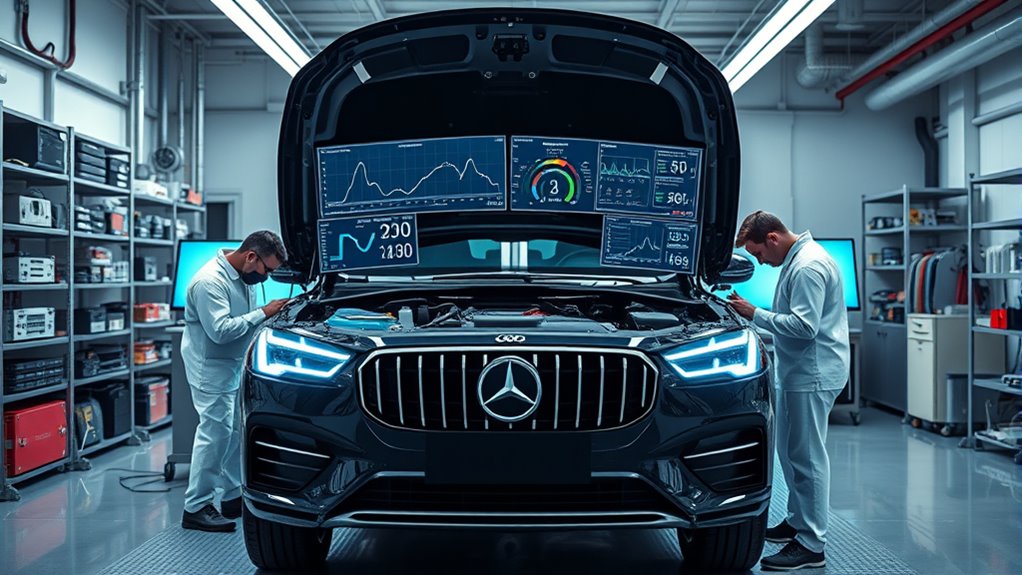

The demand for ADAS calibration is steadily rising as vehicles increasingly rely on advanced sensors like cameras, radars, and lidar to guarantee safety and ideal performance. Proper calibration is crucial because even minor misalignments can lead to false warnings or missed detections, impacting system reliability. As environmental factors, vehicle repairs, and sensor upgrades come into play, ongoing calibration becomes necessary. Staying informed about calibration procedures and requirements helps you maintain vehicle safety and accuracy—if you keep exploring, you’ll understand how to meet these needs effectively.
Key Takeaways
- Increasing adoption of ADAS features drives higher demand for precise sensor calibration services.
- Variability in vehicle makes and models necessitates specialized calibration procedures, boosting service needs.
- Regular calibration is essential for maintaining system safety and performance over vehicle lifespan.
- Advancements in sensor technology and environmental factors elevate the complexity and demand for calibration.
- OEM requirements and repair protocols mandate calibration, fueling ongoing service demand.
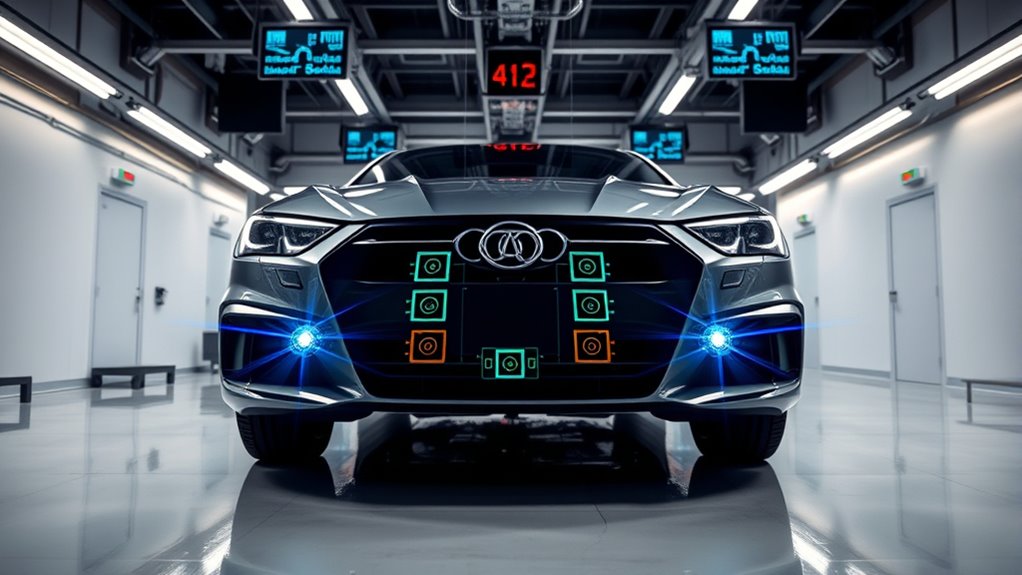
As vehicles become increasingly equipped with advanced driver-assistance systems (ADAS), the need for precise calibration has grown considerably. When you’re working on these systems, one of the most critical steps is guaranteeing proper sensor alignment. Proper sensor alignment guarantees that cameras, radars, and lidar sensors are accurately positioned, which is essential for the system’s reliability and safety. If sensors aren’t correctly aligned, even minor misalignments can lead to false warnings, missed detections, or improper system responses. That’s why calibration procedures have become a fundamental part of vehicle maintenance and repair. These procedures involve a systematic process to verify and adjust sensor positions, ensuring they operate as intended.
You’ll find that calibration procedures vary depending on the make and model of the vehicle, as well as the specific ADAS features installed. Typically, the process begins with a thorough inspection to identify any physical misalignments caused by collisions, potholes, or improper repairs. Once you confirm that sensors are physically aligned, you proceed to the calibration itself. This involves using specialized tools and diagnostic equipment designed to communicate with the vehicle’s ADAS modules. During calibration, you’ll often follow step-by-step instructions from the manufacturer, which may include driving the vehicle on a designated calibration target or test pattern. This ensures the sensors’ data aligns precisely with real-world conditions. Additionally, understanding the impact of environmental factors such as wave and wind on sensor performance can help ensure more accurate calibration results.
Calibration varies by vehicle make, model, and ADAS features, beginning with physical inspection and proceeding with specialized tools and manufacturer instructions.
Sensor alignment isn’t a one-time task; it’s an ongoing process that can require adjustments over time. For example, if you notice that the vehicle’s lane departure warning or adaptive cruise control isn’t functioning correctly, it could indicate a misalignment issue. Regular calibration helps maintain system accuracy, especially after repairs or impacts. As new vehicles incorporate more complex sensors and advanced features, calibration procedures have become more sophisticated. This means you need specialized training and equipment to perform accurate calibrations, minimizing the risk of errors that could compromise safety.
In essence, understanding the importance of sensor alignment and following meticulous calibration procedures is crucial. It’s not enough to just install or repair sensors; you must ensure they’re correctly aligned and calibrated to deliver best-in-class performance. This commitment to precision helps drivers stay safe and confident in their vehicle’s ADAS capabilities. As the demand for these systems continues to grow, so does your responsibility to stay updated on the latest calibration techniques and tools, ensuring every vehicle leaves your workshop operating at its best.
Frequently Asked Questions
How Does Weather Impact ADAS Calibration Accuracy?
Weather can critically impact ADAS calibration accuracy by affecting sensor sensitivity and the calibration environment. For instance, rain, snow, or fog can obstruct sensors, reducing their ability to detect road features accurately. Extreme temperatures may also alter sensor performance. To guarantee proper calibration, you need to take into account current weather conditions, clean sensors regularly, and perform calibration in a controlled environment whenever possible, maintaining ideal sensor sensitivity and calibration integrity.
What Are the Costs Associated With Different Calibration Methods?
You’ll find that calibration costs vary based on the method you choose. Using advanced calibration equipment can increase expenses but offers higher accuracy and quicker turnaround. Labor costs also play a role; more complex calibrations require skilled technicians, raising labor expenses. In contrast, simpler methods with basic equipment may save money upfront but could risk less precise results. Balancing equipment quality and labor needs helps optimize your calibration investment.
How Often Should Vehicles Undergo ADAS Calibration?
You should calibrate your vehicle’s ADAS sensors whenever you notice sensor misalignment or after any windshield replacement, collision, or repairs affecting sensor positioning. Experts suggest a calibration frequency of at least once every two years to guarantee peak performance, but always follow the manufacturer’s recommendations. Regular calibration maintains sensor accuracy, preventing false alerts and ensuring your safety. Stay proactive with sensor maintenance to keep your ADAS system functioning correctly.
Are There Specific Vehicle Models With Higher Calibration Demands?
Certain vehicle types, like luxury cars and trucks, have higher calibration demands due to advanced technology variance. You’ll notice models with complex sensor systems and multiple ADAS features require more frequent calibration. For example, high-end vehicles with sophisticated driver-assist technology often demand precise calibration after repairs or sensor replacements. Understanding these specifics helps you plan maintenance better, ensuring the safety and functionality of your vehicle’s ADAS features.
What Training Is Required for Technicians Performing ADAS Calibration?
You need specialized training to perform ADAS calibration successfully. About 80% of technicians now pursue certification to guarantee they master calibration techniques. This certification validates your skills and keeps you updated on the latest technology. You’ll learn proper procedures, safety protocols, and how to use calibration tools effectively. Continuous education is essential, so stay current with manufacturer guidelines and industry standards to provide accurate, reliable calibrations for maximum vehicle safety.
Conclusion
Understanding ADAS calibration demand is like steering a busy highway—you need to stay alert and adaptable. As technology advances, the need for precise calibration grows, ensuring safety and ideal performance. By staying informed and proactive, you can handle calibration demands smoothly, much like a skilled driver steering through traffic with ease. Keep up with industry trends, and you’ll be well-equipped to meet the evolving needs of ADAS calibration, making every drive safer and more reliable.