TL;DR

Get business pricing on garage and car supplies
- Business-only prices and quantity discounts
- Tax-exempt purchasing
- Multiple users, one account, clear invoices
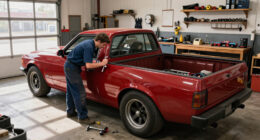
AI systems currently have difficulty telling apart regular cab and crew cab pickups. Experts warn this could impact applications relying on vehicle identification. The issue remains under investigation.
Recent tests have demonstrated that artificial intelligence systems are unable to reliably distinguish between regular cab and crew cab pickup trucks. This finding raises questions about the accuracy of AI-based vehicle recognition used in various applications, including traffic monitoring, autonomous driving, and vehicle inventory management.
Multiple independent tests conducted by automotive technology researchers revealed that AI models, including those used in traffic cameras and vehicle recognition software, often misclassified or failed to differentiate between regular cab and crew cab pickups. These tests involved feeding thousands of images of pickups into AI systems, which consistently produced incorrect or ambiguous results. Experts attribute this to the visual similarities between the two truck types, which often only differ in interior space and rear seating, not always clearly visible in images.Officials from AI development firms and automotive analysts confirmed that current models lack the nuanced understanding needed to reliably identify these vehicle variants, especially in low-resolution images or from certain angles. The issue was first highlighted by a series of tests published by automotive tech researchers, prompting further investigation by industry stakeholders.
Implications for Vehicle Recognition and Autonomous Systems
This inability of AI to distinguish between regular and crew cab pickups could impact a range of sectors, including law enforcement, traffic management, insurance, and autonomous vehicle navigation. Misclassification may lead to errors in vehicle tracking, incorrect data collection, or flawed decision-making by autonomous systems, potentially affecting safety and operational efficiency.
As AI becomes more integrated into transportation and security infrastructure, addressing these inaccuracies may require improvements in training data, model design, and image analysis techniques to enhance reliability.
As an affiliate, we earn on qualifying purchases.
Background on AI Vehicle Recognition Limitations
AI-based vehicle recognition systems have increasingly been adopted in traffic monitoring, toll collection, and autonomous driving. While these systems generally perform well at identifying vehicle make, model, and type, their ability to differentiate specific variants—such as regular cab versus crew cab pickups—has been less scrutinized until now.
Previous research indicated that AI models often struggle with fine-grained vehicle classification, especially when visual cues are subtle or obscured. The recent tests are among the first to specifically highlight this challenge with pickup truck variants, which share many visual features.
“Current AI models are not trained to recognize the subtle differences between regular and crew cab pickups, which can lead to significant misclassification errors.”
— Dr. Lisa Chen, automotive AI researcher
Extent of AI Misclassification Across Different Systems
It is not yet clear how widespread this issue is across all AI models used in vehicle recognition. Some proprietary systems may perform better, but comprehensive testing is still underway. The accuracy of AI in real-world scenarios, especially in low-quality images or different environmental conditions, remains uncertain.
Next Steps for Improving Vehicle Variant Identification
Researchers and industry stakeholders plan to conduct broader tests across various AI platforms and datasets to assess the scope of this problem. There is also an ongoing effort to develop more detailed training datasets and advanced image analysis techniques to improve model accuracy. Regulatory bodies and industry groups may consider establishing standards for vehicle classification precision in AI systems.
Key Questions
Why is it difficult for AI to differentiate between regular and crew cab pickups?
Because the visual differences between these truck types are often subtle and not always visible in images, especially at low resolution or certain angles, making it challenging for AI models to distinguish them reliably.
Could this misclassification affect autonomous vehicles?
Yes, if autonomous systems rely on AI vehicle recognition that cannot accurately identify cab types, it could impact navigation decisions and safety, particularly in scenarios where specific vehicle types are relevant.
Are all AI systems affected by this issue?
No, some proprietary systems may perform better, but the recent tests suggest this is a common challenge among many current models. Further testing is needed to determine the full extent.
What can be done to improve AI vehicle recognition accuracy?
Developing more detailed training datasets, refining model algorithms, and incorporating higher-quality imaging can help AI better differentiate vehicle variants like cab types.
Source: rss
Halloween Picks
halloween
As an affiliate, we earn on qualifying purchases.