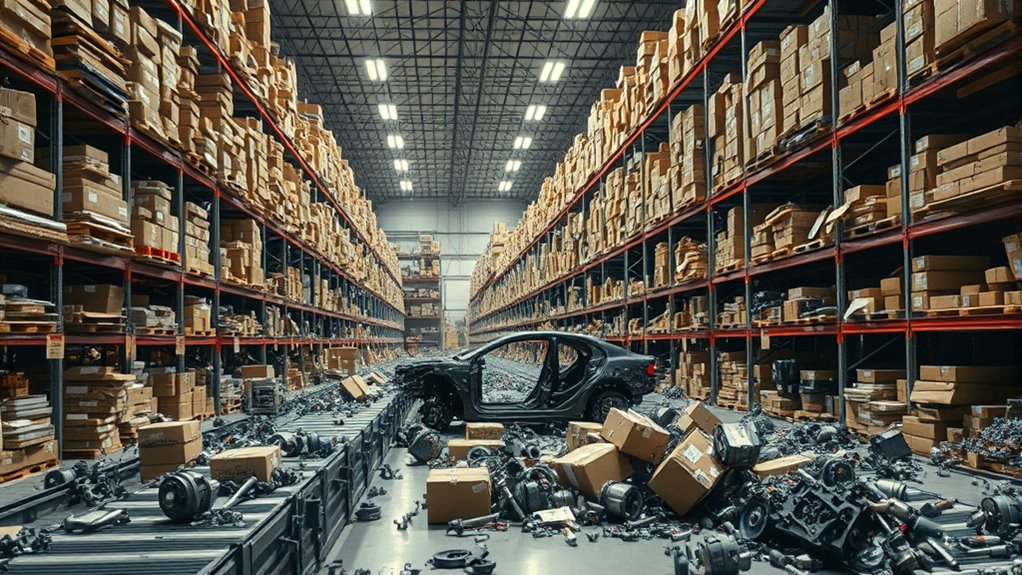

Supply chain disruptions in auto parts are drastically affecting vehicle manufacturing and repair, especially with the rising demand for electric vehicles. You might notice delays or shortages caused by factory closures, raw material shortages, and geopolitical issues. To stay resilient, companies are diversifying suppliers and spreading sourcing across regions, which helps maintain production and repair schedules. If you want to understand how these strategies can protect your operations, keep exploring the latest solutions and industry trends.
Key Takeaways
- Disruptions caused by geopolitical issues, factory closures, and raw material shortages impact auto parts supply chains.
- Dependence on limited suppliers for key electric vehicle components increases vulnerability to disruptions.
- Diversifying sourcing across multiple suppliers and regions enhances resilience and maintains production continuity.
- Supply chain vulnerabilities are amplified by the shift toward electric vehicles and their specialized parts.
- Implementing vertical storage and flexible sourcing strategies helps mitigate delays and sustain auto parts availability.
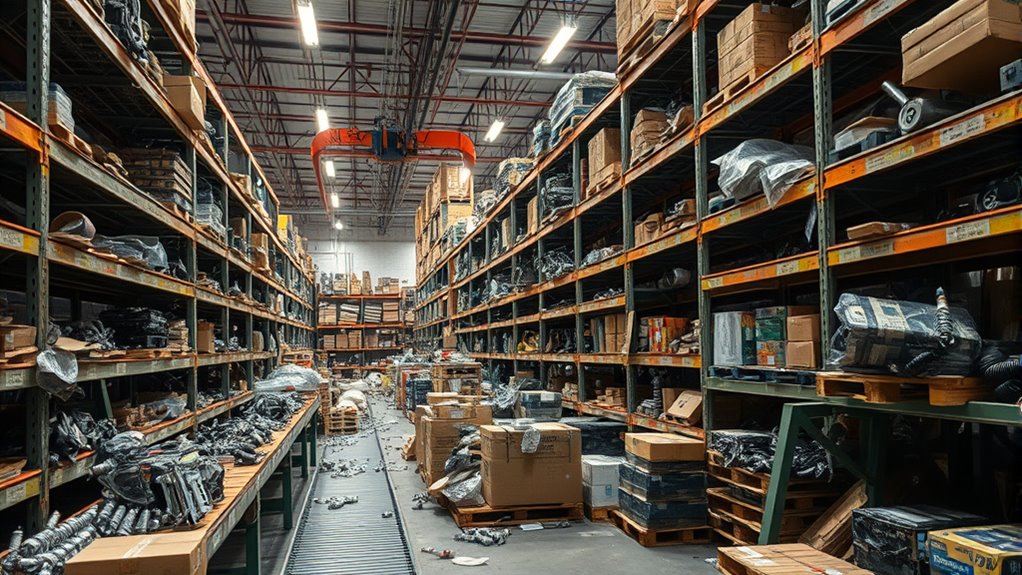
Recent disruptions in the auto parts supply chain have considerably impacted vehicle manufacturing and repair processes. These interruptions have been felt across the industry, forcing manufacturers and repair shops alike to adapt quickly. One major factor driving these challenges is the rising demand for electric vehicles. As automakers shift focus toward electric models, they require specialized components that are often sourced from a limited number of suppliers. This reliance on a narrow supplier base makes the entire supply chain vulnerable to disruptions, whether from geopolitical issues, factory closures, or raw material shortages. To mitigate these risks, many companies are now emphasizing supplier diversification. By spreading their sourcing across multiple suppliers and regions, they aim to reduce dependence on any single source and create a more resilient supply chain. Diversification allows automakers to better withstand unforeseen disruptions, guaranteeing that production lines stay operational and delivery schedules are maintained.
If you’re involved in vehicle manufacturing or repair, supplier diversification becomes a fundamental strategy. You need to stay informed about where your parts come from and consider alternative sources for essential components, especially those used in electric vehicles. When your suppliers are concentrated in one country or region, a disruption there can halt your entire operation. Diversifying suppliers not only helps to prevent delays but also provides access to different innovations and competitive pricing, which can be crucial in a rapidly evolving auto industry. For electric vehicles, this approach is particularly important because the components—like batteries, electric motors, and power electronics—are highly specialized and sometimes scarce. Building relationships with multiple suppliers across different regions helps ensure a steady flow of these parts, even when one source encounters issues. Additionally, implementing vertical storage solutions can help you keep critical parts on hand, reducing lead times during supply disruptions.
Additionally, supplier diversification can lead to improved quality and technological advancements. Different suppliers may have varying expertise and manufacturing processes, allowing you to select the best options for your specific needs. It also fosters competition among suppliers, which can drive innovation and cost reductions. As you navigate ongoing supply chain challenges, it’s essential to develop a thorough sourcing strategy that emphasizes flexibility and risk management. This way, if a particular supplier faces setbacks, you can quickly pivot to alternatives without severely impacting your production or repair timelines. Ultimately, embracing supplier diversification isn’t just a risk mitigation tactic; it’s a strategic move that positions you to adapt swiftly to industry shifts, especially as electric vehicles become more prevalent. Staying proactive in diversifying your supply chain will help guarantee your operations remain resilient and competitive amid the ongoing disruptions.
Frequently Asked Questions
How Do Geopolitical Tensions Impact Auto Parts Supply Chains?
Geopolitical tensions impact your auto parts supply chain by increasing trade sanctions and straining diplomatic relations. These actions can block or delay shipments, making it harder for you to source essential components. You might face higher costs or shortages, forcing you to find alternative suppliers or stockpile parts. Staying aware of political developments helps you anticipate disruptions and adapt your supply chain strategies accordingly.
What Are the Long-Term Effects of Supply Chain Disruptions on Auto Industry Innovation?
You might think disruptions slow down innovation, but they actually push you to prioritize supply chain resilience. Long-term, this leads to smarter designs, alternative sourcing, and more sustainable practices. However, without proactive efforts, innovation stagnation could occur, limiting advances in auto technology. Embracing resilience helps you adapt faster, ensuring your industry stays competitive and forward-looking despite ongoing supply chain challenges.
How Do Regional Differences Influence Auto Parts Supply Chain Resilience?
Regional variation considerably impacts your auto parts supply chain resilience. In some areas, robust infrastructure and local manufacturing boost your ability to adapt quickly, reducing delays. Conversely, regions with weaker logistics networks face higher vulnerability, causing disruptions that ripple through your operations. You should focus on diversifying suppliers across regions and strengthening local partnerships to enhance overall supply chain resilience, ensuring your auto parts supply remains steady despite regional challenges.
What Role Does Technology Play in Mitigating Supply Chain Disruptions?
Technology plays a crucial role in mitigating supply chain disruptions by enabling you to use digital tracking and predictive analytics. Digital tracking gives you real-time visibility into inventory and shipments, helping you quickly identify issues. Meanwhile, predictive analytics forecast potential disruptions, allowing you to proactively adjust your plans. Together, these tools improve your supply chain resilience, minimize delays, and keep your auto parts supply steady despite regional or global challenges.
How Are Small Auto Parts Manufacturers Affected Differently by Supply Chain Issues?
You might not realize it, but small auto parts manufacturers face unique challenges—about 60% experience delays due to supply chain issues. Their small scale vulnerabilities mean they’re more exposed to disruptions, with limited inventory buffers and fewer alternative suppliers. Niche supplier challenges hit them hardest, making it tougher to adapt quickly and recover. As a result, these manufacturers often face longer downtime and tighter profit margins during supply chain disruptions.
Conclusion
While the current challenges in auto parts supply chains gently nudge the industry toward adaptation, they also open doors for innovative solutions and resilience. Instead of setbacks, consider these moments as subtle opportunities to refine processes and strengthen partnerships. Although the path may seem winding, each obstacle offers a chance to build a more harmonious and responsive system. Embrace these quiet shifts as a prelude to a more resilient future, where persistence quietly paves the way forward.