
Fleet maintenance is shifting towards electric vehicles, reducing routine tasks like oil changes and mechanical repairs, while focusing more on battery health and charging management. Predictive analytics now help you forecast failures and optimize service schedules, minimizing unexpected breakdowns. Advanced sensors and telematics enable continuous monitoring, making maintenance more proactive and efficient. Staying ahead means upgrading your technology and skills; keep going to discover how these trends can reshape your fleet’s performance and costs.
Key Takeaways
- Adoption of electric vehicles reduces routine mechanical repairs but shifts focus to battery health and charging infrastructure management.
- Predictive analytics enables early detection of maintenance issues, minimizing unexpected failures and optimizing fleet uptime.
- Integration of sensors and telematics supports real-time monitoring, facilitating data-driven maintenance decisions.
- Strategic planning for EV charging and battery management is essential for cost savings and operational efficiency.
- Future fleet maintenance emphasizes technology upgrades and workforce training to adapt to evolving electric and data-driven systems.
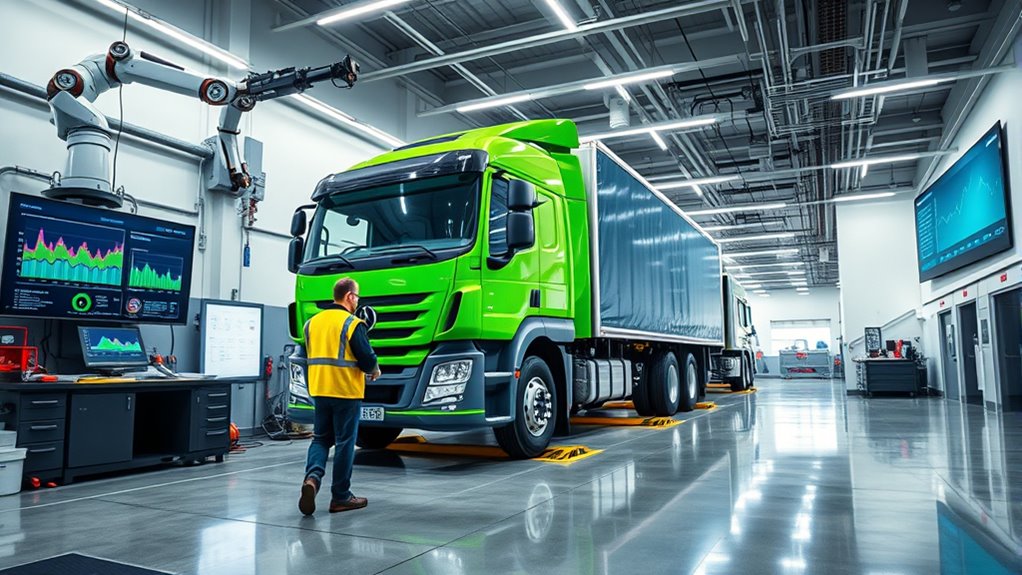
As fleet management evolves, staying ahead of maintenance trends is essential for ensuring efficiency and reducing costs. One of the most significant shifts is the increasing adoption of electric vehicles (EVs). These vehicles are transforming maintenance needs because they have fewer moving parts than traditional internal combustion engines. This reduction means less routine maintenance like oil changes and fewer mechanical failures overall. However, EVs introduce new challenges, such as managing battery health and ensuring proper charging infrastructure. To keep these vehicles running smoothly, you’ll need to understand their specific maintenance requirements and stay updated on advancements in battery technology. Additionally, integrating EVs into your fleet requires careful planning to optimize charging schedules and prevent downtime, ensuring maximum uptime and cost savings.
Electric vehicles reduce maintenance needs but require careful planning for battery management and charging infrastructure.
Predictive analytics is also reshaping how you approach fleet maintenance. Instead of waiting for a vehicle to break down, you can now use data-driven insights to forecast maintenance needs before issues arise. This proactive approach minimizes unexpected repairs and extends the lifespan of your fleet. By analyzing data from telematics, vehicle sensors, and maintenance histories, predictive analytics tools identify patterns and predict potential failures. For example, if a vehicle’s brake system shows signs of wear earlier than usual, you can schedule maintenance during routine inspections rather than risking a breakdown on the road. This not only reduces repair costs but also improves safety and vehicle availability.
Implementing predictive analytics requires the right technology infrastructure and data collection strategies. You’ll need to install sensors and telematics devices that continuously monitor vehicle performance. The data collected feeds into algorithms that analyze trends and flag issues before they become critical. This shift toward data-driven maintenance helps optimize resource allocation, reduce downtime, and improve overall fleet reliability. It’s also vital to train your team on interpreting analytics reports to make informed decisions quickly.
As you adapt to these trends, remember that staying current means investing in technology and training. Electric vehicles demand a different maintenance mindset, emphasizing battery management and charging infrastructure, while predictive analytics requires a robust data ecosystem. By blending these approaches, you can create a more efficient, cost-effective fleet that’s prepared for the future. Embracing these changes doesn’t just keep you ahead; it positions you as a proactive fleet manager, ready to meet the evolving demands of transportation with confidence and precision.
Frequently Asked Questions
How Does Telematics Influence Fleet Maintenance Scheduling?
Telematics considerably influence your maintenance scheduling by providing real-time data on driver behavior and vehicle performance. With this info, you can proactively address issues before breakdowns occur, optimizing maintenance timing. Telematics alerts you to harsh driving, excessive idling, or mechanical concerns, allowing you to schedule repairs more efficiently. This proactive approach reduces costs, minimizes downtime, and keeps your fleet running smoothly, all based on accurate, timely insights from telematics systems.
What Are the Costs Associated With Predictive Maintenance?
Predictive maintenance involves costs like detailed cost analysis, which helps you understand potential savings and expenses. You’ll need to invest in advanced sensors and equipment upgrades to enable accurate diagnostics. While these upfront costs can seem high, they often lower overall maintenance expenses by preventing major breakdowns. Over time, predictive maintenance can save you money through reduced downtime, extended equipment lifespan, and optimized resource use, making the initial investment worthwhile.
How Do Environmental Regulations Impact Fleet Maintenance Practices?
Environmental regulations, like emission standards, directly impact your fleet maintenance practices by requiring you to prioritize green compliance. You need to regularly service and upgrade vehicles to meet strict emission limits, which can involve using cleaner fuels, installing new filters, or adopting eco-friendly technologies. Staying compliant helps you avoid penalties, reduces your environmental footprint, and enhances your reputation, making sustainable practices a essential part of your maintenance routine.
What Training Is Needed for Staff on New Maintenance Technologies?
You need to train your staff on new maintenance technologies by focusing on driver safety and parts inventory management. Provide hands-on workshops to familiarize them with advanced diagnostic tools and repair systems. Emphasize safety protocols to prevent accidents during repairs. Additionally, teach them how to efficiently manage parts inventory to reduce downtime and costs. Ongoing education guarantees your team stays updated, improves maintenance quality, and enhances overall fleet performance.
How Is AI Integrated Into Fleet Maintenance Management?
You’re on the right track by exploring AI integration into fleet management. AI boosts efficiency by analyzing fleet analytics to predict maintenance needs before issues arise. It automates scheduling, reduces downtime, and improves decision-making. With AI, you get real-time insights that help streamline operations. Embracing this tech is a game-changer, turning maintenance from reactive to proactive, and ensuring your fleet runs smoothly without hitting the proverbial wall.
Conclusion
Staying ahead of fleet maintenance trends keeps your operations efficient and cost-effective. Did you know that proactive maintenance can reduce vehicle downtime by up to 30%? That’s a game-changer, saving you time and money while boosting safety. Embracing these trends means you’re not just keeping up—you’re setting the pace. Keep innovating and investing in maintenance to guarantee your fleet remains reliable and ready for whatever’s next. The future of fleet management is in your hands.