

When comparing OEM and aftermarket parts, you’ll find OEMs are made by the original manufacturer and usually come with strong warranties, ensuring better quality and fit. Aftermarket parts tend to be cheaper and easier to find but often lack warranty coverage, which can lead to higher long-term costs. Your choice depends on whether you prioritize durability and warranty or are comfortable with lower upfront costs. Continue exploring to see how these differences impact your vehicle’s performance and expenses.
Key Takeaways
- OEM parts are produced by the original manufacturer, ensuring consistent quality and precise fit, often with comprehensive warranties.
- Aftermarket parts are made by third-party companies, typically offering lower prices but variable quality and limited or no warranty coverage.
- OEM distribution channels tend to be more controlled, ensuring authentic parts reach authorized dealerships; aftermarket parts have broader distribution sources.
- The availability of OEM parts may be limited to authorized dealers, while aftermarket parts are generally more readily accessible through various suppliers.
- Choosing between OEM and aftermarket parts involves balancing cost, warranty coverage, quality, and distribution reliability.
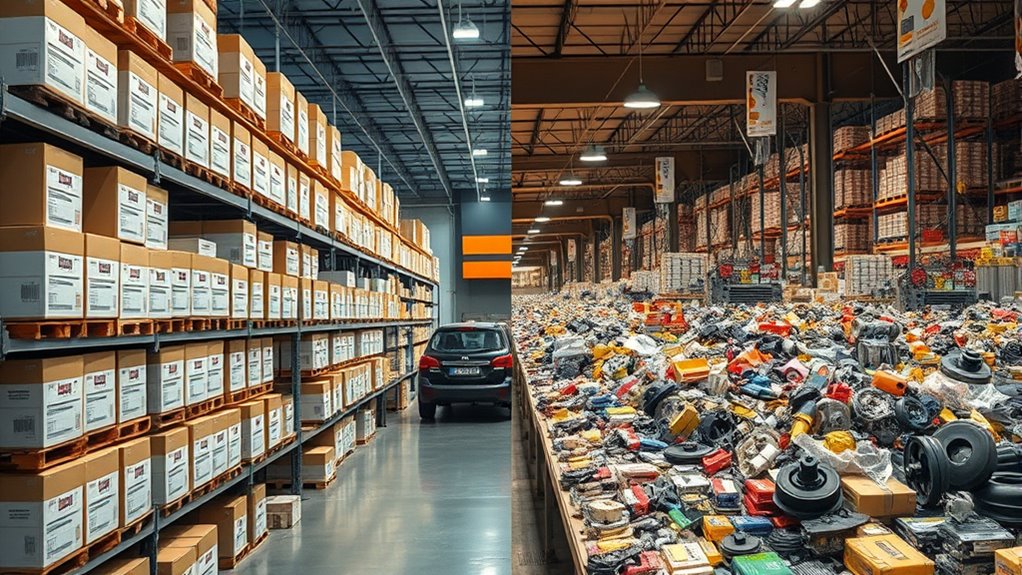
Have you ever wondered how your favorite products get from manufacturers to your hands? It’s a complex process, especially when it comes to parts distribution. Whether you’re repairing your vehicle or replacing a household appliance component, understanding the difference between OEM and aftermarket parts is essential. One key factor to consider is warranty implications. OEM parts, which are made by the original manufacturer, often come with warranties that match or exceed those of the original product. This means you’re more likely to have coverage if something goes wrong, providing peace of mind and reducing potential repair costs down the line. On the other hand, aftermarket parts, produced by third-party companies, may not always come with the same warranty coverage. Some aftermarket manufacturers offer warranties, but these can vary markedly in length and scope, which could leave you vulnerable if the part fails prematurely. Additionally, essential oils for repair can sometimes be used in the manufacturing process to improve product quality.
Cost comparison is another vital aspect to evaluate. Generally, aftermarket parts tend to be more affordable than OEM components. This price difference can be a deciding factor if you’re on a tight budget or need a quick fix. However, it’s worth considering whether the lower cost might compromise quality or longevity. OEM parts are often more precisely engineered to fit and function like the original, which can translate to longer-lasting repairs and fewer issues over time. Conversely, aftermarket parts may vary in quality—some are nearly indistinguishable from OEM, while others might be less reliable. The initial savings with aftermarket parts might seem appealing, but if they lead to frequent replacements or damage to other components, the overall cost can surpass that of OEM parts.
Furthermore, warranty implications and cost comparison often intersect. OEM parts, with their comprehensive warranties, tend to justify their higher price point through added security and reliability. Meanwhile, aftermarket parts can be tempting due to their lower prices, but they often come with limited or no warranty, which can make long-term maintenance more costly. When choosing between OEM and aftermarket, think about your specific needs: are you prioritizing longevity and warranty coverage, or are you seeking a quick, budget-friendly solution? Ultimately, the right choice depends on balancing these factors against your budget and expectations for durability. Recognizing these differences helps you make informed decisions, ensuring your repairs are both affordable and dependable.
Frequently Asked Questions
How Do OEM and Aftermarket Parts Impact Vehicle Warranty Coverage?
Using OEM parts typically keeps your vehicle warranty intact because they meet the manufacturer’s standards, minimizing warranty implications. However, aftermarket parts can sometimes void your warranty if they cause issues or aren’t approved by the manufacturer. Insurance considerations also come into play; some policies may have restrictions if non-OEM parts are used in repairs. Always check your warranty terms and insurance policy to avoid unexpected costs.
What Are the Environmental Effects of Choosing OEM Versus Aftermarket Parts?
You’re playing with fire if you overlook environmental impact when choosing parts. OEM parts often have a smaller manufacturing footprint, since they’re made to exact standards and usually sourced locally, reducing emissions. Aftermarket parts, however, might have a larger footprint due to varied manufacturing practices and global sourcing. Your choice affects not just your vehicle but the planet — making it vital to weigh environmental factors carefully.
Can Aftermarket Parts Void Vehicle Insurance Policies?
Choosing aftermarket parts can impact your insurance implications, as some policies may void coverage if parts authenticity isn’t verified. Insurance companies often prefer OEM parts because they meet manufacturer standards, reducing potential disputes. If you install aftermarket parts without informing your insurer, you risk losing coverage or facing higher premiums. Always check your policy details and discuss upgrades with your insurer to avoid any issues related to parts authenticity and coverage.
How Do Pricing Strategies Differ Between OEM and Aftermarket Parts?
Pricing policies prioritize profit and perception. OEM parts often carry a premium price, reflecting brand reputation and strict standards, ensuring quality and authenticity. Conversely, aftermarket parts usually adopt aggressive, adaptable pricing models to attract budget-conscious buyers, offering cost-effective alternatives. Your choice depends on trust in brand reputation and willingness to pay for quality. With OEMs, expect a pricier but proven product, while aftermarket options promise affordability and variety.
What Are the Long-Term Reliability Differences Between OEM and Aftermarket Parts?
You’ll find that OEM parts generally offer better long-term reliability because they meet strict quality assurance and manufacturing standards set by the vehicle manufacturer. Aftermarket parts can vary widely in quality, so some may not last as long or fit as precisely. While aftermarket options might be cheaper initially, OEM parts often provide more consistent durability and performance over time, making them a smarter choice for long-term reliability.
Conclusion
Choosing between OEM and aftermarket parts is like steering a vast ocean—you’ll find treasures and pitfalls at every turn. OEM parts are your trusted compass, guiding you with precision and reliability, while aftermarket options are the wild waves offering affordability and variety. Whichever path you sail, remember that your vehicle’s health is the lighthouse. Make informed choices, and you’ll keep your journey smooth, safe, and full of adventure. So, steer wisely and enjoy the ride!