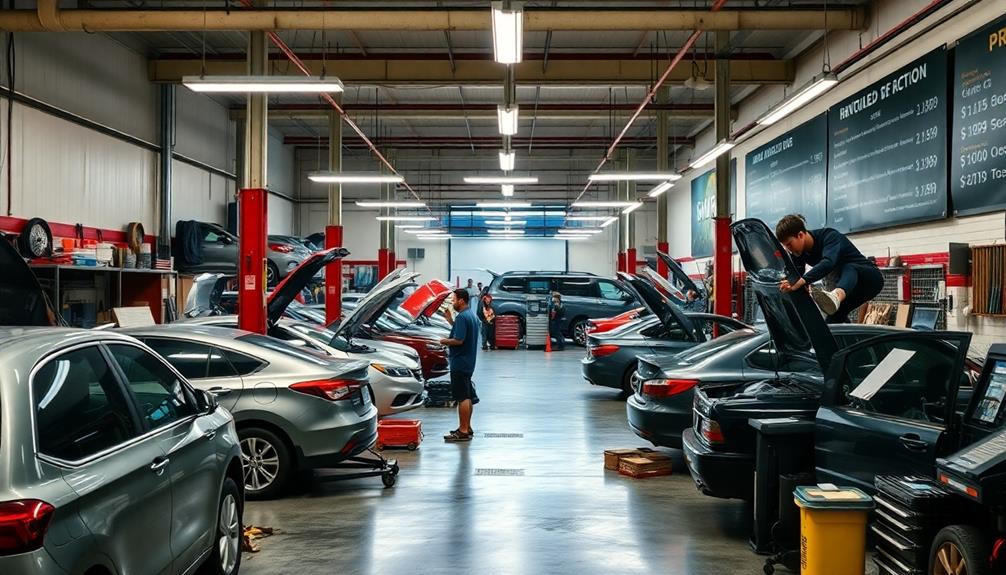

Predictive maintenance in cars uses sensors to monitor various parts like the engine, brakes, and tires in real-time. These sensors detect early signs of wear or problems and send alerts before breakdowns happen. This proactive approach helps you avoid costly repairs, improves safety, and keeps your vehicle running efficiently. By continuously analyzing data, your car can warn you when maintenance is needed. Explore how this technology can transform your driving experience and vehicle care.
Key Takeaways
- Predictive maintenance uses vehicle sensors to monitor real-time data and detect early signs of component wear or failure.
- It forecasts potential issues before breakdowns occur, enabling timely repairs and reducing unexpected vehicle failures.
- Sensor-driven data analysis helps determine optimal maintenance schedules, improving efficiency and preventing costly repairs.
- It enhances safety by alerting drivers to problems like low tire pressure or engine irregularities early on.
- Advances in sensor technology and algorithms continue to improve predictive accuracy and vehicle safety features.
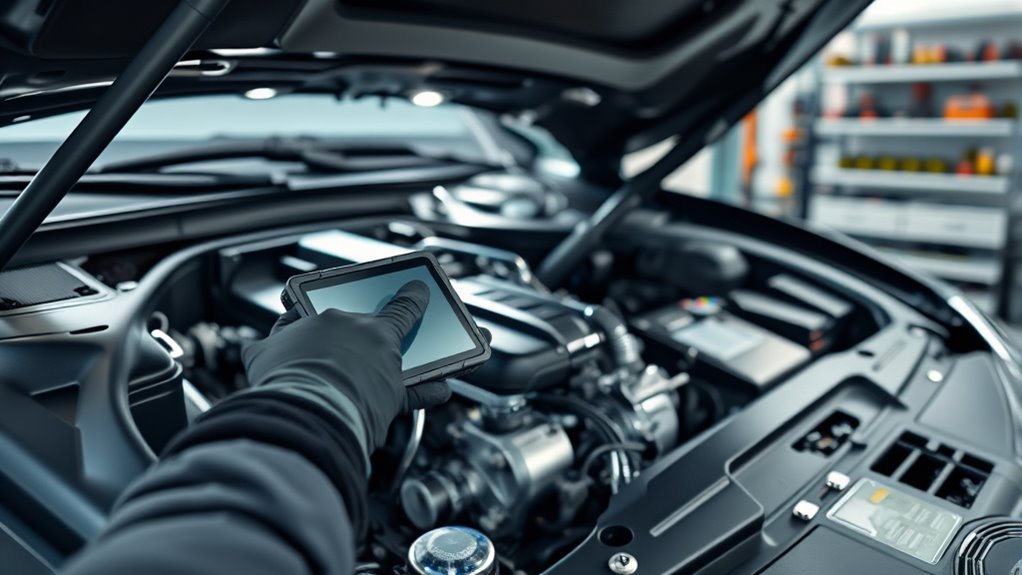
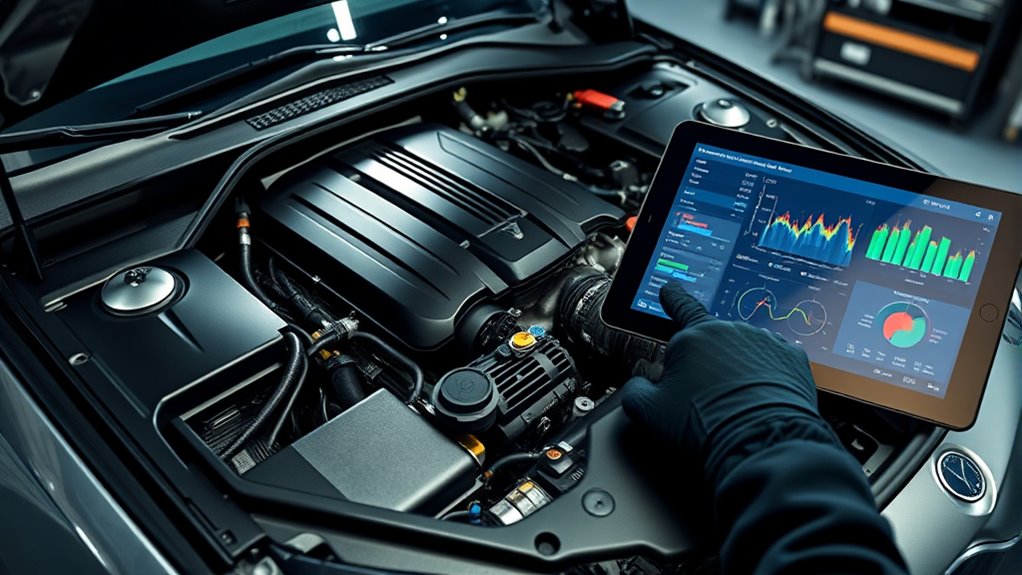
Have you ever wondered how modern cars can warn you about potential problems before they happen? It’s thanks to advancements in sensor technology that make predictive maintenance possible. Instead of waiting for a warning light or a breakdown, your vehicle constantly monitors its various systems through a network of sensors. These sensors collect real-time data on engine temperature, oil pressure, brake performance, tire pressure, and more. This information is processed by onboard computers, which analyze patterns and detect signs of wear or malfunction early on.
Because of this sophisticated sensor technology, your car can predict when certain components might fail or need attention. For example, if sensors detect irregularities in engine vibrations or temperature fluctuations, the vehicle can alert you before these issues escalate. This proactive approach helps prevent sudden breakdowns, saving you money and inconvenience. It also means that maintenance scheduling becomes much smarter and more efficient. Instead of sticking to a fixed routine or waiting for a problem to occur, your car’s system recommends specific maintenance tasks based on actual data. This tailored approach ensures that you address issues precisely when needed, avoiding unnecessary service appointments and reducing overall maintenance costs.
Advanced sensors predict component failures, enabling smarter maintenance and preventing costly breakdowns.
With sensor technology integrated into your vehicle, your car maintains a continuous dialogue with you. It can notify you about low tire pressure, imminent brake pad wear, or the need for an oil change before these issues become critical. This way, you’re empowered to plan repairs and service appointments at convenient times, rather than reacting to inconvenient breakdowns. Furthermore, this real-time data collection helps mechanics too. When you take your car in for service, they can access detailed reports about the vehicle’s condition, making diagnostics faster and more accurate.
Predictive maintenance also extends the lifespan of your vehicle. By addressing problems early, you reduce the strain on other parts and prevent minor issues from turning into major repairs. This approach promotes safer driving, better fuel efficiency, and overall vehicle reliability. As technology continues to evolve, the sensors become more precise, and the algorithms more sophisticated, making predictive maintenance an integral part of modern automotive care. Additionally, safety initiatives are often incorporated into these systems to enhance overall vehicle security. Ultimately, it shifts the mindset from reactive to proactive, giving you peace of mind knowing your car is working to prevent problems before they happen. Thanks to sensor technology and smarter maintenance scheduling, you’re not just driving — you’re driving smarter, safer, and more efficiently.
Frequently Asked Questions
How Accurate Is Predictive Maintenance in Preventing Car Breakdowns?
Predictive maintenance can be quite accurate in preventing car breakdowns when sensor accuracy and data analysis are first-rate. You benefit from real-time sensor data that detects issues early, allowing timely repairs. As long as sensors are reliable and data analysis algorithms are well-designed, you’ll see fewer unexpected failures. However, some factors like sensor calibration and data interpretation errors can impact accuracy, so regular updates and maintenance are essential.
What Technologies Are Used to Enable Predictive Maintenance in Vehicles?
You use sensor integration, data analytics, and machine learning to enable predictive maintenance in vehicles. Sensors collect real-time data on engine performance, tire pressure, and brake wear, while data analytics analyze this information to detect patterns and predict failures. These technologies work together to provide timely alerts, helping you prevent breakdowns, optimize maintenance schedules, and extend your vehicle’s lifespan, ensuring safer and more reliable driving experiences.
How Much Does Predictive Maintenance Typically Cost for Car Owners?
Predictive maintenance generally costs between $50 and $200 annually, depending on your vehicle and service plan. You might see a cost comparison showing lower expenses over time since it reduces unnecessary repairs and service frequency. By catching issues early, you save money and avoid unexpected breakdowns, making predictive maintenance a smart investment. Keep in mind, some advanced systems may have higher upfront costs but offer greater long-term savings.
Can Predictive Maintenance Be Integrated With Existing Vehicle Systems?
Yes, predictive maintenance can be integrated with your existing vehicle systems. You’ll benefit from sensor integration, which collects real-time data, and system compatibility, guaranteeing the new tech works seamlessly with your car’s electronics. Many modern vehicles already have compatible platforms, making it easier to add predictive maintenance features. Just check your car’s specifications and consult with professionals to ensure smooth integration without compromising your vehicle’s performance.
What Are the Limitations or Challenges of Implementing Predictive Maintenance?
You might face challenges like sensor reliability, which can lead to inaccurate data and false alarms, affecting maintenance decisions. Data privacy is another concern, as collecting vehicle data risks exposing personal information if not properly secured. Implementing predictive maintenance also requires significant investment in technology and training. Overcoming these issues involves ensuring sensor quality, safeguarding data, and allocating resources effectively to realize its full benefits.
Conclusion
Wondering if predictive maintenance is just hype? The truth is, it’s revolutionizing how you care for your car. By catching issues early, it saves you money, prevents breakdowns, and keeps you safer on the road. Some skeptics say it’s too costly or unreliable, but recent advances prove otherwise. Embracing predictive maintenance isn’t just a trend — it’s a smart move towards smarter, more efficient driving. Don’t wait for problems to happen; stay ahead with this game-changing technology.