
TL;DR

Get business pricing on garage and car supplies
- Business-only prices and quantity discounts
- Tax-exempt purchasing
- Multiple users, one account, clear invoices
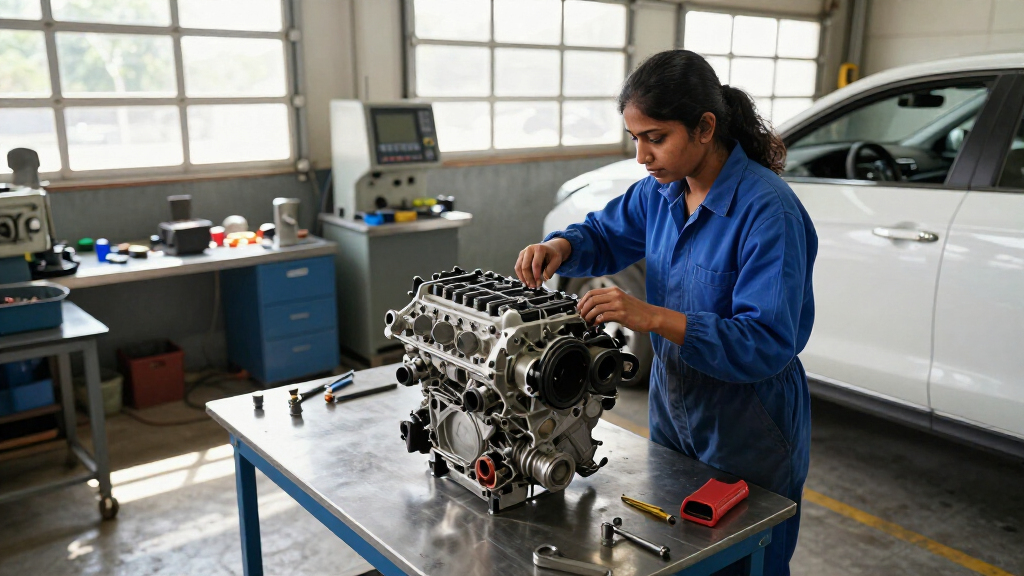
Toyota has officially inaugurated a new engine manufacturing plant in Bangalore. This development confirms Toyota’s commitment to expanding its local production capacity in India, though specific production targets and investment figures are not yet disclosed.
Toyota has officially inaugurated a new engine manufacturing facility in Bangalore, India, marking a significant milestone in the company’s local expansion efforts. The opening was confirmed by Toyota officials, emphasizing the plant’s role in boosting production capacity and supporting the company’s India operations. This move is part of Toyota’s broader strategy to strengthen its presence in the rapidly growing Indian automotive market, where demand for both passenger vehicles and commercial engines continues to rise.
The new plant, located in Bangalore, is confirmed to be operational, with Toyota stating that it will manufacture engines for both passenger cars and commercial vehicles. While specific production volumes or investment figures have not been publicly disclosed, sources suggest the facility is equipped with advanced manufacturing technology aimed at increasing efficiency and local sourcing.
According to Toyota India officials, the plant is expected to create numerous jobs and support the company’s plans to introduce new models tailored for the Indian market. The facility’s inauguration aligns with Toyota’s global commitment to expanding local manufacturing capabilities, especially in regions with high growth potential like India.
Why the Bangalore Engine Plant Matters for Toyota and India
This new engine facility underscores Toyota’s strategic focus on local manufacturing in India, which is one of the fastest-growing automotive markets globally. It enhances Toyota’s supply chain resilience, reduces reliance on imports, and positions the company to better meet local demand. For consumers, this could mean more competitively priced vehicles and a broader model lineup. Additionally, the plant’s emphasis on advanced technology reflects Toyota’s investment in sustainable and efficient manufacturing practices, aligning with India’s push toward cleaner mobility options.As an affiliate, we earn on qualifying purchases.
Toyota’s Expansion in India and Global Manufacturing Trends
Toyota’s entry into India’s engine manufacturing sector has been gradual but steady, with the company establishing manufacturing facilities for vehicles and parts over the past two decades. The recent inauguration of the Bangalore plant signals a renewed focus on local production, especially in light of India’s growing automotive market and government incentives for local manufacturing. Globally, automakers are increasingly investing in regional plants to optimize supply chains and adapt to regional market needs. Prior to this, Toyota had announced plans to expand its manufacturing footprint in India, but the specific details and timeline of the Bangalore plant were not publicly confirmed until now.Details on Production Capacity and Future Plans Still Unclear
While the plant’s inauguration is confirmed, specific details about its production capacity, investment amount, and future expansion plans remain undisclosed. It is also unclear whether the facility will serve only domestic needs or export engines to other markets. Additionally, the timeline for ramping up full-scale production has not been publicly announced, and Toyota has not provided detailed forecasts for the plant’s contribution to its overall global manufacturing network.
Next Steps Include Monitoring Production Ramp-Up and Model Launches
Toyota is expected to gradually increase production at the Bangalore plant, with official updates on capacity and output likely in the coming months. The company may also announce new vehicle models or variants that will benefit from the locally produced engines. Market analysts will be watching to see how this expansion influences Toyota’s market share in India and its supply chain strategies in the region.
Key Questions
What is the main purpose of Toyota’s new Bangalore plant?
The plant is intended to manufacture engines for Toyota’s passenger and commercial vehicles in India, supporting local production and reducing import reliance.
How will this plant impact Toyota’s presence in India?
It will likely strengthen Toyota’s manufacturing footprint, improve supply chain efficiency, and enable the company to offer more competitively priced vehicles tailored to Indian consumers.
Are there plans for export from this new plant?
Details on export plans have not been announced; it remains unclear if the plant will serve international markets or focus solely on domestic demand.
When will the plant start full-scale production?
Specific timelines have not been disclosed; it is expected to gradually ramp up over the coming months.
How much did Toyota invest in the Bangalore facility?
No publicly available figures specify the investment amount for the plant at this time.
Source: local
Halloween Picks
halloween
As an affiliate, we earn on qualifying purchases.