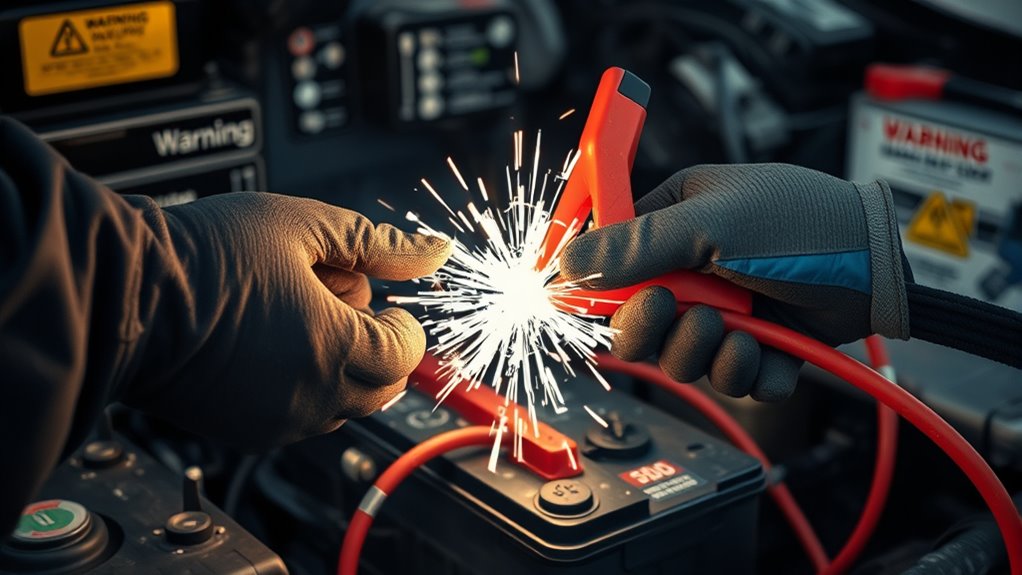

Attempting to jump-start a vehicle without a battery can be dangerous because it increases the risk of electrical shocks, short circuits, and sparks that might cause fires or damage your vehicle’s sensitive electronics. You also risk damaging electrical components if cables are connected improperly or if safety precautions aren’t followed. Without the battery, your vehicle’s electrical system may act unpredictably. Stay cautious, as understanding the full dangers can help you prevent costly mistakes.
Key Takeaways
- Without a battery, unpredictable electrical system behavior increases the risk of short circuits and component damage.
- Electrical shocks and sparks during jump-starts can cause personal injuries if safety precautions are ignored.
- Connecting jumper cables improperly may lead to electrical surges and damage sensitive vehicle electronics.
- The absence of a battery heightens the chance of electrical overloads and component harm during jump-starting.
- Professional assistance and safety measures are essential to prevent hazards when attempting a battery-less jump start.
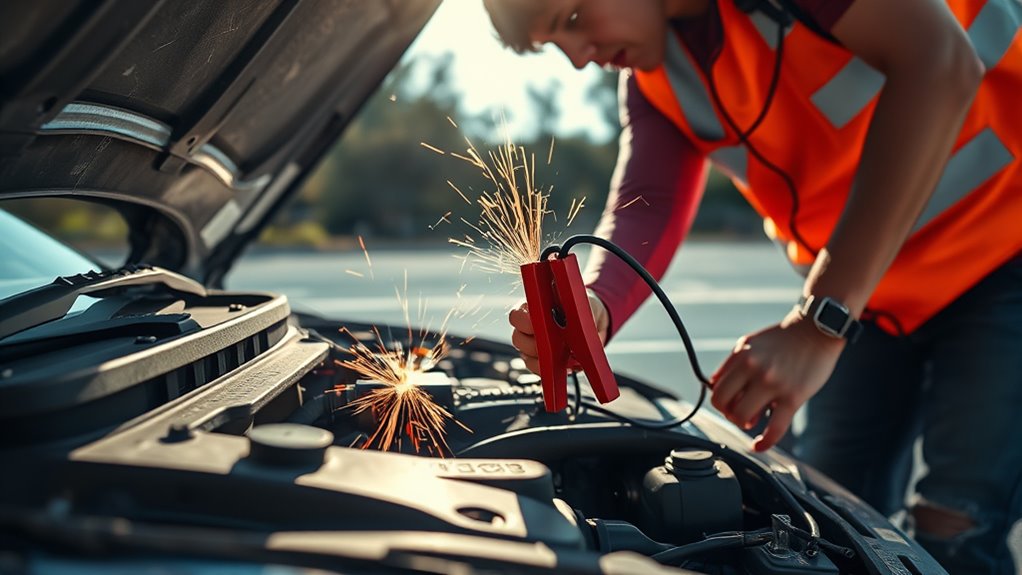
Jump starting a car without a battery might seem like a quick fix, but it’s actually fraught with serious risks. Many assume that bypassing the battery is a simple workaround, but in reality, it can lead to dangerous electrical surges, damage to your vehicle’s components, and even personal injury. If you’re considering this approach, it’s vital to understand the safety precautions you need to take and the proper emergency procedures to follow.
First and foremost, never attempt a battery-less jump start without understanding the potential hazards. Without the battery, your vehicle’s electrical system behaves unpredictably, increasing the chance of short circuits or sparks. Before you even try, make sure you wear safety gear such as gloves and eye protection to safeguard against accidental sparks or electrical shocks. Keep a fire extinguisher nearby, just in case a spark ignites a fire. These safety precautions can’t be overstated, as they help protect you from immediate harm. Additionally, understanding home cinema projectors can help you recognize the importance of proper setup and safety measures in complex systems.
If your vehicle lacks a functioning battery, you should seek professional assistance before attempting any jump-start method. If you decide to proceed, guarantee you follow the correct emergency procedures. First, disconnect any accessories to prevent electrical overloads. Next, connect the jumper cables properly—positive to positive, negative to ground—while ensuring the other vehicle is turned off. Be cautious during this process; avoid touching the clamps together or letting them contact any metal parts of the vehicle. Once connected, start the donor vehicle and let it run for a few minutes to transfer power. Then, attempt to start your vehicle. If it doesn’t turn over, disconnect the cables carefully, starting with the negative clamp, and avoid any sudden movements.
Frequently Asked Questions
Can Battery-Less Jump Starting Damage My Vehicle’s Electrical System?
Yes, battery-less jump starting can damage your vehicle’s electrical system. If not done correctly, it may cause electrical damage or system malfunction, potentially frying sensitive components. You could accidentally send too much current, harming the alternator or control modules. Always guarantee proper procedures and equipment when attempting to jump-start without a battery to prevent electrical damage and protect your vehicle’s system integrity.
Is It Safe to Perform a Battery-Less Jump Start Alone?
Performing a battery-less jump start alone is like walking a tightrope without a safety net. For your personal safety, it’s risky and not recommended. Always follow emergency procedures, such as ensuring the vehicle is off, wearing gloves, and having a fire extinguisher nearby. If you’re unsure, it’s best to get professional help. Your safety should always come first, so don’t attempt this alone unless you’re fully trained.
What Precautions Should I Take During a Battery-Less Jump Start?
When performing a battery-less jump start, you should wear safety gear like gloves and eye protection to prevent injuries. Always have an emergency kit nearby in case of accidents. Make certain the vehicle is off before connecting any cables, and double-check the connections are correct to avoid sparks or damage. Stay alert, work in a well-ventilated area, and never attempt a jump start alone if you’re unsure of the process.
Are There Specific Vehicles Incompatible With Battery-Less Jump Starting?
Did you know that about 15% of vehicles may be incompatible with battery-less jump starting? Vehicle compatibility is essential for jump start safety, as some models, especially classic cars or those with sensitive electronics, aren’t suitable for this method. Always check your vehicle’s manual or consult a professional before attempting. Using incompatible vehicles can cause damage or even pose safety risks, so verify compatibility beforehand to guarantee a safe and effective jump start.
How Does Weather Affect the Safety of Battery-Less Jump Starting?
Weather hazards and temperature effects profoundly impact the safety of battery-less jump starting. Cold temperatures can make electrical components more brittle and increase the risk of sparks or short circuits, while hot weather can cause overheating of connectors. You should be extra cautious in extreme weather conditions, ensuring all connections are secure and dry, and avoid jump starting in wet or icy environments to prevent accidents and damage.
Conclusion
Jump-starting a car without a battery might seem like a quick fix, but it’s a risky move that could backfire. You don’t want to put yourself in hot water or cause more damage than you bargained for. Always remember, it’s better to be safe than sorry. If you’re unsure, seek professional help. Don’t let impatience be the thief of your peace of mind—know your limits and avoid playing with fire.