
To legally operate your shop, you need to obtain the right licenses and permits, such as a business license and zoning permits. These confirm your shop complies with local laws, prevent fines, and keep your business running smoothly. Applying involves filling out forms, paying fees, and sometimes attending hearings. Ensuring you have all required permits builds trust with customers and vendors. For detailed steps and tips, you’ll want to explore more about shop licensing and permits.
Key Takeaways
- Obtain a valid business license to legally operate and demonstrate compliance with local regulations.
- Verify zoning permits to ensure your shop’s location is designated for commercial use.
- Apply for necessary permits early, considering potential additional requirements like health or safety licenses.
- Consult local government resources or experts to navigate permit applications and avoid delays.
- Proper licensing protects your business from legal issues, fines, and shutdowns, establishing a trustworthy operation.
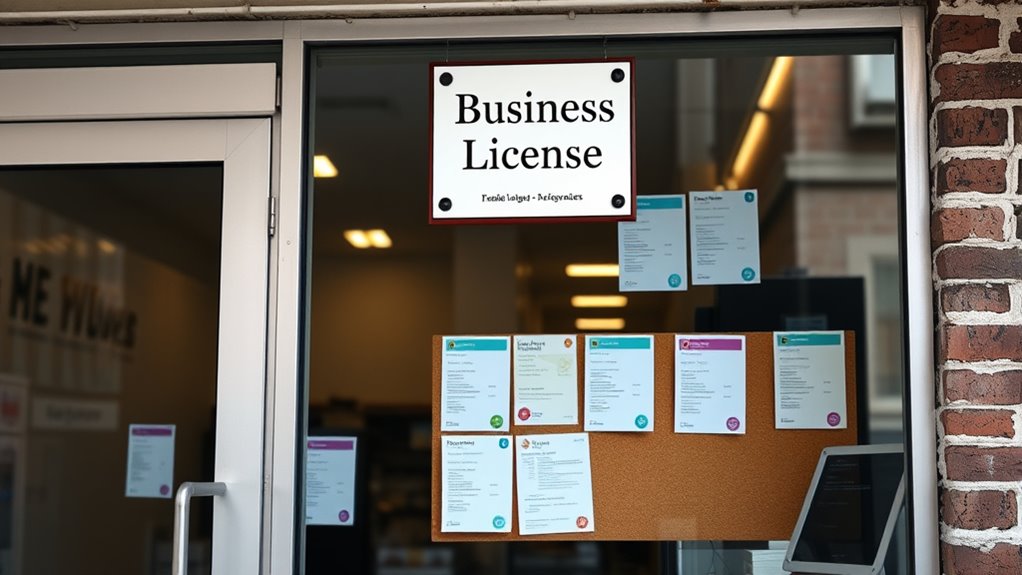
Are you aware of all the licenses and permits needed to operate your shop legally? If not, you’re risking costly fines, shutdowns, or legal trouble that can easily be avoided with proper planning. One of the first steps is obtaining a business license. This document proves that your shop complies with local, state, or federal regulations, and it’s often a requirement before you open your doors. The process varies depending on where you’re located, but generally, you’ll need to fill out an application, pay a fee, and provide some basic information about your business, such as its name, address, and ownership details. Securing a business license not only keeps you compliant but also helps build trust with customers and vendors, who often look for legitimacy before engaging with your shop.
Securing the right licenses and permits ensures your shop operates legally and builds customer trust.
Alongside a business license, you’ll need to obtain a zoning permit. This permit confirms that your shop’s location is designated for commercial use, according to local zoning laws. Many areas have specific zones for retail businesses, and operating outside these zones can lead to fines or even forced closure. Before signing a lease or purchasing property, check with your local zoning department to ensure your intended use is permitted. If your shop is in a zone that restricts commercial activity, you may need to apply for a variance or special exception, which can take time and may require public hearings. Ignoring zoning laws can cause significant setbacks, so it’s essential to verify your location’s zoning status early on.
Getting both a business license and zoning permit can seem overwhelming at first, but it’s a necessary part of establishing a legal and successful shop. Many local government websites provide detailed guides and application forms to streamline the process. Sometimes, these permits are linked, and applying for one can trigger the need for others, like health or safety permits, depending on your type of business. It’s also wise to consult with a legal expert or business advisor familiar with your area’s regulations to make sure you’re covering all bases. Failing to secure the proper licenses and permits can lead to fines, legal issues, and even shutdowns, which could jeopardize your entire business.
Understanding the importance of proper licensing and permits and ensuring you have all necessary documentation in place helps protect your shop from potential legal issues down the line. Ultimately, understanding and securing the right licenses and permits, especially your business license and zoning permit, lays a solid foundation for your shop’s success. It shows you’re committed to operating ethically and within the law. By taking these steps early, you avoid unnecessary hurdles down the line, giving you more time to focus on building your business and serving your customers.
Frequently Asked Questions
How Long Does the Licensing Process Typically Take?
The licensing process usually takes about 2 to 4 weeks, but it can differ depending on your location and the complexity of your application process. You should start early to allow time for license renewal and any additional documentation needed. Make sure to submit your application accurately and promptly, so you avoid delays. Staying organized and following up can help ensure you get your license as quickly as possible.
Are There Different Permits for Online Shops?
You might think online shops don’t need permits, but that’s not always true. Digital storefronts often require specific licensing requirements, especially if you’re selling regulated goods or operating in certain states. While there aren’t separate permits just for online shops, you should check local laws to guarantee compliance. Securing the right permits helps you avoid fines and legal issues, so stay informed about the licensing requirements for your online business.
What Are the Penalties for Operating Without a License?
If you operate without a license, you face significant unlicensed penalties, including hefty fines and potential legal action. Authorities can suspend your license or even shut down your shop entirely. Operating unlicensed not only risks financial loss but also damages your reputation and future ability to obtain permits. To avoid these consequences, make sure you obtain the necessary licenses before opening your shop, and stay compliant with local regulations.
Can Licenses Be Transferred if I Sell My Shop?
Imagine passing a torch to keep the flame alive. When you sell your shop, a shop license transfer might be possible, but it depends on your local business sale regulations. You’ll need to check with your licensing authority, as some licenses are non-transferable. Typically, the new owner must apply for their own license or approval, ensuring compliance with all rules before the sale is finalized.
Are There Specific Licenses for Food or Alcohol Sales?
Yes, you need specific licenses for food and alcohol sales. You must obtain food safety permits to guarantee your products meet health standards, and alcohol regulations require a liquor license. These licenses help you comply with local laws and maintain quality. Make sure to apply for these permits before selling food or alcohol, and stay updated on any renewals or changes to regulations to avoid fines or shutdowns.
Conclusion
Getting the right licenses and permits might seem intimidating, but it’s essential for your shop’s success. Stay organized, follow the rules, and you’ll build a solid foundation for your business. Remember, “A stitch in time saves nine”—address licensing early to avoid bigger issues later. With diligence and patience, your shop will thrive, and you’ll enjoy the peace of mind that comes from doing things the right way. Keep pushing forward—you’re on the path to success.