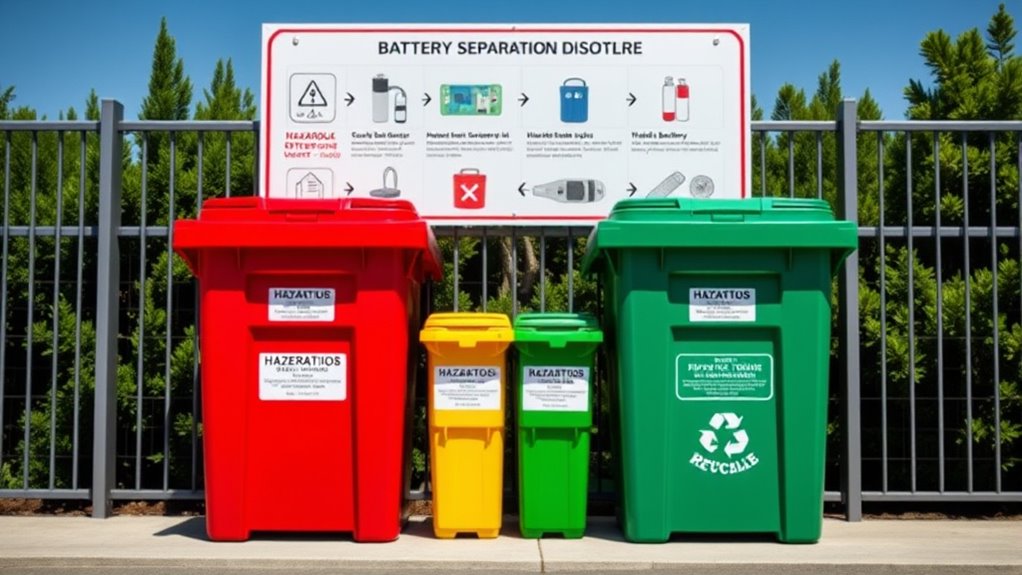

You need to follow local regulations when disposing of batteries to prevent environmental contamination and protect public health. Many areas require batteries to be taken to designated collection points or recycling centers, and laws often mandate that retailers or waste services accept used batteries. Proper disposal helps contain hazardous components like heavy metals and chemicals, reducing pollution risks. To learn more about specific regulations in your region and how to dispose of batteries correctly, keep exploring your options.
Key Takeaways
- Batteries must be disposed of at designated collection and recycling facilities to prevent environmental contamination.
- Regulations require retailers and waste services to accept used batteries for proper handling.
- Improper disposal can lead to fines or penalties under local or national laws.
- Proper disposal practices help recover valuable materials and reduce hazardous waste in landfills.
- Consumers should stay informed of specific disposal rules and incentives in their area.
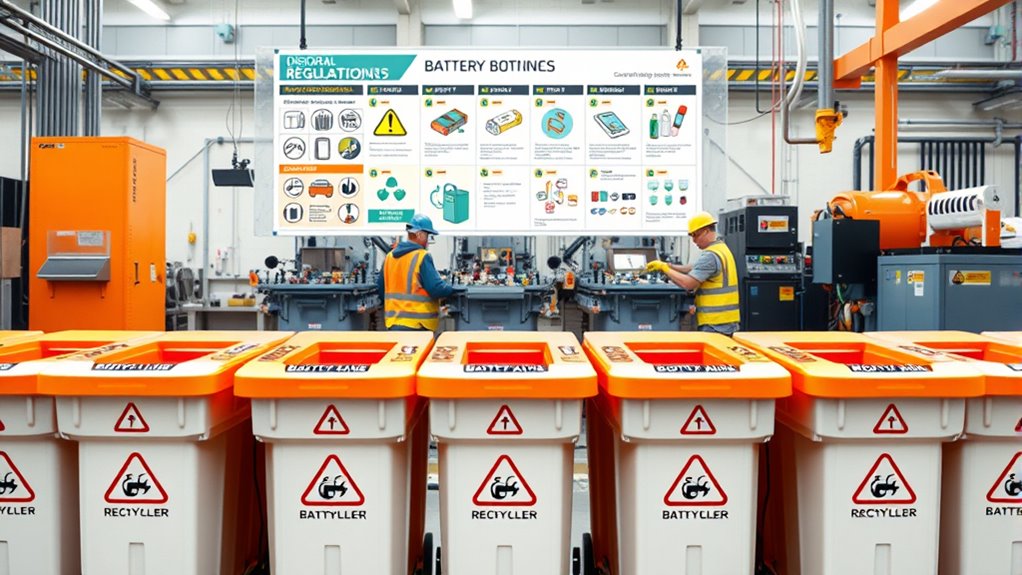
Have you ever wondered what happens to your batteries once you throw them away? Many people overlook the journey their discarded batteries take, but understanding this process reveals why proper disposal is so vital. Batteries contain chemicals and metals that can be hazardous waste if not handled correctly. Improper disposal can lead to soil and water contamination, posing risks to both the environment and public health. That’s why regulations around battery disposal are strict, aiming to prevent such hazards and promote safe waste management. To encourage responsible disposal, some regions offer recycling incentives, motivating consumers to return used batteries rather than toss them in the trash. These incentives can include deposit refunds, discounts, or free recycling programs, which make it more appealing for you to participate in proper disposal practices. When you take advantage of these programs, you help reduce the amount of hazardous waste that ends up in landfills, where batteries can leak harmful substances over time.
Recycling incentives are vital because they not only encourage individual responsibility but also support broader environmental goals. Many manufacturers and local governments now promote battery recycling as part of their sustainability initiatives. By doing so, they aim to decrease the accumulation of hazardous waste and recover valuable materials like lead, lithium, and nickel. Recycling batteries is a more sustainable choice, reducing the need for mining new resources and lowering pollution from manufacturing processes. When you recycle, your used batteries are processed safely, and the hazardous components are contained and managed properly, preventing environmental contamination.
However, regulations emphasize that batteries must be disposed of in designated collection points, not just thrown into regular trash. These rules are designed to make sure that batteries are handled by professionals who can safely extract and recycle their materials. Many jurisdictions have laws requiring retailers, recycling centers, and waste management services to accept used batteries and process them appropriately. Ignoring these regulations could result in fines or environmental penalties, so it’s essential to stay informed about local disposal rules.
Frequently Asked Questions
Are There Specific Disposal Rules for Rechargeable Batteries?
Yes, there are specific disposal rules for rechargeable batteries. You should take them to designated battery recycling centers to prevent environmental harm, as they contain hazardous waste. Never throw rechargeable batteries in regular trash, since improper disposal can lead to pollution and health risks. Always follow local guidelines to guarantee safe disposal, helping to reduce hazardous waste and promote responsible handling of batteries.
How Do Regulations Differ Between States or Countries?
You should know that regulations vary between states and countries, impacting how you dispose of batteries. International compliance becomes essential, especially for cross-border shipping and recycling. Different regions may have stricter rules to minimize environmental impact, requiring you to follow specific disposal methods or use authorized recycling centers. Staying informed about local laws guarantees you handle rechargeable batteries responsibly, helping protect the environment and adhere to legal standards across borders.
What Penalties Exist for Improper Battery Disposal?
Ignoring proper disposal can lead to serious consequences for our environment, as improper handling hampers recycling processes and increases pollution. Penalties can include hefty fines, legal actions, and even restrictions on future disposal options. You might face community service or reputational damage too. By responsibly disposing of batteries, you help protect our planet’s health, ensuring that recycling processes work efficiently and harmful environmental impacts are minimized.
Are There Exemptions for Small or Household Batteries?
You might be wondering if there are household battery exemptions or small battery regulations. Generally, small household batteries like AA or AAA are often excused from strict disposal rules, but you should still follow local guidelines for safe disposal. Regulations can vary by location, so check your local waste management policies to ensure you’re disposing of these batteries properly and avoid penalties. Always prioritize recycling when possible.
How Can I Find Local Disposal Centers for Batteries?
You might stumble upon local disposal centers when you visit your community’s hazardous waste collection events or check out nearby battery recycling programs. These centers often partner with local governments to guarantee proper disposal. Keep an eye on community boards, municipal websites, or call local waste management services. By doing so, you help prevent environmental harm and ensure your batteries are safely recycled, making a positive impact right in your neighborhood.
Conclusion
Understanding battery disposal regulations helps you protect the environment and stay compliant. Did you know that over 3 billion batteries are discarded worldwide each year, many ending up in landfills? Proper disposal prevents harmful chemicals from contaminating our soil and water. By following regulations and recycling batteries responsibly, you contribute to a healthier planet. So, make sure you’re disposing of batteries correctly—your actions make a difference for future generations.