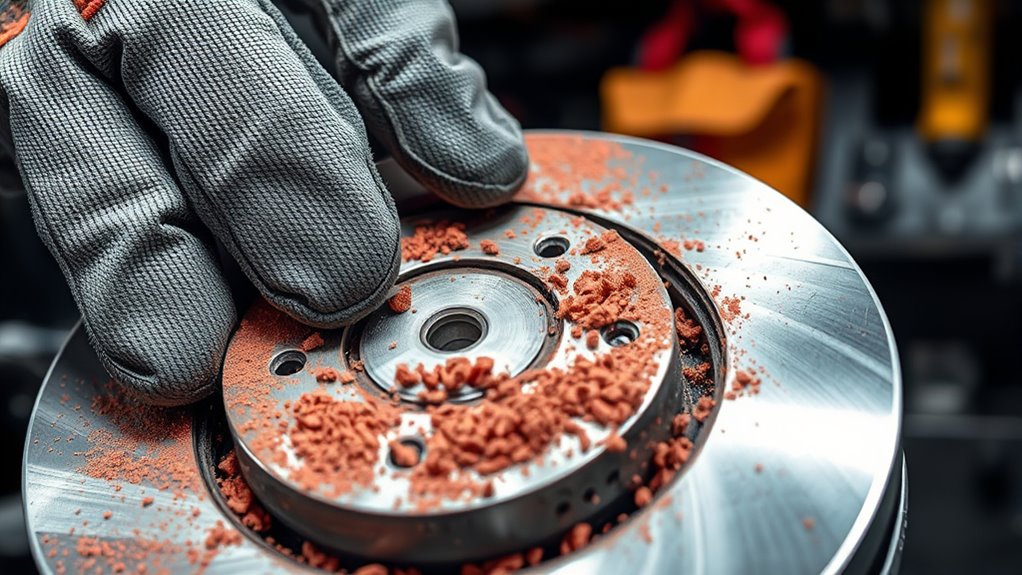

Brake dust contains harmful substances like asbestos and heavy metals that can cause serious respiratory issues over time. To protect yourself, always wear proper personal protective equipment such as respirators, safety goggles, and gloves. Make certain your workspace has good ventilation and use dust extraction systems to minimize airborne particles. Regularly clean the area with wet methods and dispose of waste properly. Staying aware of these safety measures is essential—continue to learn more to keep yourself safe on the job.
Key Takeaways
- Use appropriate personal protective equipment, including respirators, gloves, and goggles, during brake maintenance to reduce inhalation and skin contact.
- Ensure proper ventilation and local exhaust systems in workspaces to minimize airborne brake dust exposure.
- Regularly clean work areas with wet methods to prevent dust dispersal and contamination.
- Be aware of health risks associated with brake dust, such as respiratory issues and long-term lung diseases.
- Follow safety protocols for brake dust disposal to limit environmental and occupational hazards.

Brake dust is an often-overlooked hazard in automotive and manufacturing workplaces, yet it can pose serious health risks to workers exposed to it regularly. When working around brake systems, you might not realize how fine and persistent the dust particles are. These particles contain materials like asbestos, heavy metals, and other potentially harmful substances that can become airborne during brake maintenance or manufacturing processes. Dust exposure in such environments isn’t just a minor inconvenience; it can lead to long-term health problems, including respiratory issues, lung diseases, or even more severe conditions if inhaled repeatedly over time.
To protect yourself, wearing appropriate protective gear is essential. Respirators or dust masks should be your first line of defense against airborne particles. These devices are designed to filter out the tiniest dust particles that can bypass standard masks, providing a secure barrier between you and hazardous dust. Safety goggles or face shields are also indispensable, as they prevent dust from settling into your eyes or mouth during work. Gloves help keep your skin protected from contact with contaminated surfaces or brake dust that might cling to tools or parts.
Understanding dust exposure is key to managing risks effectively. When you work on brake systems, dust particles can easily become dislodged and linger in the air, especially if you’re grinding, sanding, or performing any activity that disturbs the brake material. The danger isn’t just inhaling dust momentarily; it’s about the cumulative exposure over days, weeks, or months. Continuous inhalation of brake dust can cause serious health issues, including pneumoconiosis or other lung-related illnesses. This makes it imperative to follow safety protocols consistently and ensure proper ventilation in your workspace. Using local exhaust systems or well-ventilated areas helps reduce airborne dust levels, minimizing your risk of inhalation.
You should also be diligent about cleaning your workspace regularly. Dust can settle on surfaces and be reintroduced into the air when disturbed. Wet cleaning methods are preferable because they trap dust rather than dispersing it into the air, unlike dry sweeping or brushing. Proper disposal of dust-laden materials is equally important; never allow contaminated debris to accumulate or be discarded improperly, as this can create additional dust hazards. Additionally, understanding the role of forensic financial investigators can be useful if you need to trace or verify the source of hazardous materials or financial discrepancies related to workplace safety.
Ultimately, your safety depends on taking proactive steps. Wearing the right protective gear, understanding dust exposure risks, and maintaining a clean, well-ventilated workspace are your best defenses against the hidden dangers of brake dust. Recognizing these hazards and adhering to safety measures not only protect your health but also contribute to a safer working environment for everyone involved.
Frequently Asked Questions
How Can Brake Dust Exposure Be Minimized During Vehicle Maintenance?
To minimize brake dust exposure during vehicle maintenance, you should use dust suppression techniques like wet cleaning or vacuuming with HEPA filters. Make certain proper ventilation systems are in place and functioning to remove airborne particles. Always wear personal protective equipment such as masks and gloves. Regularly maintain and inspect ventilation systems to keep them effective. These measures help protect you from inhaling harmful brake dust during your work.
Are There Specific Protective Gear Recommended for Brake Dust Handling?
Yes, you should wear respiratory protection like a NIOSH-approved mask or respirator to prevent inhaling brake dust particles. Additionally, don protective clothing such as coveralls or gloves to avoid skin contact. Using a dust mask and protective gear not only safeguards your respiratory system but also keeps your skin and clothes free from contamination. Always make sure your protective equipment fits well and is appropriate for brake dust handling to maximize safety.
What Are the Long-Term Health Effects of Brake Dust Inhalation?
While brake dust may seem harmless, inhaling it long-term can cause serious health issues. You could develop respiratory diseases, and in some cases, face an increased risk of lung cancer. Continuous exposure damages your lungs over time, leading to chronic bronchitis or other breathing problems. Protect yourself by using proper masks and ventilation, and limit exposure to prevent these long-term health effects.
How Often Should Brake Dust Levels Be Monitored in Workplaces?
You should conduct air quality monitoring regularly, ideally at least monthly, to make certain brake dust levels stay within safe limits. Implement dust control strategies like local exhaust ventilation and wet cleaning to reduce airborne dust. By consistently monitoring and controlling dust, you protect workers’ health and maintain safe workplace conditions. Regular assessments help identify any issues early, allowing you to take corrective action promptly and ensure ongoing safety.
Are There Regulations Governing Brake Dust Safety in Automotive Industries?
Yes, there are regulations governing brake dust safety in the automotive industry. You must guarantee regulatory compliance by following industry standards set by OSHA and EPA, which specify permissible exposure limits and proper handling procedures. Regularly monitoring brake dust levels helps you stay compliant and protect workers. Adhering to these regulations minimizes health risks, demonstrates your commitment to safety, and keeps your workplace aligned with legal requirements.
Conclusion
As you navigate your workspace, remember that brake dust is a silent shadow lurking in the background, quietly threatening your safety. Think of it as a hidden storm waiting to break, risking your health like an unseen fog creeping through the air. By staying vigilant and using proper safety measures, you become the lighthouse guiding yourself through the haze. Protect yourself now, and keep your occupational environment clear of the storm’s silent whisper.