
Your connected car collects sensitive data like location, driving habits, and voice commands, which can be vulnerable if not properly protected. To keep your privacy safe, manufacturers should use strong encryption standards like AES and TLS to secure data during transmission and storage. As a user, you also have control over your data sharing and should stay informed about security updates. Understanding these measures helps you better protect your personal information—continue to discover more about safeguarding your connected car.
Key Takeaways
- Connected cars collect extensive personal data, including location, preferences, and driving habits, raising privacy concerns.
- Encryption standards like AES and TLS protect data during transmission, preventing unauthorized access.
- Manufacturers must implement strong encryption protocols; variability in security levels can increase vulnerability.
- Transparency, user control options, and regular security updates are essential for safeguarding user data.
- User awareness of encryption and data security practices enhances privacy rights and helps prevent breaches.
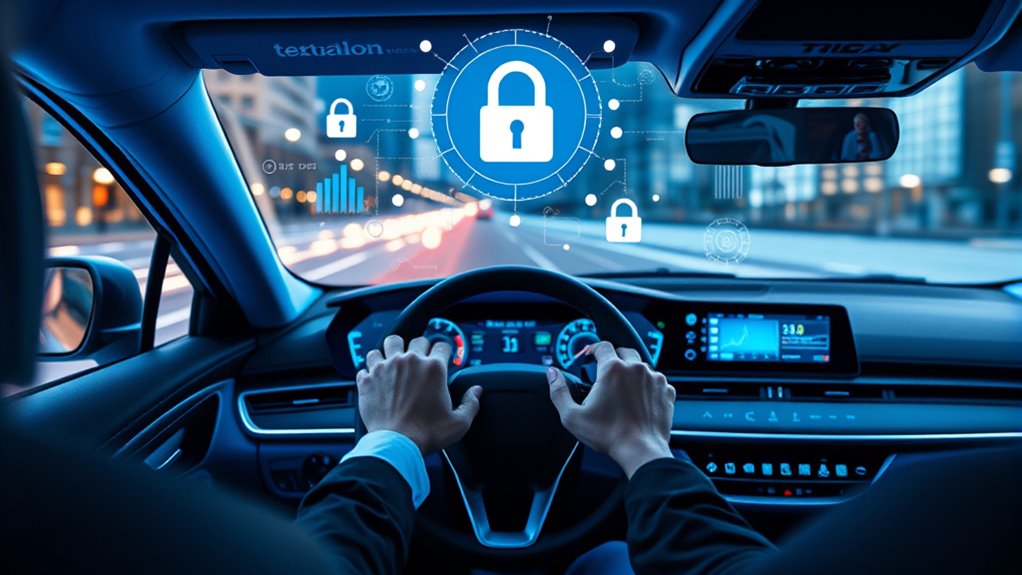
Have you ever wondered how much of your personal information is shared when you connect your car to the internet? As your vehicle becomes more integrated with digital technology, it continuously collects and transmits user data. This data can include your location, driving habits, preferences, and even voice commands. While these features offer convenience and enhanced safety, they also raise significant privacy concerns. Understanding how your data is protected is essential, especially considering the role of encryption standards. Encryption acts as a digital shield, ensuring that your sensitive information remains confidential during transmission. When data travels between your car and external servers, robust encryption standards like AES (Advanced Encryption Standard) or TLS (Transport Layer Security) are used to prevent unauthorized access. Without these measures, cybercriminals could intercept and misuse your data, potentially leading to identity theft or privacy breaches.
The security of user data hinges on the implementation of these encryption standards. Manufacturers and service providers are responsible for adopting strong encryption protocols that safeguard your information. However, not all systems use the same level of security, which means some vehicles might be more vulnerable than others. It’s essential for you to stay informed about the encryption practices employed by your connected car’s manufacturer. In some cases, outdated or weak encryption can create loopholes, exposing your user data to potential exploitation. That’s why regulatory bodies and industry standards emphasize the importance of using high-grade encryption to protect consumer information. When encryption standards are properly applied, even if data is intercepted, it remains unintelligible to unauthorized parties. This ensures your personal details stay private, even in the event of a cyber attack. Additionally, encryption standards play a crucial role in maintaining data integrity, preventing tampering during transmission.
Beyond encryption, other privacy measures are also critical. The collection and storage policies of automakers should be transparent, giving you control over what data is gathered and how it’s used. You should be able to opt out of sharing certain information if you’re uncomfortable. Additionally, regular security updates and patches are necessary to fix vulnerabilities in the system’s encryption protocols. As a user, staying aware of these security features empowers you to make informed choices about connected car services. Remember, your user data is valuable, and strong encryption standards are your best line of defense against potential breaches. The more you understand about how your data is protected, the better you can advocate for your privacy rights. Ultimately, safeguarding your personal information requires a combination of advanced encryption, responsible data handling, and your own vigilance.
Frequently Asked Questions
How Do Connected Cars Handle Real-Time Location Sharing?
Connected cars handle real-time location sharing through vehicle tracking systems that transmit your location data continuously. They prioritize location accuracy to guarantee navigation and safety features work effectively. You can often control who accesses your location, but the system updates your position in real-time, which helps with route optimization and emergency responses. However, it’s crucial to be aware of privacy settings to manage how your location information is shared and stored.
What Are Consumers’ Rights Regarding Their Data in Connected Vehicles?
You have the right to control your data, especially in connected cars, where your consumer consent is vital. You own your data, and companies must ask for your permission before collecting or sharing it. If you’re uncomfortable, you can usually request access, correction, or deletion. Stay informed about your rights, and don’t hesitate to challenge any misuse, because your data ownership rights protect your privacy.
Are Connected Car Data Breaches Common and How Are They Prevented?
Data breaches in connected cars are becoming more common, so you need robust cybersecurity protocols and data encryption to protect your data. Manufacturers should implement strong security measures, regularly update software, and monitor for vulnerabilities. You can also protect yourself by choosing vehicles with advanced security features and staying informed about updates. These steps help prevent breaches and keep your personal information safe from cyber threats.
How Do Manufacturers Ensure Third-Party App Data Security?
Manufacturers guarantee third-party app data security by implementing strong encryption protocols to protect data during transmission and storage. They also use data anonymization to prevent personal information from being exposed if breaches occur. Regular security audits and strict access controls further safeguard sensitive information. By combining these measures, manufacturers create a secure environment that minimizes risks and maintains user privacy when third-party apps access connected car data.
What Legal Regulations Govern Data Privacy in Connected Cars?
You must follow legal compliance requirements like GDPR and CCPA, which protect your data privacy rights. These regulations enforce data sovereignty, ensuring your personal information is stored and processed within specific jurisdictions. Manufacturers are responsible for adhering to these laws, implementing privacy policies, and securing user data. Staying informed about evolving regulations helps you maintain trust and avoid penalties, ensuring your connected car experience remains safe and compliant.
Conclusion
As you drive through the digital highway of connected cars, remember that your data is like a passenger sitting beside you—valuable and worth protecting. Just as you wouldn’t share your keys with strangers, don’t hand over your personal info without safeguards. Think of your data as a treasure chest; locking it up guarantees your journey remains safe and private. Stay vigilant, because in this connected world, your privacy is the ultimate destination worth safeguarding.