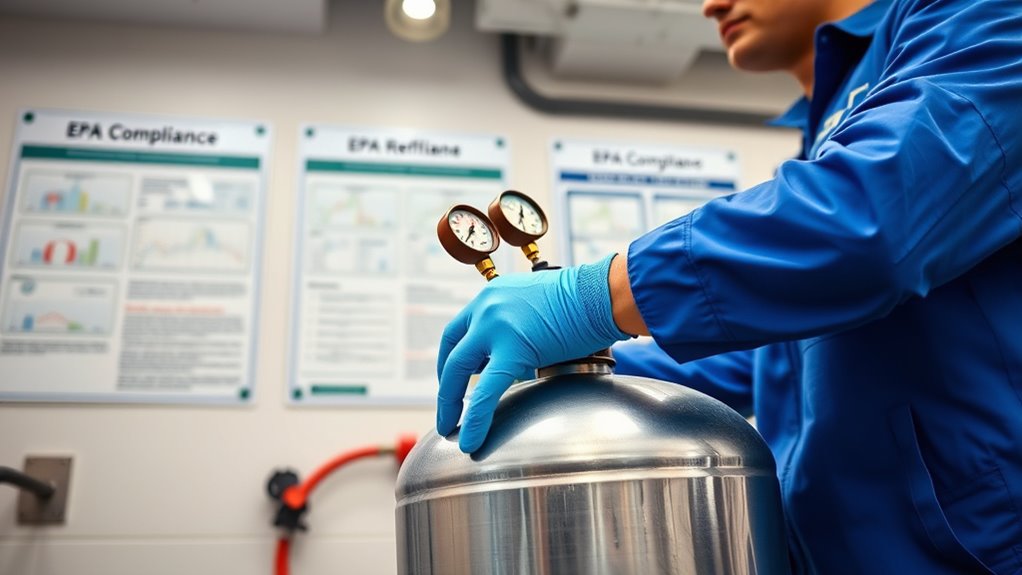

To handle refrigerants properly and comply with EPA rules, you must regularly check for leaks using certified methods and repair any issues promptly. Before disposing of or opening equipment, recover refrigerants with approved machines and containers to prevent environmental harm. Keep thorough records of all leak detections and repairs to demonstrate compliance. Following EPA regulations not only protects the environment but also helps you avoid fines. Continuing on will give you detailed steps for safe and compliant refrigerant management.
Key Takeaways
- Follow EPA regulations for refrigerant recovery, ensuring proper use of certified equipment and approved containers.
- Conduct regular leak detection and repair to prevent environmental harm and maintain compliance.
- Keep detailed records of refrigerant recovery, leak inspections, and repairs for audit purposes.
- Ensure all personnel are trained in EPA-approved handling procedures and safety practices.
- Prioritize environmental protection by promptly repairing leaks and properly disposing of or recycling refrigerants.

Proper refrigerant handling is essential to comply with EPA regulations and protect the environment. When working with refrigerants, it’s your responsibility to ensure that leaks are detected early and managed properly. Leak detection is a critical step in maintaining system integrity and preventing the release of harmful substances into the atmosphere. You need to regularly check your equipment for leaks using appropriate tools like electronic leak detectors or soap bubble solutions. If you find any leaks, you must address them immediately to prevent refrigerant loss and avoid violating EPA rules. Ignoring leaks can lead to significant environmental harm and legal penalties, so staying vigilant is key. Monitoring techniques can further enhance your leak detection efforts and ensure compliance. Refrigerant recovery plays a vital role in responsible refrigerant handling. When servicing or decommissioning a system, you’re required to recover the refrigerant before opening or disposing of equipment. This process involves extracting the refrigerant from the system using certified recovery machines and storing it in approved containers. Proper refrigerant recovery prevents the release of ozone-depleting substances into the air and reduces your environmental footprint. It’s important to follow EPA-approved procedures and use the correct recovery equipment to ensure the refrigerant is captured efficiently and safely. Failure to recover refrigerant properly can lead to regulatory violations and environmental damage.
Regular leak detection is vital to prevent environmental harm and ensure EPA compliance.
You should also keep detailed records of refrigerant recovery and leak detection activities. Accurate documentation demonstrates compliance with EPA rules and helps track refrigerant usage over time. This includes recording the amount of refrigerant recovered, leak inspections performed, and repairs made. Such records are often required during audits or inspections and can protect you from potential penalties. Maintaining a systematic approach to leak detection and refrigerant recovery not only meets legal obligations but also promotes a safer, more sustainable work environment.
In addition, training your team on proper refrigerant handling procedures is crucial. Make sure everyone understands how to perform leak detection correctly and how to use recovery equipment properly. Regular training ensures that your team remains compliant with evolving EPA regulations and keeps safety at the forefront. Remember, improper handling of refrigerants, especially during leak detection and recovery, can result in costly fines and environmental harm. Staying informed about current regulations and best practices will help you navigate the complexities of refrigerant management with confidence.
Ultimately, diligent leak detection and refrigerant recovery are foundational to responsible refrigerant handling. They help you stay compliant with EPA rules, protect the environment, and ensure the safety of everyone involved. By prioritizing these practices, you demonstrate your commitment to environmental stewardship and professional integrity.
Frequently Asked Questions
What Are the Penalties for Non-Compliance With EPA Refrigerant Regulations?
If you don’t comply with EPA refrigerant regulations, you could face hefty fines and penalties. You might be held responsible for refrigerant leaks, which harm the environment. Additionally, failing to renew your certification on time can lead to legal trouble. It’s essential that you stay compliant by properly handling refrigerants and renewing your certification to avoid costly penalties and guarantee you’re following the rules.
How Can Technicians Verify Their Certification Status?
Think of your certification like a passport—you need to keep it current. You can verify your certification status easily through online verification platforms, ensuring you’re up-to-date. To stay compliant, remember to renew your certification before it expires and regularly check your status online. This proactive approach helps you avoid penalties and demonstrates your commitment to responsible refrigerant handling, much like a seasoned traveler who keeps their documents in order.
Are There Specific Refrigerants Exempt From EPA Regulations?
Yes, some refrigerants are exempt from EPA regulations, typically due to their low ozone depletion potential or specific uses. These include certain special exemptions like non-ozone-depleting substitutes or small quantities used in laboratory or research settings. You should always verify the latest EPA lists and regulations, as exemptions can change. Staying informed ensures you handle refrigerants properly and remain compliant with current rules.
What Are the Best Practices for Refrigerant Recovery?
Think of refrigerant recovery like catching a falling glass—be precise and steady. You should always prevent leaks by inspecting equipment regularly and using proper recovery tools. When finished, confirm leak prevention measures are in place and handle refrigerants responsibly with proper disposal methods. This not only protects the environment but also keeps you compliant, minimizing costly mistakes and ensuring safe, effective recovery every time.
How Does EPA Regulation Impact Small HVAC Businesses?
EPA regulations greatly impact your small HVAC business by requiring strict adherence to refrigerant recycling standards and proper equipment use. You must ensure technician training on handling refrigerants safely and efficiently, which helps prevent leaks and environmental harm. Staying compliant means investing in proper recovery equipment, keeping detailed records, and staying updated on rule changes. This commitment not only protects the environment but also enhances your business’s reputation and operational efficiency.
Conclusion
Understanding refrigerant handling and EPA rules is essential, like steering through a complex maze with confidence. By following proper procedures, you protect the environment and avoid costly penalties. Staying informed and compliant keeps your work efficient and responsible. Think of these regulations as a guiding compass, helping you stay on the right path. Embrace these practices, and you’ll ensure safe, eco-friendly refrigerant management every step of the way.