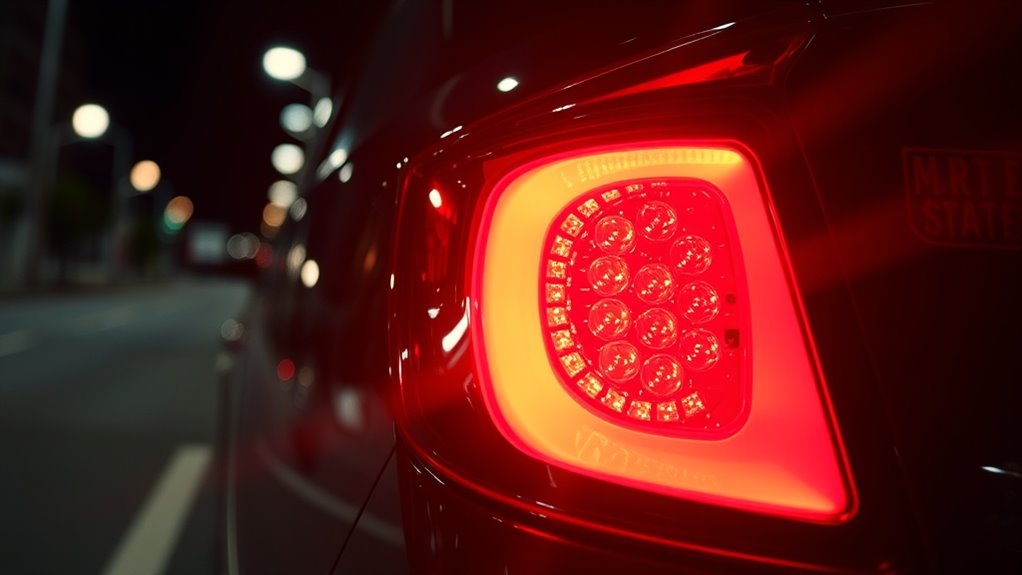

To follow brake light and lighting rules, ensure your brake lights are bright enough to be seen from a safe distance and that all other lights like turn signals and tail lights are functioning properly. Many areas have specific regulations about light color, brightness, and placement, so confirming your setup complies with local laws is vital. Proper lighting helps you communicate clearly with other drivers and keeps you safe on the road. Keep going to learn more about staying legally compliant and safe.
Key Takeaways
- Brake lights must be bright enough to be visible from a sufficient distance to alert other drivers.
- Lighting colors are regulated; brake lights typically must be red and compliant with local standards.
- All vehicle lights, including brake and tail lights, should be inspected regularly and repaired immediately if malfunctioning.
- Aftermarket lighting modifications must meet legal requirements to avoid violations and ensure safety.
- Proper lighting enhances communication with other drivers, reducing accidents and supporting road safety compliance.
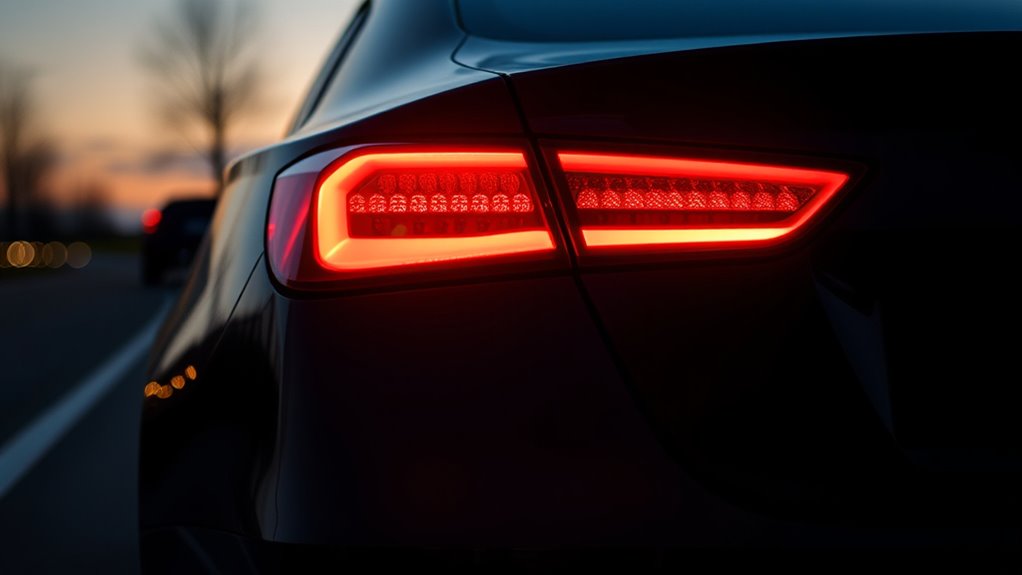
Understanding your vehicle’s lighting requirements helps you prevent avoidable accidents. For example, brake lights should be bright enough to be visible from a distance, especially in poor weather or low-light conditions. If your brake lights are dim or malfunctioning, other drivers might not recognize your signal to slow down, increasing the risk of a collision. Additionally, many jurisdictions have specific rules about the color and brightness of lights, so it’s vital you familiarize yourself with these standards. In some cases, aftermarket modifications or non-standard lighting setups can violate legal lighting requirements, so always verify that any upgrades comply with local laws. When you keep your vehicle’s lighting system well-maintained and compliant, you’re actively reducing hazards on the road. Proper lighting also contributes to vehicle safety compliance, which can help avoid fines and legal issues.
To stay within the bounds of legal lighting requirements, you should routinely inspect your vehicle before long trips or after any repairs. Check that all brake lights, turn signals, headlights, and tail lights are working correctly. If you notice any issues, address them immediately—don’t wait until you’re pulled over or involved in an incident. Many vehicle owners overlook small issues, assuming they’re minor, but these can quickly become bigger safety problems. Remember, your vehicle’s lighting isn’t just about legality; it’s about clear communication with other drivers. Proper vehicle maintenance ensures your lights are always visible, bright, and functioning correctly, helping you meet legal standards and keep everyone safer on the road. Staying proactive about your lighting system isn’t just responsible; it’s essential for responsible driving.
Frequently Asked Questions
Can I Use Aftermarket Brake Lights to Improve Visibility?
Yes, you can use aftermarket modifications to improve visibility, including upgrading your brake lights. These enhancements often feature brighter LEDs or unique designs that make your vehicle more noticeable. Just make certain your aftermarket brake lights meet safety standards and are compatible with your car. By doing so, you enhance your vehicle’s visibility, reducing the risk of accidents, and making your braking signals clearer to other drivers on the road.
Are There Specific Color Restrictions for Auxiliary Vehicle Lighting?
Think of auxiliary lighting like a painter’s palette—you want the right colors to communicate clearly. You should be aware that color restrictions for auxiliary vehicle lighting typically prohibit red, blue, or flashing lights, which can be mistaken for emergency signals. Using compliant colors guarantees your lights are effective and legal. Always check your local regulations before adding auxiliary lighting, so your vehicle stays visible without risking confusion or penalties.
How Often Should I Inspect My Vehicle’s Lighting System?
You should inspect your vehicle’s lighting system monthly as part of your maintenance schedule. Check all bulbs and lights to guarantee they’re functioning properly, replacing any bulbs that are dim or burnt out promptly. Regular inspections help you catch issues early, and following recommended bulb replacement intervals prevents unexpected failures. Staying proactive with these checks keeps your vehicle safe and compliant with lighting rules, reducing the risk of citations or accidents.
Are There Penalties for Non-Compliant Lighting in Different States?
Sure, skipping out on lighting compliance is no big deal, right? In reality, each state enforces strict penalties—think hefty fines and even license suspension—if you’re caught with non-compliant lighting. For example, California fines can reach hundreds of dollars, while Florida’s penalties include points on your license. It’s a clear reminder that ignoring lighting rules isn’t just risky; it can cost you financially and legally.
Can Damaged or Broken Lights Affect My Insurance Claims?
Damaged or broken lights can definitely impact your insurance claims. If an accident occurs and your vehicle’s lights are not functioning properly, insurance companies might see it as negligence, leading to potential claim denial or increased premiums. It’s essential to keep your lights in good condition to prevent insurance implications. Regular maintenance and prompt repairs help ensure your coverage remains valid and protects you financially after an accident.
Conclusion
By following brake light and lighting rules, you’re guiding your vehicle like a steady lighthouse in the fog, ensuring others see your intentions clearly. Think of your lights as your car’s voice, speaking softly but surely in the language of safety. When you respect these rules, you’re not just avoiding fines—you’re shining a beacon of responsibility on the road. Keep your lights bright and your journey safe, illuminating the way for everyone around you.