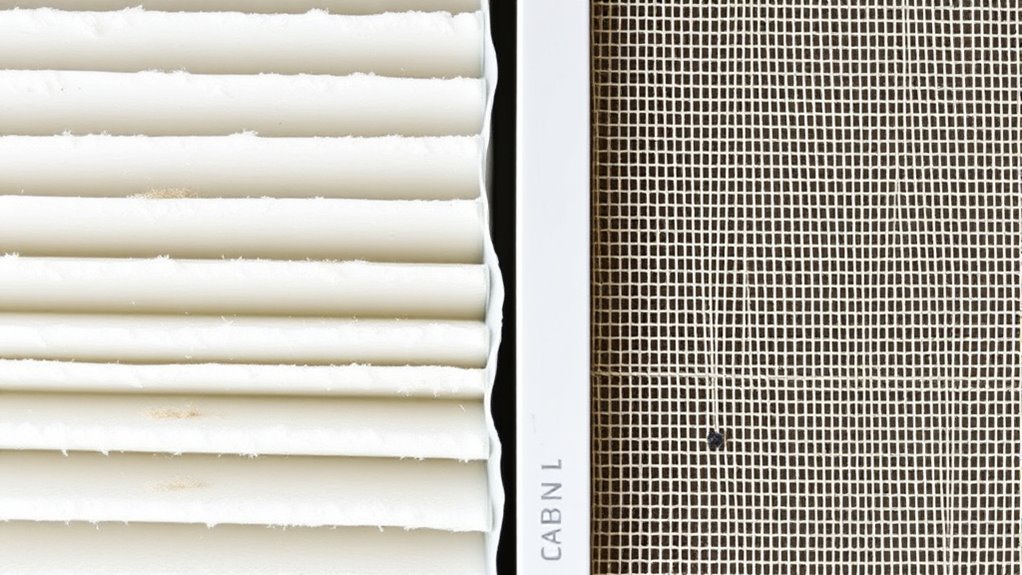

An air filter protects your engine by trapping dirt, dust, and debris to guarantee ideal airflow and performance. A cabin filter, on the other hand, filters the air entering your vehicle’s interior, removing pollen, mold spores, and other pollutants for your comfort and health. Both filters are essential for your car’s efficiency and your well-being. Understanding their roles can help you maintain your vehicle better—stay tuned to learn more about their maintenance and benefits.
Key Takeaways
- The engine air filter protects the engine by filtering dirt and debris before air enters the combustion chamber.
- The cabin filter filters outside air entering the vehicle’s interior, improving passenger air quality.
- Air filters are located in the engine compartment; cabin filters are inside the vehicle’s HVAC system.
- Both filters require regular replacement to maintain vehicle performance and passenger comfort.
- Neglecting either filter can lead to engine damage or reduced interior air quality.
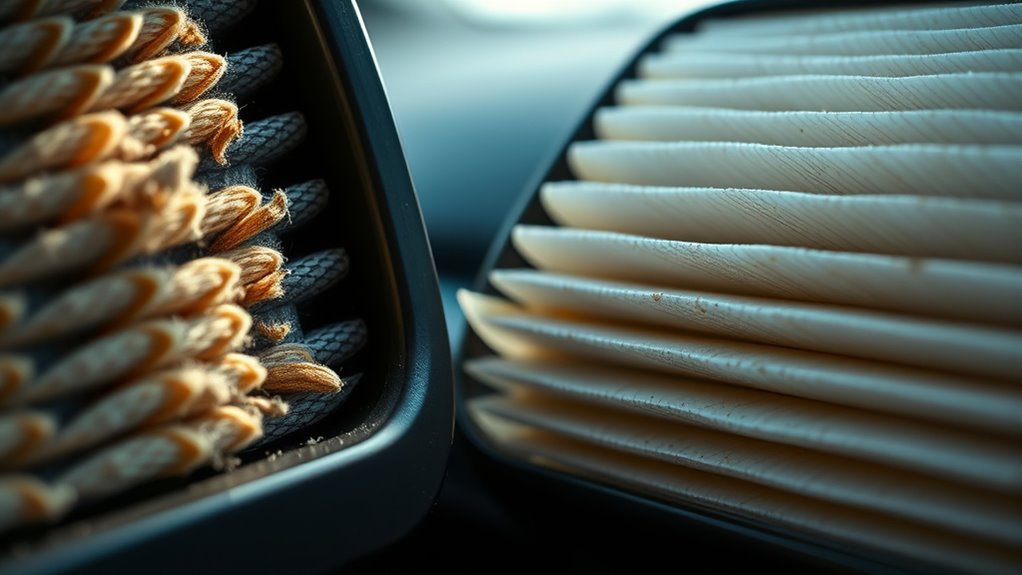
When it comes to maintaining your vehicle’s air quality, understanding the difference between an air filter and a cabin filter is crucial. Each plays a distinctive role in keeping your car running smoothly and ensuring your comfort on the road. The air filter, typically found in the engine compartment, is responsible for trapping dirt, dust, and debris that could otherwise clog your engine’s air intake. A clean air filter improves engine performance by allowing unrestricted airflow, which helps your engine run more efficiently. When your engine breathes clean air, it can generate better power, respond more quickly, and even achieve better fuel economy. Neglecting this filter can lead to reduced engine performance, increased emissions, and potential engine damage over time.
On the other hand, the cabin filter focuses on filtering the air you breathe inside the vehicle. It traps pollen, mold spores, dust, and other airborne contaminants that enter through the ventilation system. This filter is essential for allergy prevention, especially if you or your passengers suffer from hay fever or respiratory sensitivities. When the cabin filter is clogged or dirty, it restricts airflow and diminishes the effectiveness of your air conditioning and heating systems. This can cause unpleasant odors, reduce airflow, and compromise your comfort during drives. Regularly replacing the cabin filter ensures you breathe cleaner air and reduces allergy symptoms, making your driving experience more comfortable and healthier. Additionally, choosing the right projector type can significantly enhance your home cinema experience, especially in well-ventilated spaces.
Understanding the importance of both filters helps you prioritize maintenance and avoid costly repairs. The engine’s air filter should be checked every 12,000 to 15,000 miles, or sooner if you frequently drive on dusty roads. Replacing it at the right time keeps your engine performing at its best and prevents dirt from causing long-term damage. Meanwhile, the cabin filter generally needs replacement every 15,000 to 25,000 miles, depending on driving conditions. If you notice reduced airflow from your vents or an increase in allergy symptoms while driving, it’s a good sign that your cabin filter needs attention.
Frequently Asked Questions
How Often Should I Replace My Air and Cabin Filters?
You should replace your air and cabin filters every 12,000 to 15,000 miles or once a year, whichever comes first. Regular replacements improve air quality inside your vehicle and guarantee your filters reach their full filter lifespan. Keep an eye out for reduced airflow or musty odors, as these signs indicate it’s time for a change. Proper maintenance helps maintain peak engine performance and a healthier driving environment.
Can a Dirty Air Filter Affect Engine Performance?
A stitch in time saves nine, so a dirty air filter can definitely affect your engine performance. When your filter gets clogged, it hampers airflow, reducing air quality and causing your engine to work harder. This strain can lead to decreased fuel efficiency, rough idling, and potential long-term damage. Keep an eye on the filter lifespan and replace it regularly to maintain ideal engine health and guarantee your vehicle runs smoothly.
Are Cabin Filters Necessary for All Vehicle Types?
Yes, cabin filters are necessary for all vehicle types to guarantee clean airflow inside your car. Proper filter maintenance helps prevent allergens, dust, and pollutants from entering the cabin, improving air quality and comfort. While vehicle compatibility varies, most cars are designed to accommodate cabin filters. Regularly checking and replacing them keeps your HVAC system running efficiently and maintains a healthier environment for you and your passengers.
What Are the Signs of a Clogged Cabin Filter?
Imagine your car’s interior feels stuffy and the AC smells stale—that’s a sign of a clogged cabin filter. When pollution levels rise or the filter material gets clogged, airflow decreases, and odors linger. You might also notice reduced airflow from vents or increased dust inside. These signs indicate it’s time to replace the filter, ensuring cleaner air and better comfort during your drive.
Do Aftermarket Filters Offer Better Filtration Than OEM?
You might find that aftermarket filters often offer better performance comparison and cost-effectiveness than OEM options. They’re designed to trap more dirt and pollutants, improving air quality and engine efficiency. Plus, aftermarket filters are usually more affordable and easier to replace. However, make sure to choose high-quality brands to avoid potential compatibility issues. Ultimately, investing in a reputable aftermarket filter can give you better filtration at a lower cost.
Conclusion
Think of your car’s filters as guardians of your driving experience. The air filter is like a vigilant gatekeeper, keeping dust and debris from entering your engine’s lungs, while the cabin filter acts as a cozy shield, ensuring fresh air surrounds you like a gentle breeze. Together, they’re the unsung heroes keeping your journey smooth and your ride breathing easy. Keep them in top shape, and your car will thank you with every mile traveled.