Regular fluid analysis helps you keep your vehicle running smoothly and prevents costly repairs. By testing your engine oil and coolant, you can catch contamination or deterioration early before it causes serious damage. This proactive approach allows you to schedule timely changes, minimize wear, and extend your engine’s lifespan. Keeping an eye on fluid conditions empowers you to make informed maintenance decisions, saving money and boosting reliability—discover more insights to protect your car’s health as you continue exploring.
Key Takeaways
- Regular fluid analysis helps detect contamination and deterioration early, preventing engine damage and costly repairs.
- Monitoring engine oil quality reveals wear particles and debris, indicating potential engine issues before failure occurs.
- Coolant testing identifies breakdown or contamination, reducing the risk of overheating and corrosion.
- Fluid analysis services provide detailed reports to inform maintenance decisions and optimize vehicle performance.
- Routine testing extends engine lifespan, improves reliability, and saves money by enabling proactive maintenance.
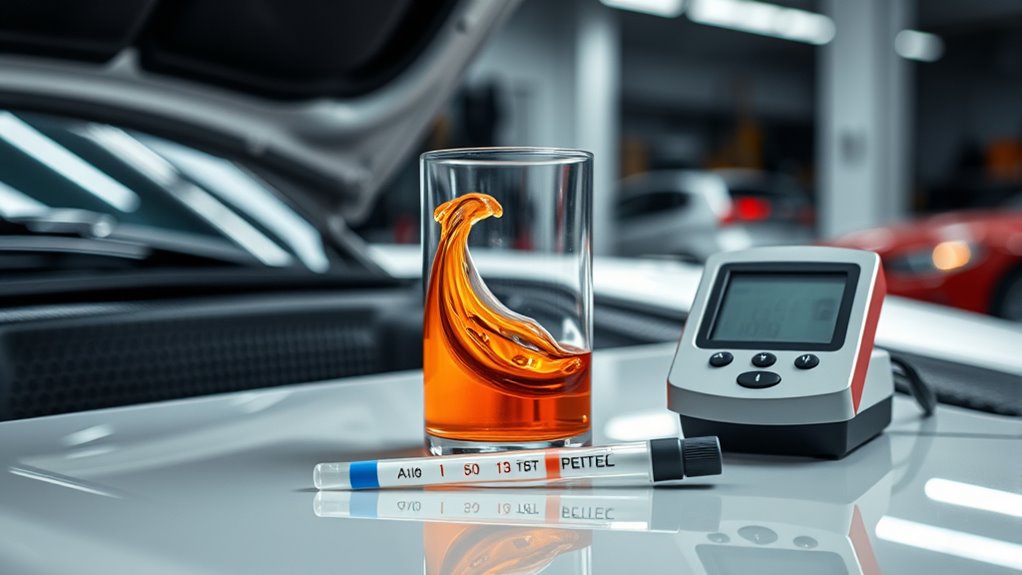
Regular fluid analysis is essential for maintaining your car’s performance and preventing costly repairs. When you routinely check your vehicle’s fluids, you gain insights into what’s happening beneath the surface, catching issues early before they escalate. One key aspect of this process is understanding oil contamination. Over time, your engine oil can pick up dirt, metal particles, and other debris from engine wear or external sources. This contamination can impair oil’s lubricating properties, leading to increased friction, wear, and potential engine damage. By analyzing your oil, you can identify signs of contamination early, allowing you to change the oil before serious problems develop. This proactive approach keeps your engine running smoothly and extends its lifespan.
Regular fluid analysis helps prevent engine damage by detecting early signs of contamination and wear.
Alongside oil contamination, coolant deterioration is another critical concern. Coolant, or antifreeze, plays a crucial role in regulating your engine’s temperature and preventing overheating. Over time, coolant can break down or become contaminated with rust, scale, or debris, reducing its effectiveness. When coolant deteriorates, your engine runs hotter, which can cause severe damage or even lead to engine failure. Fluid analysis helps you monitor the condition of your coolant, revealing signs of deterioration that might not be obvious during routine checks. Detecting coolant issues early enables you to flush and replace it before overheating or corrosion causes significant damage. Regular testing for coolant health is especially important in extreme weather conditions, where temperature fluctuations put additional stress on your cooling system. Additionally, understanding the importance of fluid analysis in maintaining vehicle health can help you make more informed decisions about your maintenance routine.
Incorporating fluid analysis into your maintenance routine doesn’t require complicated procedures. Many auto shops offer sampling services where they analyze small fluid samples and provide detailed reports on their condition. These reports can reveal early signs of problems like oil contamination or coolant deterioration, so you can act swiftly. Addressing these issues early not only prevents breakdowns but also saves you money by avoiding extensive repairs later on. Plus, understanding the condition of your fluids empowers you to make informed decisions about maintenance schedules, filter changes, and fluid top-offs.
Ultimately, routine fluid analysis becomes a crucial part of responsible vehicle ownership. It’s a smart way to stay ahead of potential issues, ensuring your car remains reliable and efficient. By paying close attention to signs of oil contamination and coolant deterioration through regular testing, you protect your engine, extend its life, and keep your driving experience safe and smooth. Consistent fluid checks are a small investment that can save you from big headaches and hefty repair bills in the future.
Frequently Asked Questions
How Often Should I Perform a Fluid Analysis on My Vehicle?
You should perform a fluid analysis on your vehicle every 6 to 12 months, depending on your driving habits. Regular checks help you monitor the oil lifespan and coolant condition, preventing potential engine issues. If you do frequent short trips or heavy towing, consider more frequent analyses. Staying proactive ensures your fluids stay in excellent condition, ultimately extending your vehicle’s lifespan and saving you money on repairs.
Can Fluid Analysis Detect All Types of Engine Problems?
Fluid analysis can detect many engine problems by identifying engine wear and oil contaminants, but it doesn’t catch everything. You might miss issues like electrical faults or mechanical failures that don’t show up through fluid inspection. Regular analysis helps spot early signs of trouble, yet it’s essential to combine it with other maintenance checks. Stay proactive, and you’ll keep your engine running smoothly longer.
Is Fluid Analysis Necessary for New Cars?
You don’t need fluid analysis for new car maintenance right away, as manufacturers design new cars to meet high standards of fluid quality. However, regular checks can help catch potential issues early, ensuring your vehicle runs smoothly. Performing fluid analysis periodically can identify contaminants or degradation, maintaining peak performance and preventing future problems. So, while not immediately necessary, incorporating fluid analysis into your maintenance routine benefits your new car in the long run.
What Are the Costs Associated With Fluid Testing?
The costs of fluid testing vary based on testing frequency and the type of fluid analyzed. Generally, expect to pay between $50 and $150 per test, depending on the complexity. You should consider cost considerations when scheduling testing, especially if you plan regular checks for ideal vehicle performance. Regular testing can help catch issues early, potentially saving you money on repairs down the road.
Can Fluid Analysis Improve My Vehicle’s Fuel Efficiency?
Think of your car’s fluid analysis like a health check-up; it can reveal issues like oil viscosity problems or fuel contaminants that might be slowing you down. By catching these early, you help your engine run smoother, which boosts fuel efficiency. Regular testing guarantees your vehicle’s fluids are ideal, saving fuel and extending your engine’s life, much like maintaining good health keeps you energetic and efficient.
Conclusion
Taking a moment to check your car’s fluids isn’t just routine—it’s a gentle way to keep your vehicle happy and healthy. By staying attentive, you catch small signs before they become bigger issues, much like tending to a delicate garden. Think of fluid analysis as a quiet conversation with your car, ensuring everything runs smoothly beneath the surface. With a little care, you’ll enjoy many miles ahead, feeling confident that your ride is in good hands.