
Your brake pads usually last between 25,000 and 70,000 miles, but their lifespan depends on your driving habits, loads, and conditions. Aggressive driving and heavy loads can wear them out faster, while regular inspections help catch issues early. Rotors can last between 50,000 and 70,000 miles but may warp or crack if overheated or unevenly worn. Staying aware of these factors and maintenance tips will keep your brakes in top shape; learn more to guarantee your safety.
Key Takeaways
- Brake pads typically last between 25,000 and 70,000 miles, depending on driving habits and conditions.
- Rotor lifespan generally ranges from 50,000 to 70,000 miles, influenced by braking style and rotor quality.
- Signs of wear include noise, increased stopping distance, and uneven pad or rotor wear.
- Regular inspections help detect early damage, preventing costly repairs and extending component life.
- Proper braking techniques and timely maintenance are essential for maximizing brake pad and rotor longevity.
Understanding how long brake pads and rotors last is vital for maintaining your vehicle’s safety and performance. When your brakes start making noise, especially squealing or grinding sounds, it’s often a sign that your brake pads are nearing the end of their life. Brake noise can indicate that the pads are worn down to the metal backing, which can damage the rotors and lead to costlier repairs. Knowing your pad replacement intervals helps you stay ahead of this problem. Typically, brake pads need replacement every 25,000 to 70,000 miles, but this range varies depending on driving habits, the type of brake pads, and vehicle conditions. Aggressive driving, heavy loads, and frequent braking can shorten these intervals, so paying attention to brake noise and performance is essential.
Brake pads typically last 25,000 to 70,000 miles, depending on driving habits and conditions.
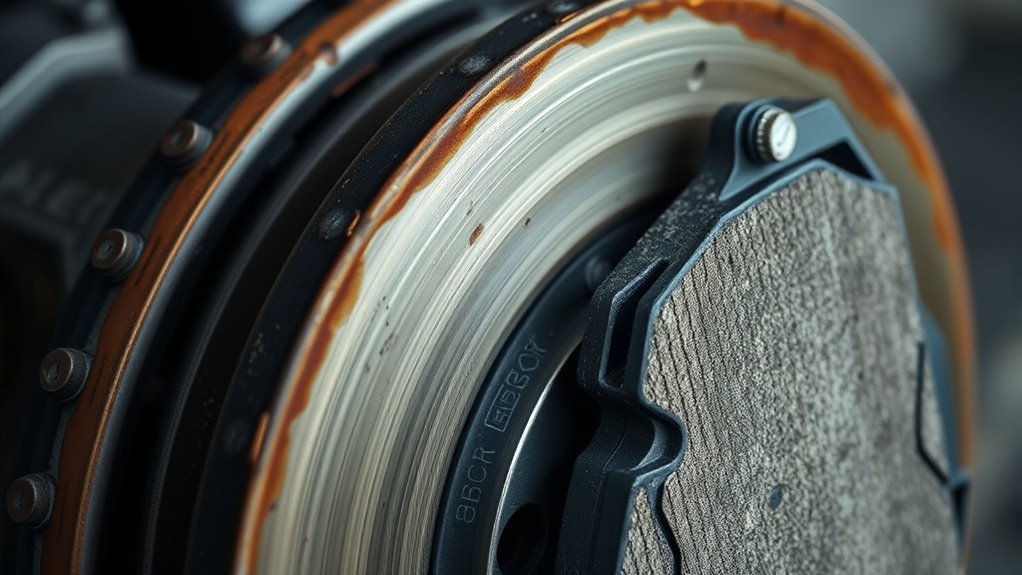
Your rotors also have a lifespan, but they usually last longer than brake pads—often between 50,000 and 70,000 miles. However, rotor durability depends heavily on how you brake and the quality of the rotors themselves. Warped or damaged rotors can cause vibration or pulsation when braking, and this often results from excessive heat or uneven wear. If you notice a pulsating pedal or increased stopping distance, it’s time to have your rotors inspected. Sometimes, rotors can be resurfaced or turned if they are only lightly worn, but if they are too thin or cracked, replacing them becomes necessary.
To maximize your brake system’s lifespan, regular inspections are your best tool. During routine maintenance, mechanics check for uneven pad wear, brake noise, and rotor condition. If they detect that your brake pads are approaching their replacement intervals, they’ll advise you to swap them out before any serious damage occurs. This proactive approach not only saves you money but also guarantees your safety on the road. Additionally, understanding the importance of timing and dates related to maintenance schedules can help ensure that your brakes are serviced at optimal intervals. Remember, neglecting brake noise or waiting too long to replace worn pads can lead to rotor damage, which translates into more costly repairs down the line.
Ultimately, understanding the signs of brake wear and adhering to recommended pad replacement intervals keeps your braking system functioning smoothly. Pay attention to how your brakes feel and sound, and don’t delay repairs when needed. Regular maintenance and timely replacements will help you avoid sudden brake failure, ensuring your vehicle stays safe and reliable for miles to come.
Frequently Asked Questions
How Do Weather Conditions Affect Brake Component Lifespan?
Weather effects can markedly impact your brake components’ lifespan. Humid or rainy conditions cause brake corrosion, especially if you don’t drive often or leave your vehicle exposed to moisture. Cold weather can make brake parts contract, leading to quicker wear. Hot, dry weather may cause brake pads to overheat, reducing their effectiveness. To extend their life, regularly inspect and maintain your brakes, especially during extreme weather changes.
Can Aggressive Driving Reduce Brake Pad and Rotor Longevity?
Aggressive driving can slash brake pad and rotor life faster than a lightning bolt strikes the sky. When you brake hard and often, you cause brake overheating, which accelerates wear and tear. This constant pounding heats up components, making them warp or crack sooner. If you want your brakes to last longer, ease up on aggressive driving habits—your brake system will thank you with extended longevity and improved safety.
Are There Specific Driving Habits That Extend Brake Lifespan?
You can extend brake lifespan by adopting smooth driving styles, avoiding sudden stops, and gradually braking when needed. Regular maintenance routines, like inspecting and replacing brake components on schedule, also help. Avoid aggressive driving, such as rapid acceleration and hard braking, and drive more predictably. Keeping your brake system well-maintained guarantees you minimize wear and tear, ultimately prolonging the life of your brake pads and rotors.
How Does Vehicle Load Impact Brake Wear and Tear?
Think of your vehicle as a soldier carrying a heavy backpack. When you load it with extra cargo, like a full trunk or heavy gear, the vehicle’s weight increases, just like the backpack. This added weight strains the brakes, causing faster wear as they work harder to slow down. So, the more cargo you carry, the quicker your brake pads and rotors wear out, demanding more frequent replacements.
What Are the Signs of Uneven Brake Pad or Rotor Wear?
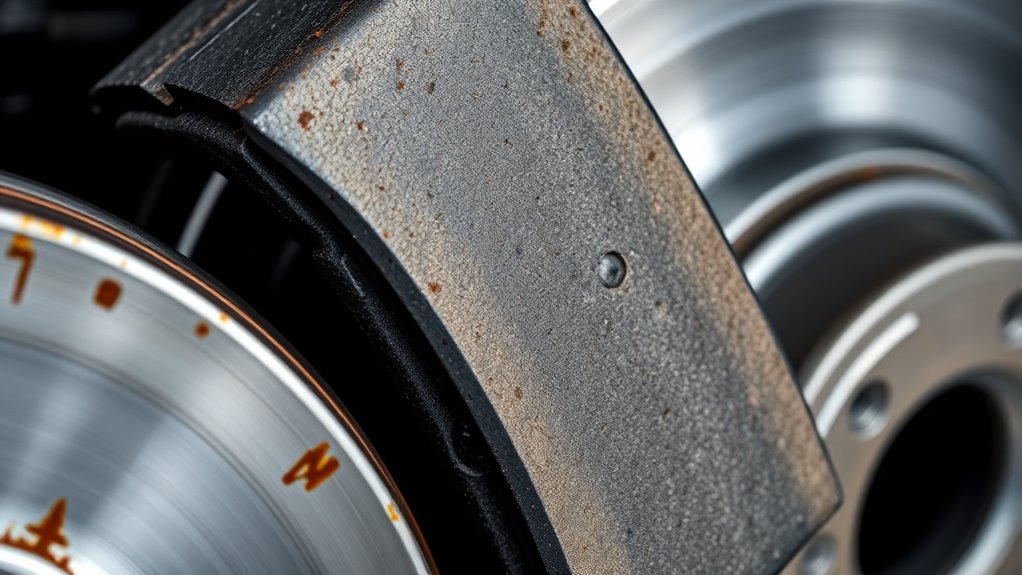
You’ll notice uneven brake pad or rotor wear if you feel vibrations or pulsations when braking, or if your vehicle pulls to one side. Brake pad unevenness may cause squealing or grinding noises, while rotor scoring can leave visible grooves or rough spots on the rotor surface. These signs indicate that the brake components aren’t wearing evenly, so it’s important to have your brakes inspected and serviced promptly to guarantee safety.
Conclusion
So, next time you hear squealing or feel that wobble, remember your brake pads and rotors are basically the ticking time bombs of your car. If you ignore them, you might end up a crash test dummy for your own neglect. Treat your brakes like royalty — because, honestly, they’re the only thing stopping you from turning your daily drive into a demolition derby. Stay vigilant, or enjoy the thrill of expensive repairs!