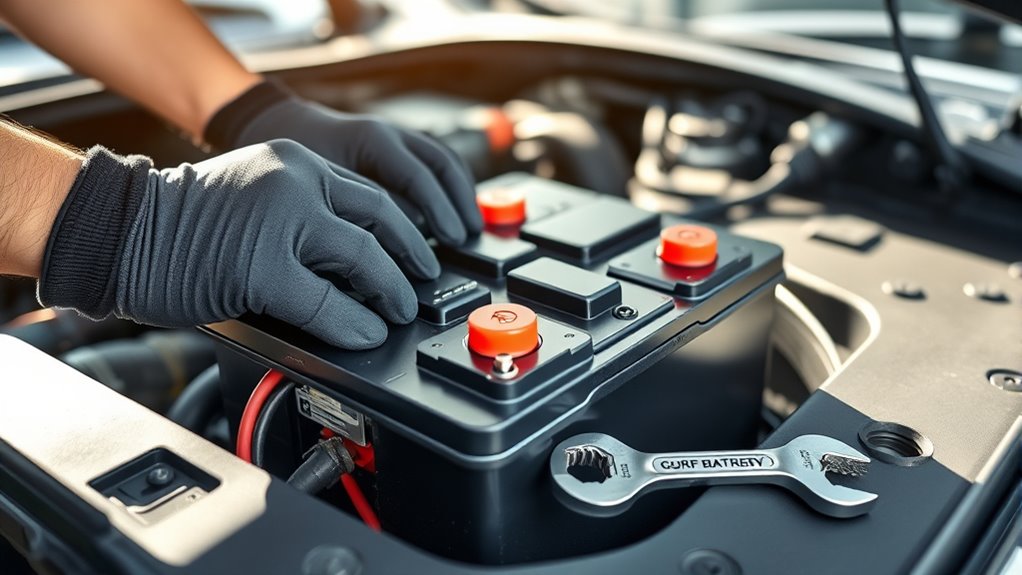

To maintain your gas car’s battery, regularly check for corrosion on the terminals and clean them with a baking soda and water mix using a wire brush. Apply a protective layer like petroleum jelly to prevent future buildup, and keep terminals tightly connected. Use a multimeter to verify your charging system works properly, and avoid overcharging. Staying attentive to your battery’s condition prolongs its life and ensures reliable starts—learn more tips to keep your car dependable.
Key Takeaways
- Regularly inspect and clean battery terminals to prevent corrosion and ensure solid electrical connections.
- Use a multimeter to verify proper charging voltage from the alternator (13.7-14.7V).
- Apply protective coatings like petroleum jelly or terminal spray to reduce future corrosion buildup.
- Keep the battery charged with a smart charger, avoiding overcharging or repeated jump-starts.
- Monitor battery age and condition, replacing it promptly to maintain reliable vehicle performance.
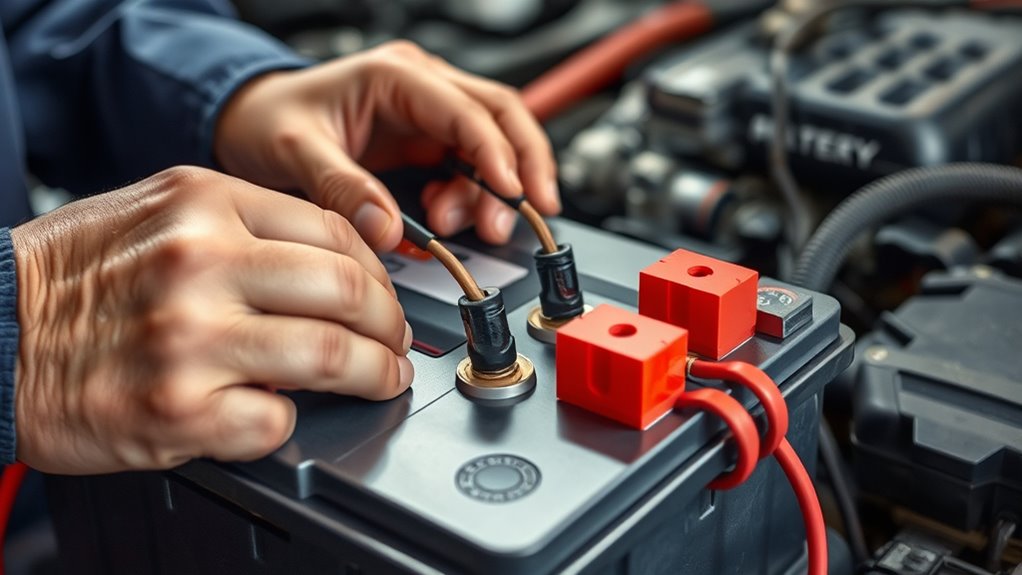
Your gas car’s battery is vital for starting your vehicle and powering its electrical systems, so maintaining it is essential to prevent unexpected breakdowns. Over time, your battery can develop issues like corrosion or lose its ability to hold a charge, which can leave you stranded. One common problem is battery corrosion, often appearing as a white or greenish crust around the terminals. This buildup can hinder the flow of electricity, making it harder for your engine to start and for electrical components to function properly. Regularly inspecting your battery terminals and cleaning off corrosion with a mixture of baking soda and water can help maintain a solid connection. When cleaning, use a wire brush or an old toothbrush to scrub away the corrosion gently, then rinse with water and dry thoroughly before reconnecting the terminals. Applying a thin layer of petroleum jelly or terminal protector spray afterward can help prevent future corrosion. Additionally, staying aware of battery age and condition can help you plan for replacements before failure occurs. Charging techniques are equally important in keeping your battery in peak condition. If you notice your engine struggles to start or if you see warning lights related to the battery, it might be time to check the charging system. Using a multimeter, you can verify that your alternator is charging the battery correctly; a healthy battery should read around 12.6 volts when the engine is off and between 13.7 to 14.7 volts when running. If the voltage drops below these levels, your battery isn’t charging properly, and you may need to replace the alternator or have the system checked by a professional. When charging a dead or weak battery, use a smart charger that adjusts the current to prevent overcharging, which can damage the battery. Avoid relying solely on quick chargers or jump-starting repeatedly, as these can stress the battery and reduce its lifespan.
Consistently maintaining your battery through these simple steps can extend its life and ensure your car starts reliably every time. Keep an eye out for signs of corrosion and address them promptly, and make sure your charging system is functioning correctly. Proper charging techniques, combined with regular inspections and cleaning, help prevent unexpected failures. Remember, a well-maintained battery isn’t just about avoiding inconvenience; it’s about keeping your vehicle safe and dependable. By investing a little time in these routine tasks, you’ll enjoy smoother drives and fewer surprises on the road.
Frequently Asked Questions
How Often Should I Replace My Gas Car Battery?
You should replace your gas car battery every 3 to 5 years, depending on its battery lifespan and maintenance tips. Regularly check for signs of wear, corrosion, or difficulty starting your vehicle. Keep terminals clean and ensure your charging system is working properly. By following these maintenance tips, you can extend your battery’s life and avoid unexpected breakdowns, but plan for a replacement within this timeframe to keep your car running smoothly.
Can a Weak Battery Cause Engine Problems?
A weak battery can definitely cause engine problems, such as difficulty starting or stalling. When your battery’s lifespan is nearing its end, it struggles to provide enough power, especially if charging techniques aren’t ideal. This can lead to insufficient electrical supply for engine components. Regularly check your battery’s health, keep terminals clean, and guarantee proper charging to prevent these issues. A healthy battery keeps your engine running smoothly.
Is It Necessary to Disconnect the Battery During Winter?
You absolutely don’t need to disconnect your battery in winter, but it’s a good idea to prevent disaster! Extreme cold can cause battery corrosion and damage insulation, risking your car’s start-up or even permanent failure. Disconnecting the battery keeps it safe from harsh weather. Regularly check the battery’s condition, clean corrosion off terminals, and guarantee proper insulation to keep your battery healthy through winter’s worst.
How Do I Jump-Start a Car With a Dead Battery?
To jump-start a dead battery, connect the positive (red) clamp to the dead battery’s positive terminal, then to the good battery’s positive terminal. Next, attach the negative (black) clamp to the good battery’s negative terminal and the other end to an unpainted metal surface on your car. Follow jump start techniques carefully and always observe safety precautions—wear gloves and eye protection, and avoid sparks. Start the working vehicle first, then try yours.
What Are the Signs of a Failing Gas Car Battery?
Your battery’s health can be like a ticking clock—watch for signs of failure. If you notice sluggish engine starts, dim headlights, or flickering dashboard lights, it’s time to check. Battery corrosion around terminals and increasing battery age also signal trouble. These issues hinder power flow, making your car less reliable. Catch these signs early, and you can prevent breakdowns, keeping your ride smooth and your day on track.
Conclusion
Taking care of your gas car’s battery is like tending to a delicate garden—you must regularly nurture and inspect it to keep it thriving. A well-maintained battery is the heartbeat of your vehicle, ensuring it runs smoothly through every twist and turn. Don’t let neglect be the silent thief of your journeys; instead, show it some love and attention. With simple care, your battery will stay resilient, ready to power your adventures with unwavering loyalty.