
Choosing the right coolant type, like IAT, OAT, or HOAT, is key to protecting your engine—just make sure it matches your vehicle’s recommendations. Regularly checking and replacing your coolant every 30,000 to 50,000 miles helps prevent rust, overheating, and costly repairs. Topping off isn’t enough; complete flushes are better for long-term protection. Keep an eye on your schedule and proper maintenance tips to keep your engine running smoothly and efficiently.
Open a free Amazon Business account
Business pricing, bulk buying and tax-exempt orders.
As an affiliate, we earn on qualifying purchases.
Key Takeaways
- There are main coolant types: IAT, OAT, and HOAT, each with different chemical compositions and longevity.
- Always match coolant type to vehicle manufacturer’s specifications to prevent engine damage.
- Regular coolant checks and replacements, typically every 30,000 to 50,000 miles, are essential for optimal engine performance.
- Flushing and replacing coolant prevent rust, clogs, and overheating, extending engine lifespan.
- Proper disposal and recycling of used coolant protect the environment and support sustainability efforts.
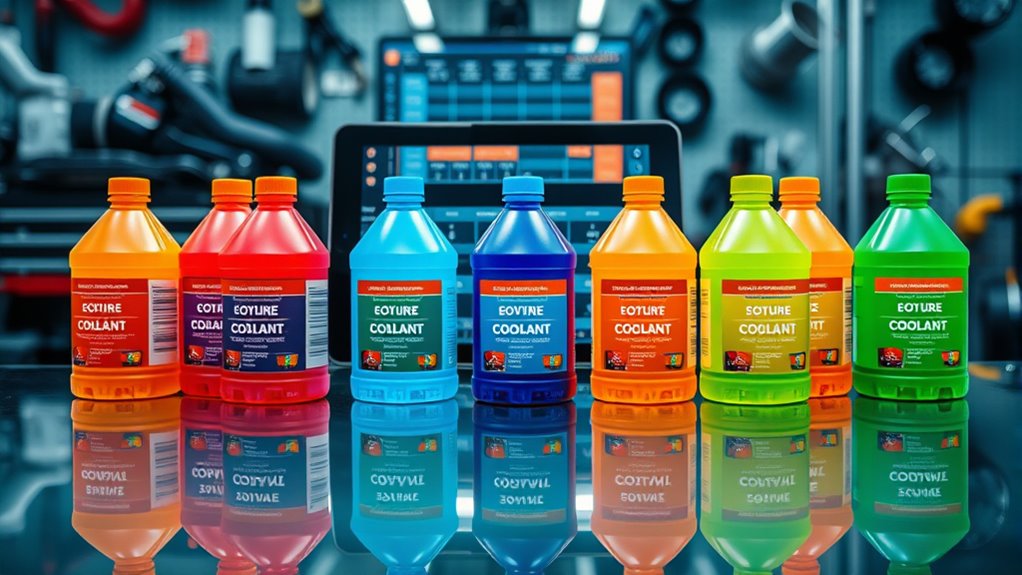
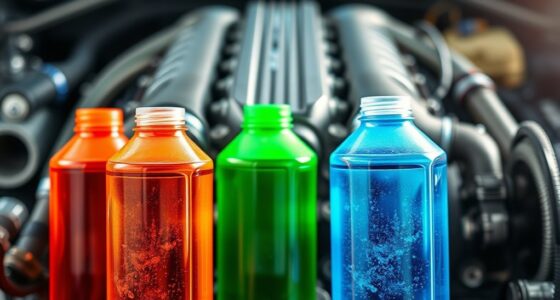
Choosing the right coolant and sticking to proper service schedules are indispensable for keeping your vehicle’s engine running smoothly. When it comes to coolant, understanding the different antifreeze formulas is key. There are primarily three types: inorganic additive technology (IAT), organic acid technology (OAT), and hybrid organic acid technology (HOAT). Each has unique properties and specific applications, so you need to select the one compatible with your vehicle manufacturer’s recommendations. Using the wrong type can lead to corrosion, overheating, or freezing. Regularly checking coolant levels and ensuring you’re using the correct formula helps prevent engine damage and maintains peak performance.
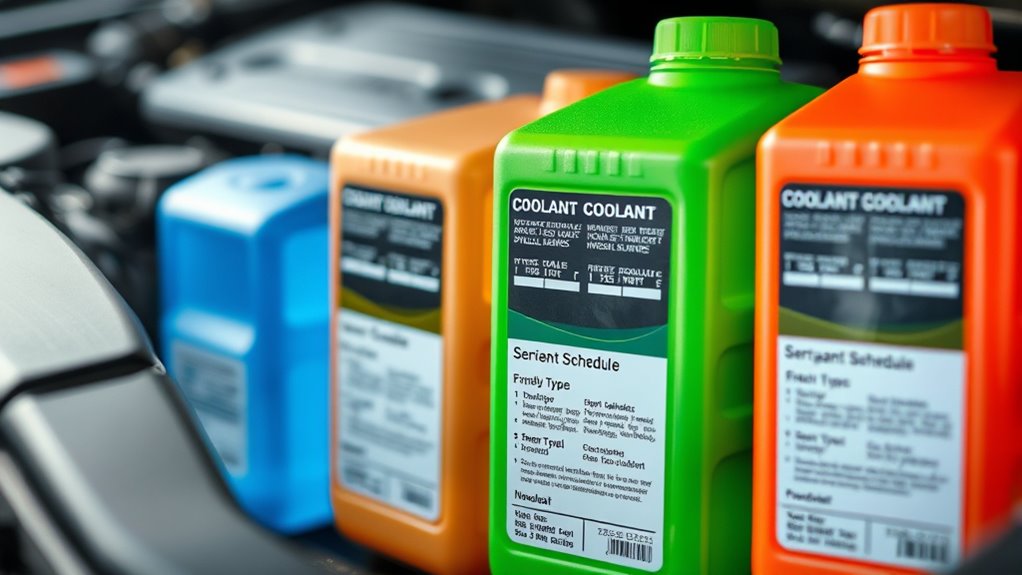
Maintaining a proper coolant service schedule is indispensable, and that involves more than just topping off the fluid. Over time, coolant can degrade, losing its ability to protect your engine from extreme temperatures and corrosion. Many manufacturers recommend flushing and replacing coolant every 30,000 to 50,000 miles, but always refer to your vehicle’s manual for specific intervals. Sticking to these schedules ensures your coolant remains effective and your engine stays protected. It also helps prevent buildup of rust and debris that can clog cooling systems, which can cause overheating and expensive repairs. Proper coolant filtration and disposal are essential to environmental safety and to prevent potential contamination of water sources.
Another important aspect of coolant maintenance is understanding coolant recycling methods. Proper disposal and recycling of used coolant are indispensable for environmental safety and can also be cost-effective. Used antifreeze formulas often contain contaminants and heavy metals, making them hazardous if disposed of improperly. Many auto shops and recycling centers accept used coolant, where it can be filtered and processed for reuse. Some recycling methods involve chemical treatment to remove impurities and restore the coolant’s properties, allowing it to be reused safely in other vehicles or industrial applications. Recycling not only reduces environmental impact but also conserves resources, so it’s worth prioritizing whenever you’re due for a coolant change.
As an affiliate, we earn on qualifying purchases.
Frequently Asked Questions
Can I Mix Different Coolant Types Safely?
You shouldn’t mix different coolant types because coolant compatibility varies, and mixing risks can lead to gelling, corrosion, or engine damage. Always check the manufacturer’s recommendations and use the same type of coolant your vehicle requires. If you need to top off, stick to the same coolant brand and type. Mixing incompatible coolants can compromise your cooling system’s effectiveness, so it’s best to avoid doing so altogether.
How Do I Know if My Coolant Needs Replacing?
Your coolant’s like the lifeblood of your engine, so when it darkens or gets gritty, it’s time for a change. Check the coolant color codes; if it’s murky or rusty, replace it promptly. Follow radiator flush procedures to clear out old fluid and prevent corrosion. Regularly inspecting your coolant guarantees your engine stays cool under pressure, avoiding costly repairs down the road. Don’t wait—your engine’s health depends on it.
Are There Eco-Friendly Coolant Options Available?
Yes, eco-friendly coolant options are available for sustainable cooling. You can look for formulations that use biodegradable, non-toxic, and environmentally safe ingredients. These eco-friendly formulations reduce harmful emissions and minimize environmental impact. When choosing coolant, check labels for eco certifications or eco-friendly claims. Switching to these options not only helps protect the environment but also supports sustainable cooling practices, making your vehicle more eco-conscious.
What Are the Signs of Coolant System Failure?
You’ll notice signs of coolant system failure if your engine overheats or runs hotter than usual. Look for coolant contamination, which can cause discoloration or a sweet smell, and check for radiator leaks that may lead to low coolant levels. You might also see steam or puddles under your vehicle. Address these issues promptly to prevent further damage and keep your engine running smoothly.
Does Climate Affect Coolant Choice and Schedule?
Climate considerations definitely influence your coolant choice and schedule. If you live in a hot climate, you’ll need a coolant with better heat tolerance and may require more frequent changes to guarantee coolant longevity. In colder areas, choose a coolant that prevents freezing. Regularly check your coolant levels and condition, especially if seasonal temperature fluctuations are extreme, to keep your engine running smoothly and avoid overheating or freezing issues.
Conclusion
Understanding coolant types and adhering to service schedules keeps your engine running smoothly. Think of it like giving your car regular health check-ups—skipping them can lead to costly repairs. Visualize your coolant as the bloodstream for your engine; just as your body needs clean, balanced blood, your car needs fresh coolant. By choosing the right coolant and sticking to maintenance, you guarantee reliable performance and avoid breakdowns. Stay proactive, and your engine will thank you.
Flea & tick season Picks
flea and tick prevention
As an affiliate, we earn on qualifying purchases.