Cooling system pressure testing checks for leaks, weak spots, and system integrity in your vehicle’s cooling system. You’ll want to guarantee the engine is cool, then attach a pressure gauge to the radiator or coolant reservoir, using a hand pump to pressurize the system to the recommended level. If the pressure drops quickly, it indicates a leak or issue that needs repair. Continuing ahead will reveal how to perform the test effectively and interpret its results.
Key Takeaways
- Ensures the cooling system is sealed properly by checking for leaks and weak spots.
- Requires engine to be cool and radiator cap removed before attaching the pressure tester.
- Uses a hand pump to pressurize the system to manufacturer-recommended levels, monitoring for pressure drops.
- Steady pressure indicates system integrity; pressure loss suggests leaks or faulty radiator cap.
- Regular testing helps prevent overheating and costly repairs by early leak detection.
Cooling system pressure testing is a crucial step in ensuring your vehicle’s cooling system functions properly and prevents overheating. When you perform this test, you’re checking for leaks, weak spots, or other issues that could cause your engine to run hotter than it should. The process involves using a pressure gauge to evaluate the integrity of the cooling system, especially around critical components like the radiator cap. The radiator cap plays a key role because it maintains the correct pressure within the system, which raises the boiling point of the coolant and helps prevent overheating. If the cap isn’t sealing properly, pressure can escape, leading to potential overheating or coolant loss.
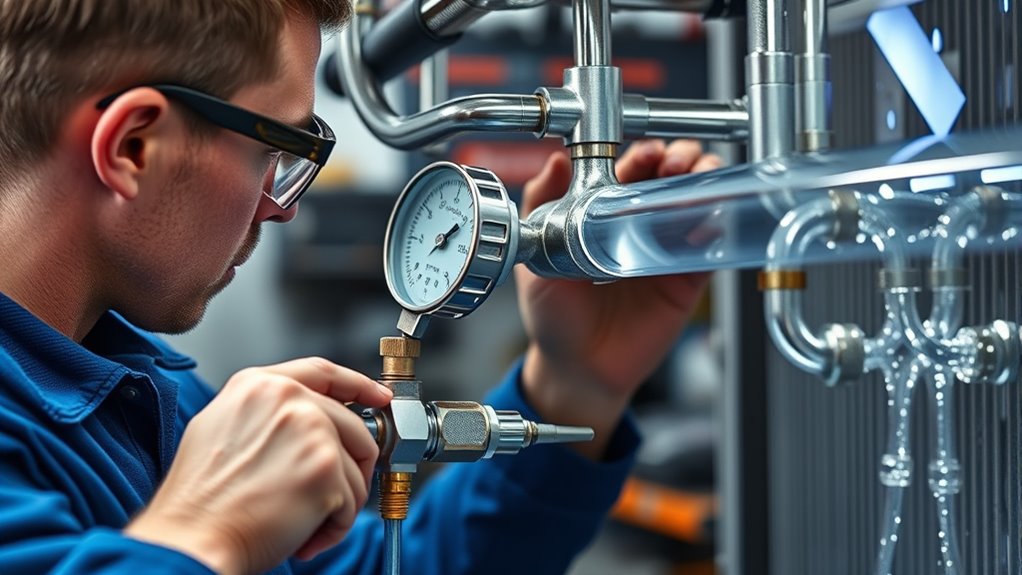
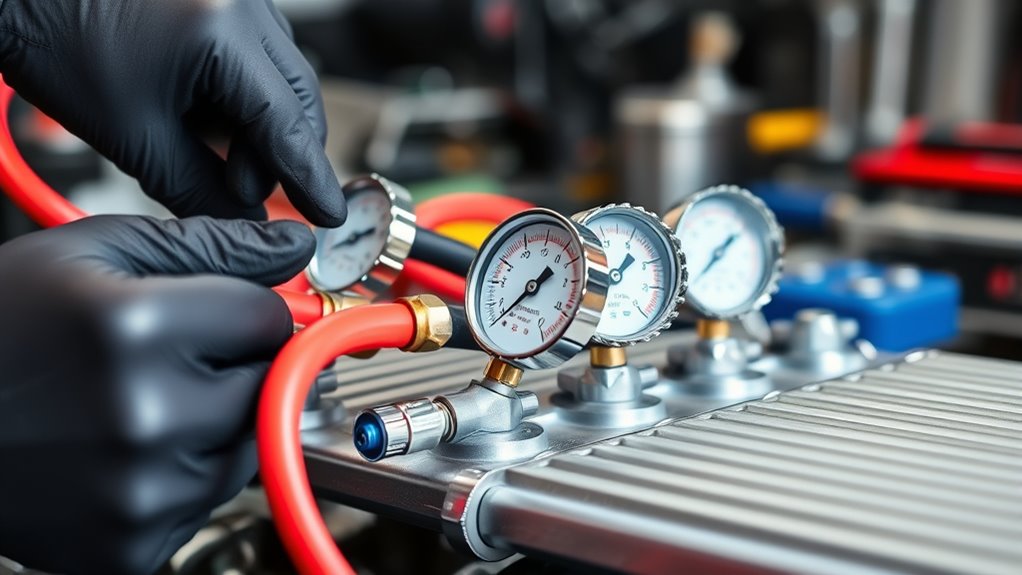
To start, you’ll want to make sure the engine is cool to avoid injury or inaccurate readings. Remove the radiator cap carefully, as residual pressure might still be present. Attach the pressure test adapter, which connects to your radiator or coolant reservoir, and then secure the pressure gauge to the adapter. This gauge allows you to monitor the pressure in real-time, giving you a clear picture of how the system holds up under pressure. When you pressurize the system, you’ll likely need to pump the tester’s hand pump until the pressure reaches the manufacturer’s recommended level, typically between 13 to 16 psi for most vehicles. This is where the radiator cap’s robustness becomes critical, as it’s designed to hold this pressure without leaking.
As you observe the pressure gauge, keep an eye on the needle. If it holds steady, that indicates your cooling system and radiator cap are sealing correctly and there aren’t significant leaks. If the pressure drops quickly, you’ve got a leak somewhere—possibly in the radiator, hoses, or even the head gasket. In that case, you’ll need to locate and repair the leak before driving the vehicle again. Sometimes, the pressure test reveals the radiator cap itself is faulty; if it doesn’t hold pressure when tested separately, replacing the cap is usually the first step to fixing the problem. This simple check can save you from more costly repairs later on by catching issues early. Additionally, understanding how heat pump technology contributes to overall energy efficiency can help inform maintenance practices for climate control systems.
Frequently Asked Questions
How Often Should I Perform Cooling System Pressure Tests?
You should perform cooling system pressure tests at least once a year, especially before seasonal changes. During the test, check the coolant quality and make certain your pressure gauge is properly calibrated for accurate readings. Regular testing helps detect leaks or weak spots early, preventing overheating. If you notice a drop in pressure or coolant issues, test more frequently until you identify and fix the problem.
Can Pressure Testing Damage My Vehicle’s Radiator?
Think of pressure testing as a gentle check-up for your radiator’s health. If done correctly, it shouldn’t cause damage, but if your radiator already has leaks or weak spots, the pressure gauge might reveal them, and improper testing could worsen existing radiator leaks. Always guarantee the pressure test is performed by a skilled technician who understands your vehicle’s limits, preventing potential damage and keeping your cooling system in top shape.
What Are Signs of a Failed Cooling System Pressure Test?
If your cooling system pressure test fails, you’ll notice signs like persistent radiator leaks or a sudden drop in pressure on the pressure gauge, indicating a leak or faulty seal. Also, if the pressure gauge isn’t calibrated correctly, it might give false readings, making you think there’s a problem when there’s not. Always double-check the gauge calibration and inspect for leaks to accurately diagnose issues.
Is Special Training Required to Perform Pressure Testing?
Think of pressure testing like a chef preparing a delicate dish—you need proper training to do it safely. You don’t need special certification, but having training guarantees you understand the equipment and safety protocols. Without this knowledge, you risk damaging the system or causing injury. So, while formal certification isn’t always required, proper training is essential to perform pressure testing effectively and confidently.
What Safety Precautions Should I Take During Testing?
You should wear protective gear like gloves and safety glasses to prevent injuries during testing. Make sure you’re familiar with emergency procedures, such as how to quickly release pressure or shut off the system if needed. Always inspect equipment beforehand, and keep a fire extinguisher nearby. By taking these precautions, you minimize risks and stay safe while performing pressure testing on the cooling system.
Conclusion
Proper cooling system pressure testing is essential to prevent engine overheating and costly repairs. Did you know that a small leak can drop your cooling system pressure by 20%, leading to potential engine damage? Regular testing helps catch issues early, saving you time and money. Make sure to check your system periodically and address any pressure drops promptly. Staying proactive keeps your engine running smoothly and extends its lifespan.